 The Angry Staff Officer
What a 98-Year Old Children’s Book Teaches Us About AI
Regular readers of this blog will know that I’m a big fan of using fiction as a lens through which to view the world – some might say, to my detriment. But we do not listen to those naysayers (since they spark no joy) and we move on. I recently picked up a copy of one of my favorite books as a child and was pleased to find that age did not diminish it; in fact, it improved it. Even more surprising was finding inside it a real cautionary tale on the use of artificial intelligence.
So, first off, the book: The Trumpeter of Krakow, published by Eric P. Kelly in 1928. Set in the 15th century, it follows a Polish family fleeing their home in Ukraine after it has been destroyed by Tartars and making their way to Krakow. Yeah, I know, you’re really confused where this is headed. You and me both, reader, but bear with me.
The protagonist of this novel aimed at young adults, is, predictably, a young adult. Joseph Charnetski flees with his mother and father to Krakow with their only possession: a large pumpkin. I don’t want to give away too many spoilers, but the family gets settled into some new digs underneath the apartments of a kindly alchemist and his daughter, dad Andrew Charnetski gets a job as a city trumpeter, Joseph befriends the alchemist’s daughter and adopts a dog, yada yada yada, the usual stuff. But the undercurrent of all this is that inside that pumpkin (I knew it was eating at you, be patient) is the Great Tarnov Crystal, aka, the philosopher’s stone. You know, the thing that if you gaze into it you will have all the secrets of the universe revealed to you. It was this magical item the Tartars were after.
Anyways, stuff happens, as it is wont to do in books, and through a series of mishaps, the crystal ends up in the hands of the alchemist. Like all good alchemists, he’s trying to figure out the secrets of the universe. He’s assisted in this endeavor by his German student from the local college who is – like all good grad students – bent on finding the way to turn base metals into gold. C’mon, life is hard out there, a kid’s gotta eat. When the student finds out the alchemist has the crystal in his possession, he is overjoyed and convinces the reluctant alchemist to use the stone to get them rich. This involves the student putting the alchemist into a hypnotic trance and staring into the stone to find the secrets. As one does, of a weekend.
After several failed attempts, the student finally gets the alchemist to get into a really good trance and start mixing the ingredients the alchemist “sees” inside the crystal. All is gucci until the alchemist combines everything into a cauldron and the items just happen to be really good ingredients for what a 1943 Allied strategic bombing theorist would want in a really good firebomb. The house erupts in flames, spreading to the rest of the city and burning half of it down. Don’t worry, the main characters all escape. The dog, too.
What does this have to do with AI, you are screaming at whatever device you’re using to read this. It is this. As everything is getting sorted out at the novel’s conclusion (I glossed over some robbery and assassination attempts, and a dope story about the Heynel), we come to find out that the crystal simply reflected back what was already inside the alchemist’s mind. Where he thought he was finding the wisdom of the ancients, he was instead getting his own biases, memories, theories, and ideas all jumbled up and pushed back to him. Creating an inferno.
This is artificial intelligence in a nutshell. Where so many see it as the key to a bright future, unlocking untold troves of wisdom, it simply regurgitates algorithmically driven responses from the absolute cesspool that is the internet. It aggregates all the theories, biases, random speculation, misinformation, disinformation, and all the thousand ills that flesh is heir to and spits it back out in a hallucinatory screed designed to make the human user believe that it is something new. In short, it does very expensively what an undergrad philosophy major can do for very cheap (sorry, philosophy majors, I really do love you).
Not unlike the results of the Great Tarnov Crystal, the end result is destruction. AI use results in the destruction of human critical thinking skills, erases the joy and passion of creativity, and undermines curiosity – that incredible aspect of being human. And it tries to steal the em dash from us.
Rather than saving us time by removing arduous tasks, it removes the things that make us human. It does not make stupid people smart; it makes smart people stupid. AI corrupts our ability to communicate with each other, turning dialogue into self-affirming feedback loops that dampen our ability to empathize and sympathize with the plight of our fellow humans. It creates false illusions of relationships, preying on the weaknesses inherent to the human condition. And it destroys the very world we live in. Powered by data centers that use the equivalent of a town’s water supply in a day, AI brings with it environmental factors very analogous to a fire that destroys everything around you.
In our quest to solve the problem of learning – to turn base metals into gold – we have instead created something that could undermine our very ability to exist as human beings. War doesn’t even do that. Which is a low bar, I know.
The novel’s ending offers us a satisfying conclusion. The alchemist, waking from his be-cindered trance, seizes the crystal and runs to the edge of the Vistula. Pulling himself up to his full height, he raises the crystal over his head and…well, I’ll let you read it yourself.
“Listen!” His voice now rose shrill and screaming. “It was I that stole the crystal from Pan Andrew. The first sight of it drove honesty from my head as it has driven honesty from the heads of many who have seen it. I saw there all that magicians and astrologers of all ages have devoutly wished for. I saw there the means of working out a great name for myself, of becoming famous, of becoming envied over all the world. I was tempted and I fell, but I shall see to it that no more trouble comes from this accursed stone.”
He paused, overcome by the effort of so much speaking, but in a second a flood of wild laughter burst from him. “There was the student Tring,” he shouted, “yes, Tring—who used to be my student. Because I looked so much into the crystal my mind grew weak and he knew and I knew. It was he who said that if we but possessed the secret of turning brass into gold then we should have power without stint, and it was he who first directed me to read in the glass what formula I might find therein for such magic. What did I find there? . . . Only the reflections of my own crazed brain. And at last between us we have done nothing but cause want and misery and suffering all over Krakow. It is because of our madness that half the city is now but a heap of ashes, that men and women and children are homeless and in poverty.”
With these words his voice shrank to a wail, and he stood, a pitiful figure, his shoulders drooping, and his face turned toward the ground.
“Cease, man! We are thy friends,” shouted the scholar.
“Nay. Such as I have no friends. But”—his shoulders suddenly straightened—“with such jewels as this that cause strife between man and man, and war between nation and nation—here—now—I make an end!”
Then raising himself to such a height that for a moment he appeared to be a giant, he swung about and hurled the crystal into the air with all his force.
The sun struck it there as it seemed for a moment to hang between earth and sky like a glittering bubble or a shining planet. Then it fell, fell, fell—until it dropped with a splash into the black, hurried waters of the Vistula River, so that the circles for a moment beat back the waves of the rushing torrent—then all was as before.
A fitting end to such a tale. And what I hope is a fitting allegory for the end of AI.
See, this is why fiction is important, even if it is nearly a hundred years old.
Enjoyed what you just read? Please share using the buttons below.
Rate this:
#AI #artificialIntelligence #books #dangersOfAI #dangersOfArtificialIntelligence #Fiction #LifeLessons #TheTrumpeterOfKrakow #WhatA98YearOldChildrenSBookTeachesUsAboutAI #Writing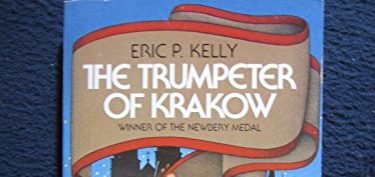
 python_nsi
 Black White Blue in the South
 JohnW
JohnW DoomsdaysCW
 TheDavidBowersAwards
 Regina Kammer
 Ric Raftis
  🇺🇦
🇺🇦

 Poetry News
 BC Info Bot