Do You Need a Cycloidal Drive?

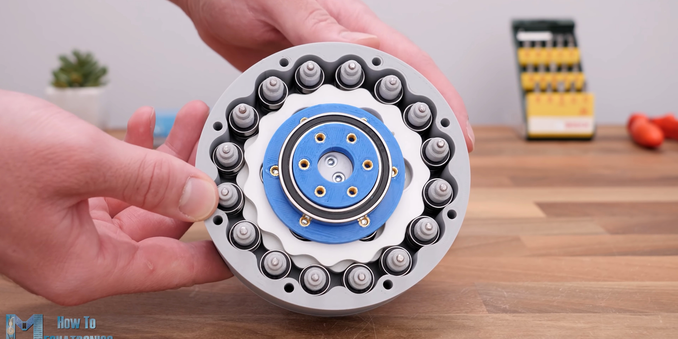
A cycloidal gear drive is one of the most mesmerizing reduction gears to watch when it is running, but it's not all just eye-candy. Cycloidals give decent gearing, are relatively compact and back-drivable, and have low backlash and high efficiency. You probably want one in the shoulder of your robot arm, for instance.

But designing and building one isn't exactly straightforward. Thanks, then, to [How To Mechatronics] for the lovely explanation of how it works in detail, and a nice walkthrough of designing and building a cycloidal gear reducer out of 3D printed parts and a ton of bearings. If you just want to watch it go, check out the video embedded below.

The video is partly an ad for SolidWorks, and spends a lot of time on the mechanics of designing the parts for 3D printing using that software. Still, if you're using any other graphical CAD tool, you should be able to translate what you learned.

It's amazing that 3D printing has made sophisticated gearbox designs like this possible to fabricate at home. This stuff used to be confined to the high-end machine shops of fancy robotics firms, and now you can make one yourself this weekend. Not exotic or unreliable enough for you? Well, then, buy yourself some flexible filament and step on up to the strain wave, aka "harmonic drive", gearbox.

Thanks to serial tipster [Keith] for the tip!

#3dprinterhacks #robotshacks #3dcad #3dprinted #3dprintedgears #cycloidaldrive #cycloidalgearbox #gear
Do You Need A Cycloidal Drive?

A cycloidal gear drive is one of the most mesmerizing reduction gears to watch when it is running, but it’s not all just eye-candy. Cycloidals give decent gearing, are relatively compact and …

Hackaday

OpenDog Version 3 Is Ready To Go Walkies

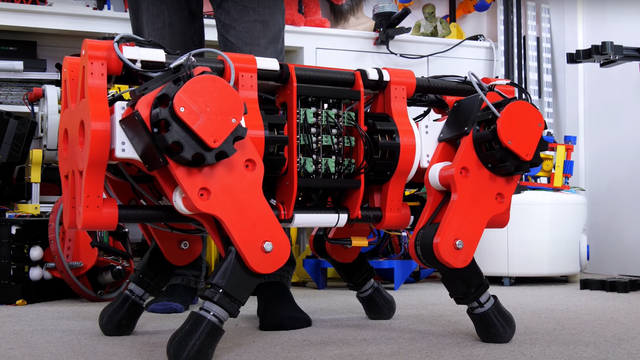
We've been following [James Bruton]'s open dog project for a little while now, and with his considerable pace of work - pandemic or no pandemic - development has been incredibly rapid. The latest milestone is the public release of version 3 (Video, embedded below.) This upgrade to the system adds 3D printed cycloidal gearboxes, removing the previous belt drives. [James] had immense fun tuning the motor controller parameters for these and admits they're not completely dialed in yet. He notes that the wider gearbox body means that the robots geometry needed to change a little, and the previous belt-drive version may have a bit of an edge, but he's confident he can make it work (and given his incredible previous robotics builds, we totally believe he'll nail it!)

Silicone overmolding around a 3D printed former, using a 3D printed mould

Older versions struggled with slippery plastic feet; the advantage of a predictably smooth contact shape of a rounded foot is somewhat offset by the limited contact patch size, and that means not so much grip on some surfaces. [James] solution was obvious enough - just learn how to make 3D printed silicone moulds and cast a nice rubber foot around a plastic former, and problem solved! Unfortunately he neglected to add some recesses for a lever to get in between the mould halves, so it was a bit of a struggle to separate after curing. A beginner's mistake that won't be repeated, we're sure.

Full source for openDogV3 is now available on the GitHub page. Here's the playlist for the whole project, as well as direct links for the cycloidal drive development (part1, part2, part3.) But before you all go diving in to start 3D printing your own pooch, [James] tells us that the total cost would be around $2000 all in, with the bulk of that being the motors and ODrive units, so this one for the serious builder only!

We've covered robot dogs a fair bit, a particularly nice example is The Dizzy Wolf, and if you're wondering just why on earth you'd want a robot dog, then Ask Hackaday has you covered as well.

#robotshacks #3dprinting #cycloidalgearbox #jamesbruton #opendog #robotics

OpenDog Version 3 Is Ready To Go Walkies

We’ve been following [James Bruton]’s open dog project for a little while now, and with his considerable pace of work – pandemic or no pandemic – development has been incred…

Hackaday