 Dust^2
"Higher dust exposure near the Salton Sea is linked to poorer lung function in nearby children." -- Dust Matters #dust #crticalzone #environment #california #publichealth
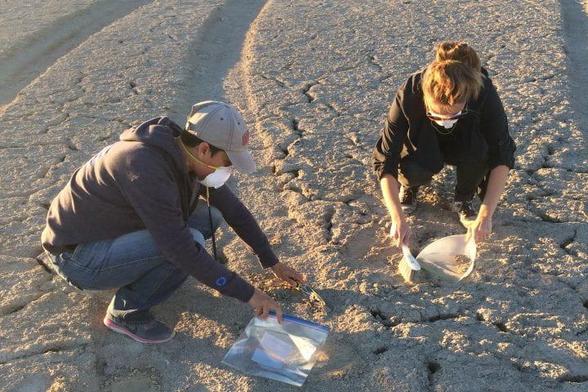
"Higher dust exposure near the Salton Sea is linked to poorer lung function in nearby children." -- Dust Matters #dust #crticalzone #environment #california #publichealth
#Water is one of the most important parts of Earth's #CrticalZone, no matter if it's in the form of ice, vapor, or liquid.
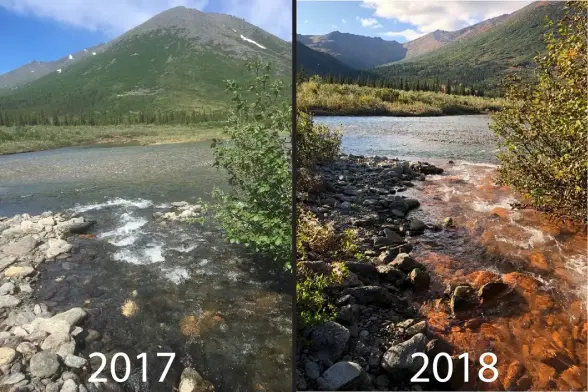
Ongoing work in the #Arctic is examining the "rusting" of #rivers in the region.
This image below is from a story about this research asking the "key question is whether the orange stream phenomenon represents a temporary state or a more permanent shift in the water quality and health of these formerly pristine #Arctic rivers."
Check in with our current understanding of #Nanoplastics

This Future Brief presents the current science on nanoplastics: their detection, assessment and monitoring; their impacts in the environment, ecotoxicity, and environmental fate; and their potential impacts on human health. In 2022, nanoplastics research is a very fast-moving area. New techniques and methods are currently in development to detect, identify and analyse nanoplastics and their impacts, in the environment and in organisms. Methods of interest currently include various advanced techniques in light scattering and chemical identification. Harmonised protocols and reference materials are needed as well as advances in isolation, identification and field sampling.
 The Big Data Cluster
 Dustˆ2