 Daniel Fischer
In 15 minutes on https://cuboulder.zoom.us/j/93204983058 a symposium on (mostly solar) #coronagraphs from the National Solar Observatory, running from 19:30 to 22:00 UTC.
Among the speakers at the highly inspiring #coronagraphs symposium at the CU in Boulder was also an amateur astronomer - George Hripcsak had build a coronagraph himself and imaged the E and even the K corona. The title of the symposium "Coronagraphs are back, baby!" was true indeed!
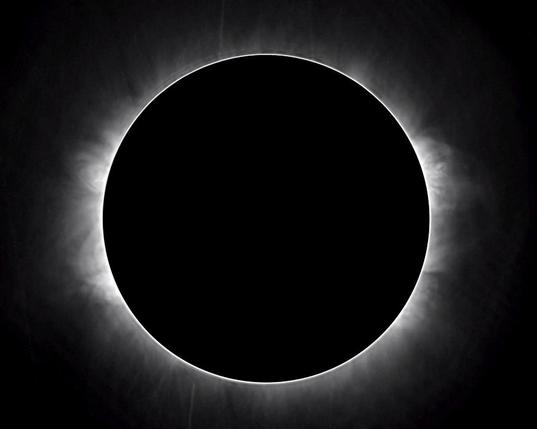
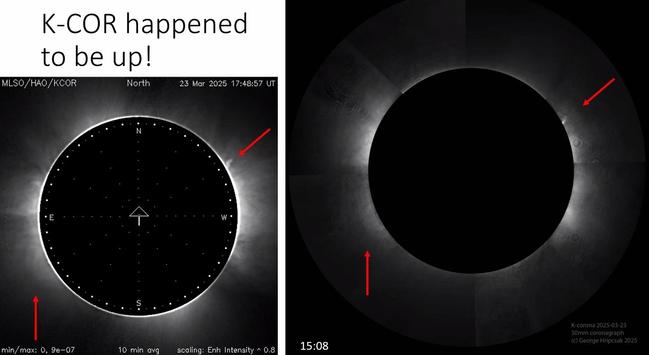
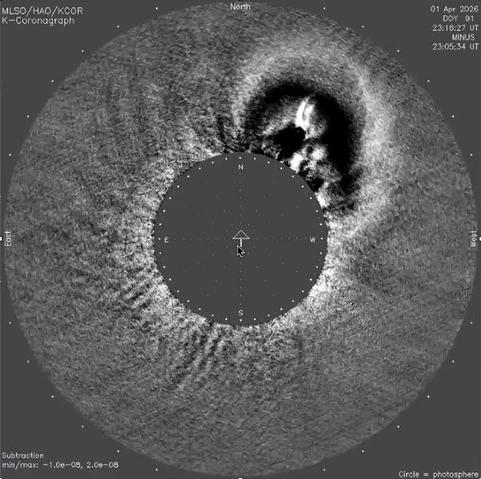
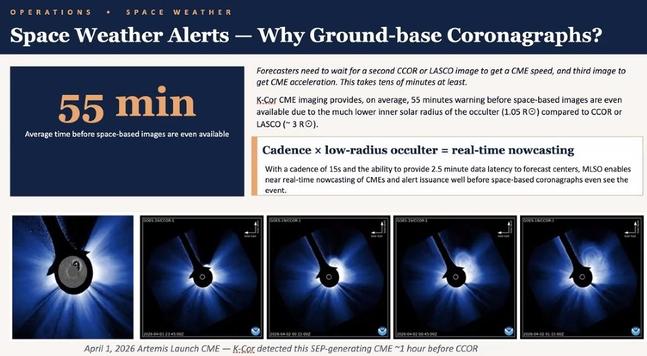
Since March the K-Cor coronagraph is finally back in action on #MaunaLoa - and at the #coronagraphs symposium in Boulder the value of a ground-based instrument was highlighted by Tom Berger: it catches a beginning #CoronalMassEjection almost an hour earlier than all existing coronagraphs in space which have to cover more of the surroundings of the Sun.
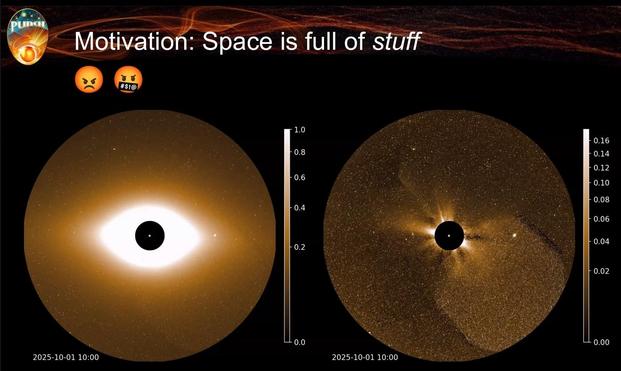
This slide from the #coronagraphs symposium in Boulder from the talk by Sam van Kooten is quite enlightening: it shows two processing steps of a #PUNCH WFI composite, on the left still dominated by the F corona i.e. #ZodiacalLight i.e. interplanetary dust (just as seen in the Artemis II eclipse images) while on the right the - at such distance from the Sun muuuch fainter - K corona has been brought out which traces the Sun's magnetic field.

 ᴄᴏʀʀᴀᴅᴏ
How #Webb's #coronagraphs reveal #exoplanets in the #infrared
https://phys.org/news/2023-03-webb-coronagraphs-reveal-exoplanets-infrared.html

How Webb's coronagraphs reveal exoplanets in the infrared
NASA's James Webb Space Telescope has many different observing modes to study planets orbiting other stars, known as exoplanets. One way in particular is that Webb can directly detect some of these planets. Directly detecting planets around other stars is no easy feat. Even the nearest stars are still so far away that their planets appear to be separated by a fraction of the width of a human hair held at arm's length. At these tiny angular scales, the planet's faint light is lost in the glare of its host star when trying to observe it.
 Nancy Beekeeper