New AI‑driven tools are helping scientists design cross‑breeding strategies to boost genetic diversity in the endangered kākāpō. By combining machine‑learning predictions with DNA sequencing data, conservation genomics can curb species decline and prevent genetic loss. Read how open‑source tech is reshaping wildlife rescue. #AICrossbreeding #ConservationGenomics #KakapoRecovery #GeneticDiversity

🔗 https://aidailypost.com/news/ai-aids-crossbreeding-curb-decline-genetic-loss-endangered-species

We still have capacity in our #ConservationGenomics course: https://physalia-courses.org/courses-workshops/course62/

If you're interested in population genomics, specifically with a connection to conservation, consider signing up! 🧬💻

Conservation Genomics

Dates ONLINE, 21-24 July 2025 To foster international participation, this course will be held online

physalia-courses

📢 Still 4 places available for the #ConservationGenomics course

📅 22nd-25th July

📍Online

🔗Info and registration: https://www.physalia-courses.org/courses-workshops/course62/

Conservation Genomics

Dates ONLINE, 21-24 July 2025 To foster international participation, this course will be held online

physalia-courses

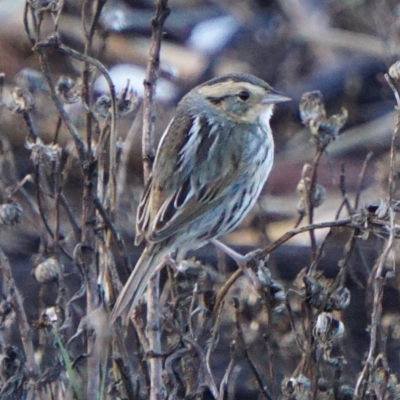
Proud to announce my latest work with Jennifer Walsh and Rauri Bowie is out in
Global Change Biology!

Spatial variation in population genomic responses to over a century of
anthropogenic change within a tidal marsh songbird.

https://doi.org/10.1111/gcb.17126

The study draws on historical museum specimens to reconstruct temporal responses
to tidal marsh habitat loss in coastal California.

#ConservationGenomics
#ornithology #Birds #sparrows #NaturalHistoryCollections
#saltmarsh #HabitatLoss

Exciting work from Chloe Mikles' undergraduate thesis is finally out in
conservation genetics! Chloe sequenced whole genome sequences from 39 Song Sparrows in the San Francisco Bay Area
to explore the genetic basis of local adaptation and adaptive capacity among the 5 subspecies
found in the region.

Evolutionary divergence and adaptive capacity in morphologically distinct song sparrow subspecies
https://link.springer.com/article/10.1007/s10592-023-01547-w

#ornithology #ConservationGenomics #sparrows
#saltmarshes

Evolutionary divergence and adaptive capacity in morphologically distinct song sparrow subspecies - Conservation Genetics

Spatial variation in the environment can affect population fitness and individual phenotype by facilitating natural selection and local adaptation, and thereby enhance the diversity and adaptive capacity and persistence of species at regional to continental scales. The song sparrow subspecies complex endemic to the San Francisco Bay region, which has received over a century of close study, presents an opportunity to evaluate the adaptive potential of distinct subspecies faced with habitat loss, population decline, and threats of future environmental change. We used whole-genome sequences from 39 individuals representing five morphologically distinct song sparrow subspecies to evaluate the role of neutral and adaptive evolutionary processes in driving divergence within physiologically challenging habitats across multiple environmental clines. We found that natural selection for traits explained by ecological variables, including temperature and salinity, are drivers of adaptive genetic variation in these song sparrows. Differentiation was highest for candidate loci under selection (compared to neutral markers), as predicted if local ecological processes are at least partially responsible for the rapid radiation of these subspecies. Our findings inform management aimed at conserving and prioritizing population-level diversity in species displaying local adaptation and inhabiting a diverse range of environments.

SpringerLink

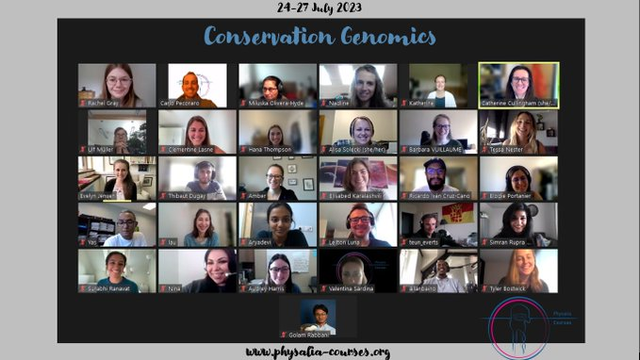
Another fantastic edition of the #ConservationGenomics course is going to an end!

Many thanks to this amazing team of instructors and attendees!

Thanks to you all for this great week!🥳

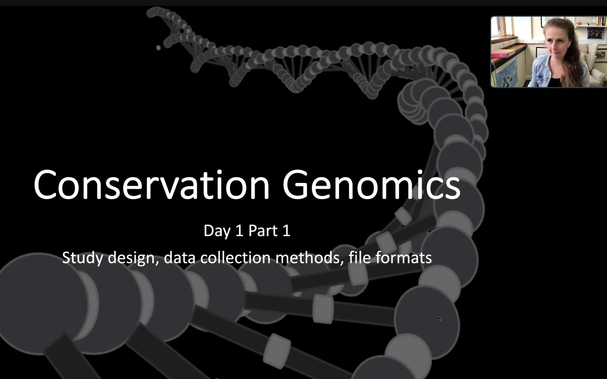
We have just started off the 3rd edition of the #ConservationGenomics course

We will work through a suite of analyses looking at population structure, local adaptation, effective population size, inbreeding and relatedness 😻

A highly contiguous genome assembly for the Steller's jay (Cyanocitta stelleri):
The latest high quality genome resource from the California Conservation Genomics Project.
Now online at Journal of Heredity: https://doi.org/10.1093/jhered/esad042

#ornithology #genome #genomics #ConservationGenomics

A highly contiguous reference genome for the Steller's jay (Cyanocitta stelleri)

Abstract. The Steller's jay is a familiar bird of western forests from Alaska south to Nicaragua. Here, we report a draft reference assembly for the species gen

OUP Academic
Coalition for Conservation Genetics

Coalition for Conservation Genetics

Our Conservation Genomics course is almost full. Last 6 seats left, so act fast! 🧬

🗓️24th-27th July

💡This course will introduce attendees to how the tools of population #genomics can be used to inform conservation!

🔗https://www.physalia-courses.org/courses-workshops/course62/

#ConservationGenomics #Genomics #Bioinformatics #Rstats #PopulationGenomics

Conservation Genomics

Dates ONLINE, 21-24 July 2025 To foster international participation, this course will be held online

physalia-courses