John
JohnLow back still tender ... Zercher 210lbs for easy single
245lb floor press. Not a PR, but I'm down ~10lbs in bodyweight.
 Hebrew by Inbal
Let's talk verbs!
1️⃣ When to tackle verbs? After building a solid foundation in Hebrew grammar, syntax, and basic conversation. This includes sentence structure, genders, numbers, adjectives, the construct state, and the Hebrew Et. My course, Practically Speaking Hebrew, covers all these basics.
2️⃣ The conjugation tables use my PSP Phonetic System, helping you read and pronounce Hebrew accurately with English letters. You can learn conversational Hebrew without the alphabet. If you're unfamiliar with PSP, ask in the comments for a link to my tutorials.
3️⃣ Tell me in the comments which verbs you'd like to learn next.
Remember, learning Hebrew is a journey. Start with the basics, use my PSP Phonetic System, and share what you want to learn.
 Matt Willemsen
Pan-cancer approval shows huge potential for antibody–drug conjugates
https://www.chemistryworld.com/news/pan-cancer-approval-shows-huge-potential-for-antibody-drug-conjugates/4019519.article #medicine Cancer #antibody #drug #conjugate
https://www.chemistryworld.com/news/pan-cancer-approval-shows-huge-potential-for-antibody-drug-conjugates/4019519.article #medicine Cancer #antibody #drug #conjugate

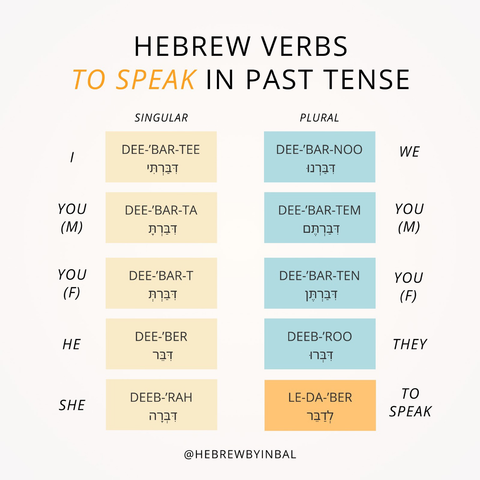
Today we're going to tackle something that's often overlooked but absolutely crucial for becoming fluent in Hebrew — the past tense of the verb "to speak," which is "לדבר" (Le-da-'ber).
Why is this so important? Well, telling stories, sharing experiences, or simply reminiscing about good times in Israel — all of these scenarios require you to know how to use "לדבר" in the past tense.
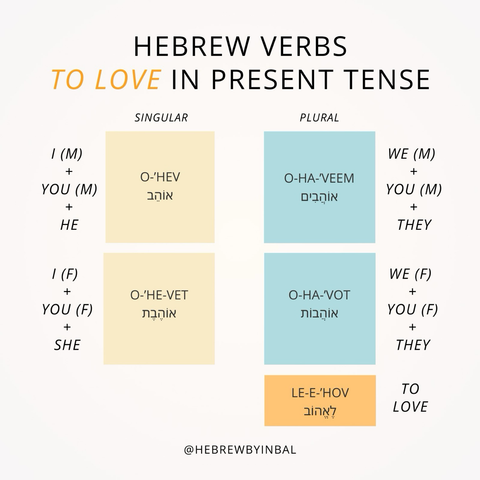
Let's dive into the wonderful world of Hebrew conjugation in the PRESENT tense.
Learning a new language, especially one as rich as Hebrew, can be quite a journey. Many of my students, like you, have embarked on this path.
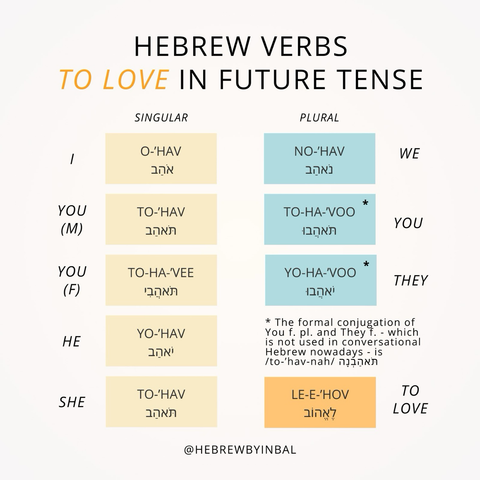
So, whether you're saying "I love" or "you love" (אתה אוהב), I'm here to guide you through this language journey, helping you gain confidence and embrace the beauty of Hebrew conjugation.
#ilove #tolove #youlove #hebrewlove #hebrew #conjugate #conjugatemethod #verb
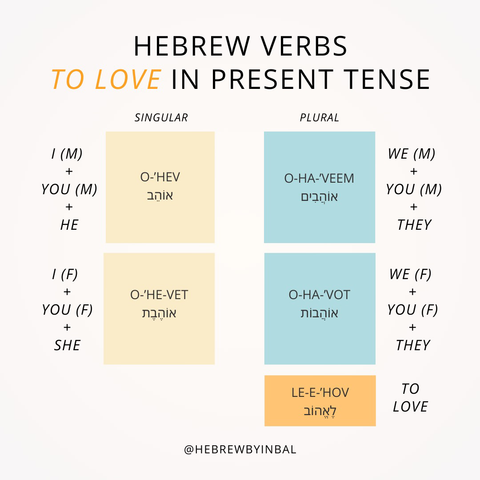
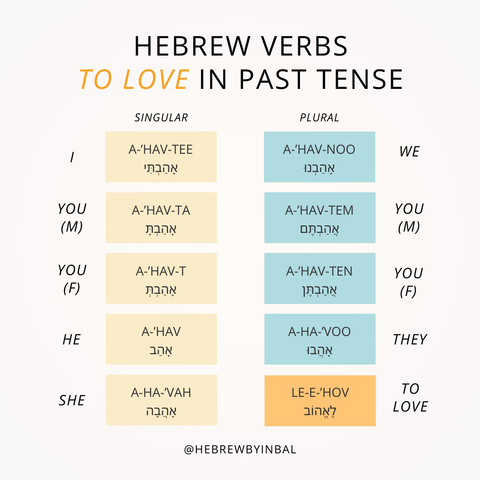
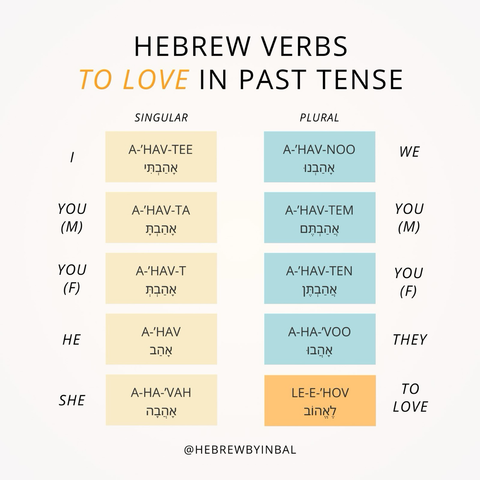
Today, we're diving into how to say 'loved' in Hebrew, exploring all its beautiful conjugations.
Because isn't love—like language—about connecting, remembering, and, yes, sometimes, letting go?
Dive in to see how the past tense of 'to love' forms its own love story, one conjugation at a time. 💛📜