RE: https://mastodon.green/@plazi_species/115746512910604870

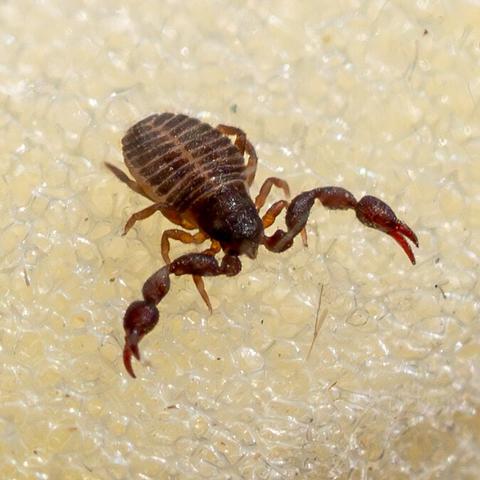
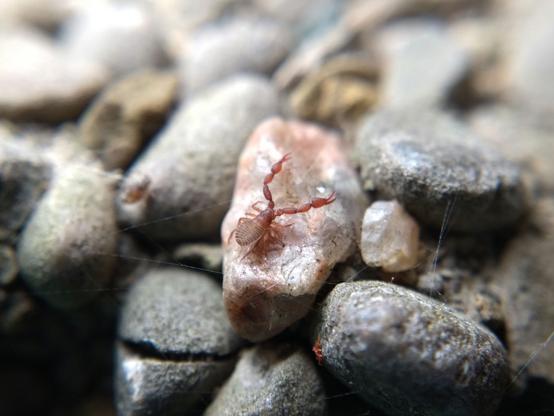
#Pseudoscorpions are #interesting and #biologically diverse #arachnids that are often overlooked due to their #smallsize. Many species are #grounddwellers or live in deadwood. The largest #taxon is the #Chernetidae, with approximately 726 extant #species. L. Laibe et al. (2025) described a new species of its genus #Attaleachernes from the eastern #Amazon region and also characterized the #habitat.
©This text #StefanFWirth Berlin 2025

Reference
L.Laibe et al.(2025)
https://doi.org/10.11646/zootaxa.5716.2.4
The pseudoscorpion has the size of a pinhead and eats even smaller insects.

Der Pseudoskorpion ist stecknadelkopfgroß und ernährt sich von noch kleineren Insekten. In Deutschland gibt es 49 Arten.

#pseudoskorpion
#chernetidae
#FalseScorpion
#bookScorpion

I was just poking around the garden today in a spare moment and had two unexpected arachnid discoveries!!

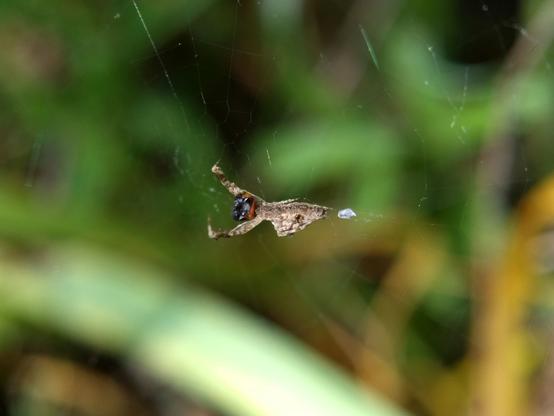
1. A hackled orbweaver (_Uloborus glomosus_), one of the very few venomless spiders, that also makes orb webs with a fuzzy, glueless silk not often used for aerial webs—I rarely come across them and never, I think, in my own garden.

2. A new kind of pseudoscorpion—not the tiny yellowish cthoniids I'm used to, but a HUGE beast with sturdy claws, like 3mm long! I think it's family Chernetidae.

#arachnids #spiders #pseudoscorpions #Arachnida #Araneae #Uloboridae #Pseudoscorpiones #Chernetidae