 Context, Thought, and Learning: ShiraDest publications Offers Project Do Better
Passing To Freedom, Chapter 45: Fates Worse…
Chapter 45
We put our plan into action. I’d spoken with several who had been taking turns listening at the taverns and following Smith and his men, changing costumes often, I was glad to hear. They told me that they did this especially often when they followed Loving, who tended to be far more solitary, and thus more difficult to follow. Many were young men, boys, even, who found the adventure of this chase both exciting, and a story for their grandchildren, one confided in me.
“You are like unto a damsel in distress.”
His gaze upon me made me blush, and we both turned our heads. He had even knelt before me, hat in his hands held over his heart, his red hair clipped so short it was sticking up at all angles on his head. I reproached myself bitterly for not having seen this.
“I am loath to give offense, but as much as I am honored by your affection, my heart belongs, to another.”
This young man seemed kind and courageous. He took my rejection in good humor, saying:
“Nonetheless, I will ever be you defender, come what may.”
“I thank you,” I paused, searching for a name: “May I call you Courageous Red?”
His face lit up like the sun, as he scampered out the door.
Because of my training in grooming horses, courtesy of the family of Brutus, I was moved by a Conductor early in the pre-dawn hours to a new Station: a stable. Adding paddock boots to my costume, I tended the horses.
I saw many whom I had met earlier during my stay, coming and going with messages all day. They always looked relaxed once they crossed the threshold into the stable, as though suddenly free from the weight of vigilance.
One of those messages, to my surprise, a young boy delivered into my own hand, right under the curry comb I was using at that moment, just about mid-day.
The message could only be from a vanishingly small number of people, as most working class women could not read. Few knew that I could. I waited until he left, and then chose a stall with good light, as though going to see to my personal needs. It was a very short note, written in the hand of Brutus’ wife, which I recognized from all of her recipes as she had taught me to cook. It said only:
Farmer Brown has betrayed us. Burn this note. Mrs. B.
I stood in the stall in shock, glad of the privacy, horrified that this man whom I had thought to be our friend would do such a thing. An entire free family was now at the mercy of a law which not only made their activities illegal, but also punished colored people far more harshly than white citizens. Even worse, Mr. Brown knew all of us.
He knew me, he knew young Tilly, he knew Anna, and he knew, or had known, all three of our horses. He had been a stable hand in the home of family for some years, so he could also point each of them out on sight.
As I stood in the stall fighting back tears for the friends who had saved us in Shrewsbury, I head footsteps crossing into the barn. A voice called out my name. Or rather, my newest name.
“Jenny, are you decent?”
“Yes, sir, I am.”
I hurried out to make the worker’s curtsy to the Conductor who had led me here in the morning, showing me which stalls to give to our Tilly’s little gelding, who needed coaxing to eat, these days. I often wondered if this little horse missed both Captain and Old Mary as much as I did their riders.
He looked very sad, and grim. His thin lips were stretched nearly flat, and they were entirely devoid of blood.
“I have bad news, I am afraid.”
I could see that, already. And just as I had been starting to have high hopes for our plan, as it began to show fruit. Tonight had been fixed as the evening to draw both of the Senator’s head men together. Smith was more and more belligerent lately, making it easy to get him thrown out. But these tidings looked like they might change things. I nodded, giving him my full attention.
“I’m afraid that your friend, young Tilly, may be out of our hands.”
My eyebrows shot up, and I waited.
“She seems to have been sold.”
“Sold?” I was confused.
“But her former owner has been looking for her. Has he ceased to advertise for her in the papers, then? This makes no sense.”
“That is what we thought, too, but her owner seems to have renounced all claims to her.” He’d pronounced the word owner as if it were an expletive. “There have been no more postings for her, and now,” he had paused to look at me, frowning again, and said, “that Senator from Virginia has had Smith take her away, shutting her up along with his other people under Smith’s guard.”
The Senator? Bought Tilly? No. God, please, no! That could not be. She already had an owner who was searching for her, and that meant that … unless he had found her and was holding her for the other man?
“Why do you believe that her former owner has renounced all claims to her? Do you mean to say that you have seen a bill of sale for her, in his name, or” God forbid, “was there an auction?”
“No,” the man had rushed to say, putting out a reassuring hand, “nothing like that. Certainly not in this city,” he had added, as though such a commonplace thing, where I was from, were unthinkable here in the North.
“So…?”
“The Senator has been displaying her, rather … publicly, since yesterday.”
The man looked suddenly embarrassed, blushing deeply.
“Displaying?”
I continued to wait for a reply.
“He has been displaying her outside of a house of ill repute, promising to give her, free of charge, to any man with information on the whereabouts of a certain very light skinned …”
“For me.”
I felt nauseous, my knees trembling and my arms aching suddenly, fists clenched as I fought to draw breath and stay on my feet. How dare that foul beast of a man do such a thing to this child.
Then it occurred to me:
“But, how can he do that?”
I got another blush in response.
“I mean, without the permission of her owner, how can he do something that would compromise her value later, at auction, or even for a private sale.”
The man looked mildly shocked at my words, but I was merely repeating such things as I had heard the men in the company of the Senator saying for nearly my entire life, in Virginia.
“You must forgive me. I had forgotten that this is not a topic of general conversation up here in the North.”
“Is is so, down there?” He turned beet red, now. “I mean to say, down south?”
“Yes, it is,” I had replied. “And rather too often, I am afraid.”
But how had the Senator been able to find Tilly, and why do this to her? We knew that he must have found out we were all together, after that woman had locked us in and called his men to come collect us, while she collected the rewards on our heads. But how had he gotten hold of her?
In the instant that a thought came to me, I knew that it was true. Could I really have any other choice?
“I am very sorry,” then, almost in a murmur, “the poor child.”
I had quite forgotten that this man was still standing there. Perhaps he would know.
“Do we know how she came to be in the clutches of that foul b-, man?”
His eyebrows had risen, hearing me about to call the Senator a beast, but a knowing nod was all that betrayed his thoughts. He heaved a great sigh, as though he were thinking something over.
“We were able, through some accountants who are friends of the cause, to trace her papers, which have been examined,” he added quickly, “and the papers are genuine, or at least they appear so, being properly notarized with the Virginia state seal,” he paused, and then said, “only to trace the sale to another enterprise in that state.”
Then he sighed again.
“And now we also know how she was found, for it seems that this was no accident, I am afraid.”
Of course it was not. Nothing was, with the Senator. I braced my self, waiting to hear what was coming.
“It seems that the child had been tracked down by a certain notorious bounty hunter, and with the help of a formerly enslaved man.”
“But if he has not even been paying Smith and his men, as we have heard, then how has he been able to pay this bounty hunter?”
“On credit, from what we have been able to glean.”
That made sense. I now recalled a long ago discussion between the Senator and Loving. Some of his creditors were demanding that any new purchases be made in coin, others calling for full payment of his debts. I’d forgotten that gentlemen were always presumed to be in good standing, and expected to be extended credit for nearly all of their purchases.
“Some of our watchers saw the kidnapping take place, but were unable to stop it.” He frowned, and then his face brightened:
“I know that particular Porter, and I can assure you that he, at least, would have tried, if he could have gotten to the horse in time.”
He coughed as I looked down, balling my fist.
“But we did get a good description of the colored man who grabbed her. He’s likely working in the employ of the bounty hunter, for whom the set of expenses, including his hire of the man who identified young Tilly, was enumerated as part of the set of transactions listing the child’s sale to the Senator.”
So that was how they had found the slave catcher who had caught young Tilly. This sounded like the work of Mr. Loving. I heard him ordered to investigate rivals, both political and business related, from time to time. And the slave catcher, if he had found young Tilly, must have had help. Who was this former slave he kept mentioning, though?
“How do you know of this former slave that helped capture Tilly? You seem to be very familiar with that man.”
He frowned, his face falling even further. “We are, or we were, at any rate, sadly.”
“How so?”
“The man was once a friend not only to the cause, but also to some friends of yours, in Shrewsbury. That family has had to leave the state, now, due to this sad business.”
“Wait,” I said, feeling a growing pain in the pit of my stomach, “not the former slave who left that town not long before we ourselves did?”
He had nodded, then hung his head, holding it in one hand, and admitting:
“The same, yes. It seems that he somehow met up with this bounty hunter, whether by accident or of his own free will, we do not know. From the large number of expenses requested for payment, it seems that he gave away quite a lot of information, about many of us, to his employer, for quite some time before Tilly was taken by him.”
That, I realized, explained how the Senator knew that using young Tilly to get to me would be an effective attention keeping strategy, a phrase I had heard him use many times before. It would also keep the attention of much of our network of friends in the surrounding states. He could sell a wealth of information about Brutus. And about Old Mary’s training, Captain, and my beloved Anna. This was very bad.
I knew that for the Senator, faking a document with the seal of the Commonwealth of Virginia was a trivial matter. None of this business of a sale by Tilly’s owner made sense, given what she had told us, what Anna had surmised, and also the words of Dr. H.
What did make sense, given my knowledge of the Senator’s lack of scruples, even for his fellow white property owners, was that he might have faked documents. They might keep until young Tilly’s owner finally got word that she was up here, and sent to retrieve her. After that, even the Senator would face serious consequences.
I heard a throat clear. I had forgotten his presence. He’d been telling me about my old acquaintance at the home of Brutus, who was now a traitor, who had given our little Tilly into the hand of the enemy.
“I believe that he was often known as Farmer-”
“Brown.”
“Yes,” he had acknowledged.
When I realized that this was how our Farmer Brown had betrayed us, I knew I could never forgive him.
***
Passing to Freedom: Willow and Weems …
a historical novel by D. Antonia Jones, aka Nia or
Ni,
fka Shira A. Destinie Jones
#AnnAnna #BlackHistory #historicalFiction #slavery #writing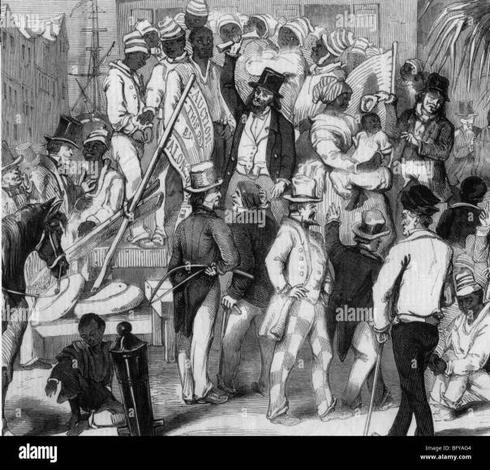
 Audubon Ballroon (he/him)
 KillBait News
 KillBait
 Laura G, Sassy 70’s
 🦋🧿Tempestori 🌬🌊
 James Haley