Aric Chen urges designers to "put words into action" in live Dezeen 15 interview

Day 11 of the Dezeen 15 digital festival features a video interview with curator Aric Chen, who suggests that the process of writing manifestos is a distraction from solving the world's problems. Watch live from 3:00pm London time.

"Manifestos are, frankly, part of how we got into the mess that we're in," he states in his own manifesto written for Dezeen.

"They are inherently one-dimensional and are often exclusionary and divisive, their conceit of a unifying logic resulting most frequently in empty platitudes at best and totalitarian visions at worst."

Instead, he says, it is time to "put words into action, without fear of failure".

[

Read:

Aric Chen calls for "the death of manifestos"

](https://www.dezeen.com/2021/11/15/aric-chen-manifesto-dezeen-15/)

While calling for the death of manifestos, Chen also introduces Zoöp – a framework for bringing non-human interests into an organisation's decision-making process, created by Het Nieuwe Instituut in Rotterdam, where he is general and artistic director.

Chen is an architecture and design curator and a professor at the College of Design & Innovation at Tongji University. Before becoming a director at Het Nieuwe Instituut, he became the first curatorial director of Design Miami.

The Dezeen 15 festival features 15 manifestos presenting ideas that could change the world over the next 15 years. All contributors will also take part in a live video interview.

See the full list of contributors here.

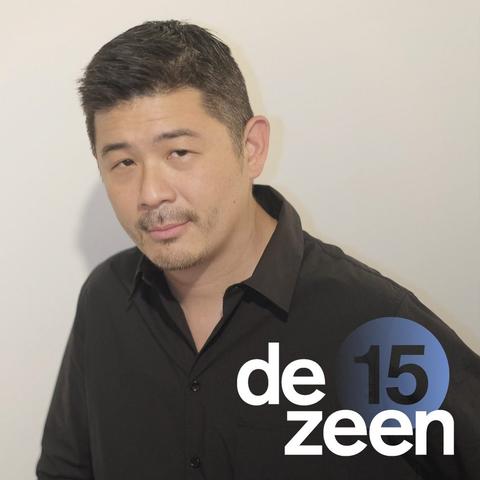
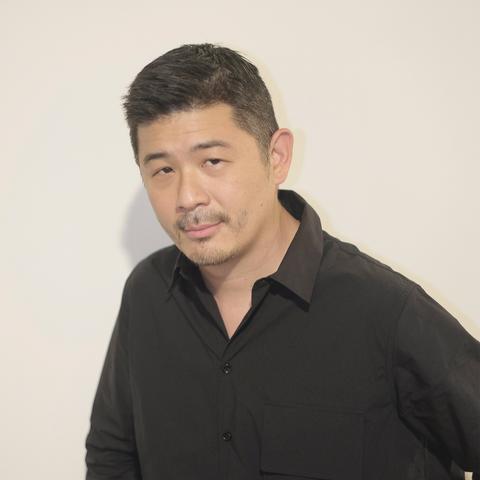
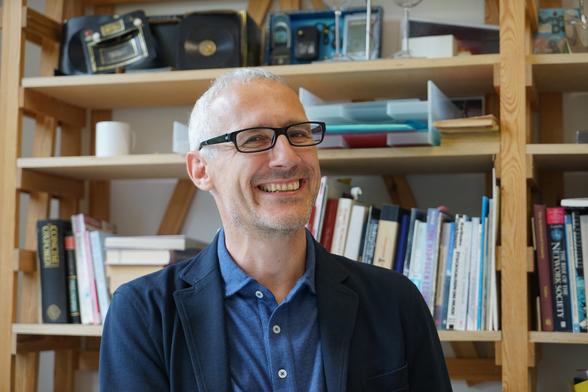
The portrait of Chen is by Yoha Jin.

The post Aric Chen urges designers to "put words into action" in live Dezeen 15 interview appeared first on Dezeen.

#dezeen15festival #all #talks #aricchen #livestreams

Aric Chen urges designers to "put words into action" in live Dezeen 15 interview

Day 11 of the Dezeen 15 digital festival features a video interview with curator Aric Chen, who suggests that the process of writing manifestos is a distraction from solving the world's problems. Watch live from 3:00PM UK time.

Aric Chen calls for "the death of manifestos"

Curator Aric Chen claims that manifestos are "part of how we got into the mess that we're in" in his contribution to the Dezeen 15 digital festival.

They are a distraction, he claims, "resulting most frequently in empty platitudes at best and totalitarian visions at worst."

The Dezeen 15 festival features 15 contributors presenting their manifesto ideas that could change the world over the next 15 years. See the full line-up of upcoming and past contributors here.

Let us begin this manifesto by calling for the death of manifestos.

Manifestos are, frankly, part of how we got into the mess that we're in. We have for too long been beguiled by their fervor, their eloquence, their deceptive clarity. These edicts of belief and proclamations of purpose have seduced us into thinking that, by virtue of their certainty and righteousness, we could build a shining new world or, in contemporary parlance, "find a path forward towards [fill in the blank]".

But manifestos, however well-intentioned they may be, are by nature reductive and, as such, their expansive promises can only prove false. They are inherently one-dimensional and are often exclusionary and divisive, their conceit of a unifying logic resulting most frequently in empty platitudes at best and totalitarian visions at worst. They are a distraction: proof of the power of rhetoric – for good, bad, and often, both at the same time – but also its impotence.

A call to action is no longer action enough

So where does this leave us? As we confront the litany of urgencies and crises – ecological, social, systemic – that lie so readily at the tips of our tongues, we are humbled by our past failures and the knowledge that solutions do not exist to problems that are too complex to be "solved" (or to even define; one person's solution, after all, is usually another person's problem).

And so in the cultural realm, and in design, we have resorted to speculating, "posing questions," "raising awareness" and issuing calls to action – worthy and valuable exercises, to be sure, except for the fact that we are out of time, as societies, as a planet and as one species among many for simply speculating, posing questions and raising awareness alone. A call to action is no longer action enough.

Instead, the path forward, as they say, is tangled with an infinitude of paths – acting simultaneously, shaped by context and thus operating on different logics drawing from different knowledges – human, supra-human, and non-human alike – even if the untidy results seem contradictory, as they often are. Having done away with the fallacy of the blanket reasonings that gave us the manifesto, we can liberate ourselves from the dead-ends and devastations of totalizing worldviews and towards more productive negotiations of perpetually shifting realities, vantage points, and dynamics.

How this might play out depends on one's situation. To be more concrete, let's consider the role of cultural institutions, and specifically, the one I work for. At Het Nieuwe Instituut, where we have the luxury of a mandate for experimentation, we will be building on our foundation of research – and, yes, speculation, posing questions, and raising awareness – by acting upon ourselves as a testing ground for probing the thresholds between speculation and feasibility – a kind of enacted speculation.

We can liberate ourselves from the dead-ends and devastations of totalizing worldviews

Several years ago, one of our research teams, led by Klaas Kuitenbrouwer, began developing a concept called Zoöp, which is essentially a framework for bringing non-human interests and voices into an organization's decision-making process as a means of instilling more equitable and ecologically regenerative practices. In the first half of next year, we will become the world's first Zoöp.

Later in the year, we will host and co-organize the inaugural Solar Biennale, a new initiative led by designers Marjan van Aubel and Pauline van Dongen and curated by Matylda Krzykowski. This will not be a techno-utopian showcase of would-be silver bullets, but rather a multi-perspectival, critical examination of solar practices and possibilities – taking place during Rotterdam's famously sunless autumn and winter – that tests the implications of the energy transition we collectively need, with lessons, we hope, for how we ourselves can become a more sustainable organization.

Meanwhile, we've begun investigating how co-creation might offer new ways of more deeply and inclusively embedding a broader range of voices and perspectives in everything we do. And as designers increasingly question their role and complicity in the market mechanisms of extractive capitalism, we have begun exploring how we might rework the revenue-generating fallback of so many cultural institutions – ie the museum store – to become a testing ground for the alternative forms of consumption, exchange and value generation that many of these designers have been proposing.

We need to put words into action, without fear of failure

These are not solutions, but rather stress-tests for the scenarios and multiplicities of propositions that we as a design discipline have been proffering for years. Some will work, some won't, some will work in some contexts but not others, or not now, but perhaps in the future.

But as cultural institutions continue to ponder our social relevance, we need to put words into action, without fear of failure and without presuppositions, while obviously sharing and making visible what we learn – both because we should, and because we can.

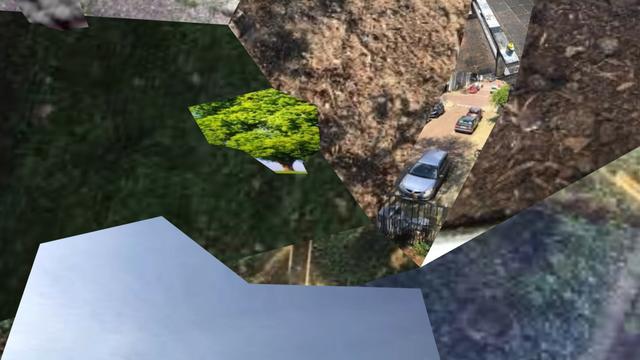
Above: Aric Chen photographed by Yoha Jin. Main and first image: an illustration of the Zoop initiative created by Het Nieuwe Instituut for its Neuhaus exhibition in 2019

Aric Chen is an architecture and design curator and a professor at the College of Design & Innovation at Tongji University.

In 2018, he was named thefirst curatorial director of Design Miami. He recently became the general and artistic director of Het Nieuwe Instituut in Rotterdam.

Read more about Aric Chen ›

The post Aric Chen calls for "the death of manifestos" appeared first on Dezeen.

#dezeen15festival #all #aricchen
Aric Chen calls for "the death of manifestos"

Curator Aric Chen claims that manifestos are "part of how we got into the mess that we’re in" in his contribution to the Dezeen 15 digital festival.

Live panel on design education with Beatriz Colomina, Aric Chen and Anthony Dunne

Dezeen has teamed up with Salone del Mobile to live stream a talk exploring the issues facing a new generation of graduate designers. Tune in here at 3:00pm Milan time.

The talk is part of Dezeen's collaboration with Salone del Mobile which will see a daily live stream of a panel discussion during Supersalone for its Open Talks series.

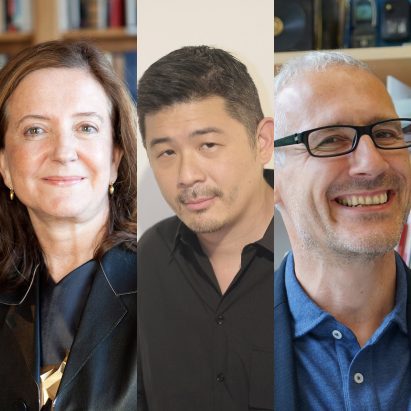
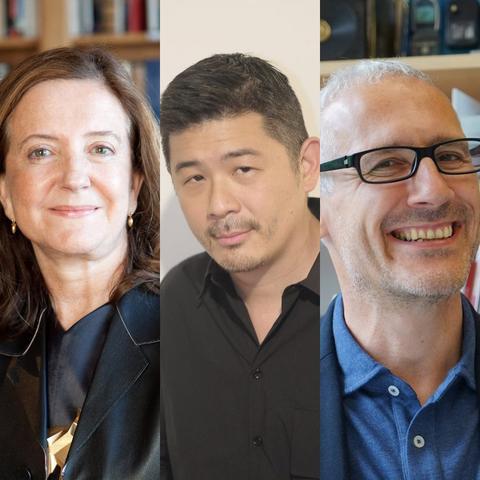
The first talk to kick off the programme is a panel discussion on design education and will include architectural historian Beatriz Colomina, curator Aric Chen and professor of Design and Social Inquiry at Parsons School of Design in New York Anthony Dunne.

Architectural historian Beatriz Colomina will join the panel

The panel will discuss the Lost Graduation Show, an exhibition that showcases 170 design projects by students from 48 design schools worldwide, who graduated between 2020 and 2021, during the coronavirus pandemic.

Titled Who can say no to education?, the talk will be moderated by the show's curator and the head of Master Theory at ECAL in Lausanne, Anniina Koivu.

The panel will discuss the pressing topics and issues, explored by the students in the show, that are facing a new generation of designers.

Also joining the panel from Milan is curator Aric Chen. Photo by Yoha Jin.

Colomina is an architectural historian and the founding director of the Media and Modernity programme at Princeton University, and professor and director of Graduate Studies in the School of Architecture. She has written numerous books on architectural history, including Sexuality and Space, and Domesticity at War.

Chen is an independent curator and writer based in Shanghai, where he works as the director of the Curatorial Lab at the College of Design and Innovation at Tongji University.

He is also the curatorial director for Design Miami and was recently named general and artistic director of Rotterdam's Het Nieuwe Instituut.

Anthony Dunne will also be joining the panel

Dunne is a professor of Design and Social Inquiry and c0-director of the Designed Realities Studio at Parsons School of Design in New York.

He is also partner in the design studio Dunne & Raby, together with Fiona Raby.

Koivu is a design writer, curator and consultant who works with a variety of clients such as Kvadrat, Iittala, Vitra and Camper.

The panel will be moderated by design writer and curator Anniina Koivu

She is also a designer, currently acting as the head of Master Theory at ECAL in Lausanne, Switzerland.

This year's edition of Salone del Mobile, titled Supersalone, is curated by architect Stefano Boeri as a response to the coronavirus pandemic, which caused the cancellation of the 2020 edition.

Taking place in Milan in September rather than in its usual April slot, the special edition of the fair will feature products displayed on a series of parallel walls instead of in branded booths.

Salone del Mobile and parallel fuorisalone events will take place from 5-10 September 2021 in Milan. SeeDezeen Events Guide for an up-to-date list of architecture and design events taking place around the world.

The post Live panel on design education with Beatriz Colomina, Aric Chen and Anthony Dunne appeared first on Dezeen.

#opentalks #designtalks #all #talks #videos #aricchen #videosbydezeen #designvideos #beatrizcolomina #supersalone

Live panel on design education with Beatriz Colomina, Aric Chen and Anthony Dunne

Dezeen has teamed up with Salone del Mobile to live stream a live talk exploring the issues facing a new generation of graduate designers.

Het Nieuwe Instituut appoints Aric Chen as general and artistic director

Shanghai-based architecture and design curator Aric Chen has been named the new general and artistic director of Rotterdam's Het Nieuwe Instituut.

Chen will take up the position at Het Nieuwe Instituut (HNI), an institute and museum for architecture, design and digital culture, from 1 May.

In taking up the role, Chen, who is currently curatorial director of the Design Miami fairs, plans to expand on the institute's tradition of research and critical inquiry.

Above and top image: Aric Chen will take up his new role in May

"I've been really impressed by HNI's deeply embedded impulse to expand definitions, not just for its core disciplines – architecture, design, digital culture – but also for what an institute can be," he told Dezeen.

"I have every hope of pushing this further by sharpening and expanding on its research and critical inquiry into not only the pressing questions confronting us in the present and future, but also those relating to how we see the past," Chen added.

"What's more, it's not just about how we think about these things, but how we act on them. For me, it will be about thinking and doing."

Chen to join board of directors

Chen succeeds Guus Beumer, Het Nieuwe Instituut's current general and artistic director, who is retiring. He will join managing director Josien Paulides on the organisation's board of directors.

"We highly value the extensive knowledge, experience and international reputation of Aric Chen in the fields of architecture, design and digital culture," chair of Het Nieuwe Instituut’s supervisory board Judith van Kranendonk said.

"In addition, his international, intercultural profile aligns with the internationalisation and interculturalisation of the fields that Het Nieuwe Instituut represents."

Chen had previously worked with a couple of the institute's predecessor organisations, the Netherlands Architecture Institute and Premsela, which were merged with Virtueel Platform to form Het Nieuwe Instituut in 2013.

He is currently professor and founding director of the Curatorial Lab at the College of Design & Innovation at Tongji University in Shanghai, as well as curatorial director of the Design Miami fairs in Basel, Switzerland, and Miami Beach, USA.

He will complete his current term at Design Miami in November 2021 and continue his role at Tongji University through spring 2022.

Chen's previous roles include curator at large of the Herzog & de Meuron-designed M+ museum and creative director of Beijing Design Week.

Last year, he spoke to Dezeen as part of our Virtual Design Festival in a video message from Shanghai.

Photography is by Yoha Jin.

The post Het Nieuwe Instituut appoints Aric Chen as general and artistic director appeared first on Dezeen.

#all #design #news #aricchen

Het Nieuwe Instituut appoints Aric Chen as general and artistic director

Shanghai-based architecture and design curator Aric Chen has been named the new general and artistic director of Rotterdam's Het Nieuwe Instituut.