The Billion-Pound Ghost: Why Project Pathfinder is the Economic Firewall Scotland’s Games Sector Needs

Project Pathfinder: Last week, the Herald published its list of the 50 most powerful people in Scottish arts and culture. It was an impressive collection of talent – but it was also a perfect snapshot of why the interactive sector remains a ‘billion-pound ghost’ in our national policy.

Despite being one of the most successful and high-value creative industries we possess, not a single person from the games industry made the list. This invisibility was not a cultural snub; it is a systemic and ingrained risk to our economy.

The Reality Check

For the first time in 14 years, the UK games market is in retreat. Recent data from TIGA shows a sharp 4.5% fall in development jobs, with over 1,500 roles lost in a single year. We are navigating a global market that is increasingly volatile, saturated, and facing increased competition.

As I recently noted in the PocketGamer.biz Mobile Mavens discussion, government support has moved from a ‘nice-to-have’ benefit to a priority. In 2026, a region without a dedicated strategy (or Games Action Plan) isn’t just less competitive – it is effectively invisible in the global market.

A Step in the Right Direction, but Only a Step

We genuinely welcome the UK Government’s recently announced £30 million Games Growth Package. This investment is a vital vote of confidence in the sector. However, it is important to note that this funding addresses only one of the five key recommendations within “Level Up: Scotland’s Games Action Plan“- specifically, the need for a dedicated IP fund.

While funding for new games is essential, it does not address the fundamental need for strategic recognition, knowledgeable business support, education & skills alignment, or the industrialisation of games technologies and techniques. Rather than simply funding more products, we must build the infrastructure that allows our talent to thrive across the entire economy.

Introducing Project Pathfinder

As the author of Level Up, I have argued that we must bridge the ‘Translation Gap’ between games and the wider economy. Today, the Scottish Games Network (SGN) is moving beyond advocacy into industrial delivery with the launch of Project Pathfinder.

We have formally applied for Ecosystem funding to support this initiative and are currently securing letters of support from organisations across Scotland’s other key industries, includeing: Healthcare, Energy, Fintech, Cyber, Data, Creative Industries, Space and more.

Project Pathfinder is not just another games project – it is the only approach currently active in the UK that treats games as an innovation engine for the wider economy and an integral part of the country’s digital future.

By industrialising the connection between game-native technologies, such as Real-Time 3D, simulation, visualisation, engagement and creative design with other critical industries, we are creating a blueprint for the future. Project Pathfinder is a pilot for Scotland (and the proposed National Games Innovation Centre), but it offers a scalable model for the UK as a whole.

(It also offers the opportunity for revenue outside the hit-driven consumer games market, which could potentially make the country’s game developers more investment-friendly).

What Is Project Pathfinder?

It’s simple. Project Pathfinder looks for ways to bring the country’s games ecosystem together with other industries and sectors, and explore opportunities to build connections, opportunities for collaboration and projects where ‘games’ offer an approach that is not yet present in those other sectors. The goal is for Scotland’s games companies, using their unique range of skills, to work with other organisations across the country to develop and deliver paid projects outside the consumer game market.

This does not stop game companies from working on videogames. Instead, it takes the unique skills and approach from the games world and makes them relevant to the challenges and opportunities in other key parts of our economy.

The project aims to deliver three major pieces of work:

  • The MTG (More Than Games) Registry: A national digital directory allowing global organisations to find and understand the technical capabilities, skillsets and commercial benchmarks of Scottish games studios.
  • The Public Sector Interactive Procurement Toolkit: A bespoke framework to help government departments, public sector bodies, local authorities and corporations understand how to procure interactive services.
  • Industrial Activation Sprints: Tailored sessions, connecting game studios with industrial leaders across multiple sectors outside the games ecosystem. This could be a delegation going to a trade event, a tailored workshop to gather data from both sectors, or a dedicated business development sprint.

The Call to Action

The reality is that we simply do not need yet another ‘test-and-finish’ review, which pushes any sort of support another two years down the road. We need the infrastructure that turns our elite £151,382 GVA-per-head potential into a resilient and integrated national asset.

SGN is looking for Founding Industrial Partners to lead our first Activation Sprints. If you are a leader in a high-growth sector and you are struggling with complex data, engagement, or simulation, the games sector may have the solution.

We already have letters of support from some of the country’s leading innovation organisations, including: the Digital Health & Care Innovation Centre (DHI), Social Enterprise Academy (SEA), ScotlandIS, and Tech Scaler with many other organisations lining up to support the project. We’ll be sharing the letters as they are agreed and showing the appetite across Scotland’s economy for collaboration.

If your organisation is interested in exploring ways to understand and work with the games ecosystem please get in touch for an exploratory conversation.

The era of invisibility ends now. It is time to press start on the future of the UK’s interaction economy.

Photo by Jonny Gios on Unsplash

#appliedGames #cyber #data #film #Fintech #games #GamesActionPlan #ProjectPathfinder #scotland

Abertay’s ‘Play For Good’ To Showcase the Power of Games at RSE Curious Festival

The transformative power of video games to address real-world challenges will be on full display this September, as Abertay University’s Applied Games Lab presents its Play for Good exhibition as part of the prestigious Royal Society of Edinburgh’s Curious festival of knowledge.

This is a significant and welcome inclusion, demonstrating the growing recognition of games as a powerful tool for social and cultural impact. The exhibition is a real-world showcase of the More Than Games philosophy, a core pillar of the work being done to build a more resilient and impactful games ecosystem in Scotland.

This is the second major games-focused event to be included in the festival, joining the ‘Unreal Pasts, Playful Presents’ panel discussion, which also explores the cultural impact of our medium.

The interactive exhibition will feature a range of innovative projects developed by artists, experimental game makers, and experience designers from the Abertay Game Lab. These are not traditional entertainment products, but digital and physical artefacts designed to tackle challenges in health, wellbeing, and social inclusion.

Projects on display at Play For Good, include:

  • Virtual reality games used in rehabilitation and live performance.
  • A tabletop game designed to explore themes of social inequality.
  • Playful engagements with club culture and nature.
  • A project using game development for digital youth inclusion.
  • An experience that uses a bike as a game controller.

This is a fantastic opportunity for the wider Scottish games community, policymakers, and the public to see firsthand how the skills and technologies from our industry are being applied to create positive change. It’s a chance to move beyond the conversation and see tangible examples of applied games in action.

The Scottish Games Network strongly encourages everyone to visit this free, drop-in exhibition to support the incredible work being done at Abertay and to see the future of the More Than Games ecosystem.

Event Details:

  • What: Play for Good (Exhibition)
  • When: Saturday 6 September – Saturday 14 September 2025
  • Where: The Royal Society of Edinburgh, 22-26 George Street, Edinburgh
  • Cost: Free, drop-in (but booking is essential)

For more information on the exhibition and the full ‘Curious’ festival programme, please visit the Royal Society of Edinburgh website.

Photo by lhon karwan on Unsplash

#appliedGames #Curious #edinburgh #games #MoreThanGames #RoyalSocietyOfEdinburgh #RSE #scotland

OUT NOW: Restore From Glitchers & Stirling University

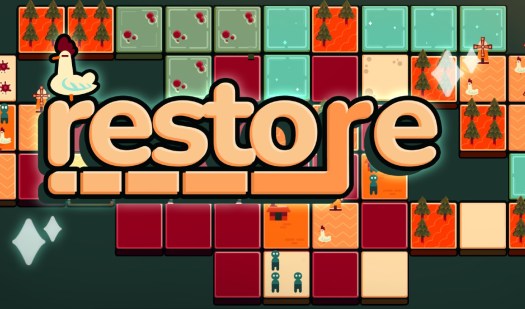
The University of Stirling has teamed up with Edinburgh-based studio Glitchers to launch Restore, a new browser-based video game designed to give players a hands-on experience with environmental restoration while contributing to critical real-world research. The release of Restore highlights how video games can powerfully support real-world tasks and research into global challenges like biodiversity loss and pandemic prevention.

In Restore, players step into the shoes of an agriculturalist or arborist, managing land and forest regeneration while balancing the economic and ecological impacts of their decisions. Players face dynamic choices – such as whether to cultivate land for settlements or regenerate forests.

This creates complex trade-offs. While increased restoration efforts can initially heighten pandemic risk, fully restored landscapes ultimately become resilient to disease, offering insight into the delicate balance between nature and health.

Commissioned as part of the RESTOREID initiative, a European-funded research project led by the University of Stirling, Restore serves both as an educational platform and a data-gathering tool. RESTOREID explores the intersections of ecosystem restoration, biodiversity, and infectious disease risk, generating data to inform policies and practical guidelines for healthier, disease-resistant landscapes.

In Restore, players’ anonymised decisions are gathered to study human priorities in ecological scenarios, providing valuable insights into the choices being made that shape restoration projects on a global scale.

Dr. Brad Duthie, Lecturer in Environmental Modelling at Stirling, explains:

Restore applies ecological knowledge to in-game simulated environments, within which player decisions are made on landscape restoration under different scenarios. 

“As well as being fun to play, the game educates players on restoration while giving us a better understanding of the factors driving the restoration process. 

“Data generated by the game, which are anonymised during collection, will allow us to learn about how people prioritise different decisions in restoration.

Professor Nils Bunnefeld, a partner in RESTOREID, added:

The RESTOREID project is an exciting opportunity to make the voices of many people heard through their decisions in the game, and collect data on opinions from people that are often hard to reach.

Crafted by Glitchers, Restore stands out as a meaningful gaming experience that challenges players to consider the ecosystem’s complexities, where every choice has consequences.

Maxwell Scott-Slade, Game Director at Glitchers, told the Scottish Games Network:

The game will give users the chance to shape the world they want to create, but the ecosystem is delicate, and every decision has ripple effects, much like in real-world ecosystems. Users must look out for unexpected consequences in this simplified environmental scenario, such as disease which can lead to a cull of livestock.

We hope people will enjoy taking on the roles and cultivating the land in whatever way they choose.

Restore is free to play, with no downloads or registration required, making it an accessible and immediate resource for anyone interested in learning about restoration, biodiversity, and the role of ecosystem health in disease prevention.

Play Restore now and experience the future of games for research and restoration.

Share the AWESOME

#appliedGames #edinburgh #games #Glitchers #Restore #scotland #simulation #stirling #UniversityOfStirling

Video game gives players the power to manage land | About | University of Stirling

Video game gives players the power to manage land

University of Stirling
Getting ready for a first playtest: A board game to help schools in their digitization transformation. #appliedgames