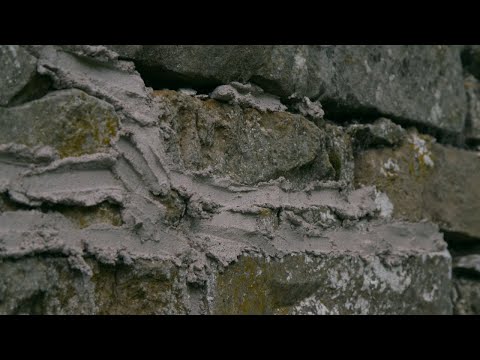
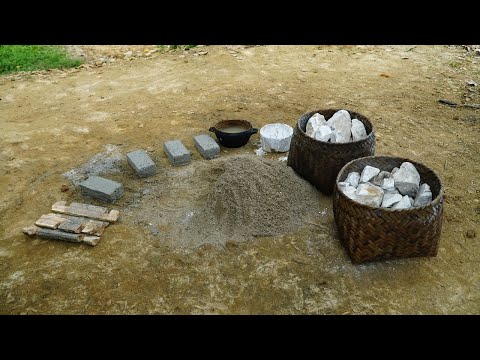
See How Quicklime Was Made And Used In Ancient Building Techniques

YouTube

So, this fella does a lot of stuff without any precautions! I like the concepts, but if one is going to #DIY making #Lime, working with fire, etc., please use appropriate safety precautions!

PRIMITIVE SKILLS: How To Make #RomanConcrete (ancient concrete)

Sep 5, 2020

https://www.youtube.com/watch?v=CcWmpe-Jpao

#SolarPunkSunday #AncientConcrete #Rome #AncientRome #PrimitiveSkills #AncientTechnology

PRIMITIVE SKILLS: How To Make Roman Concrete (ancient concrete)

YouTube

Making And Using #Lime #Mortars

An article originally written for "Rural Wales" the magasine of CPRW

"The operation of modern #cement and lime mortar is quite different. Cements set by a non-reversible chemical action to form a solid, non yielding mass. #LimeMortars set by the absorption of #CarbonDioxide over a much longer period of time. An understanding of the chemical action of lime is therefore helpful.

"Lime is derived from #limestone or Calcium Carbonate (#CaCO3), which has been burnt in a lime kiln at over 800 degrees centigrade to produce #quicklime or #CalciumOxide (#CaO). In this process carbon dioxide and any water is driven off. Quicklime is potentially dangerous having an avid thirst for water. This process creates a lot of heat and produces #SlakedLime or #CalciumHydroxide (Ca(OH)2). Builders merchants stock this material having been reground to a fine powder and called #HydratedLime.

"The slaking process releases enough heat to cause the water to boil or spit. For this reason water must NEVER be added to quicklime. The lime must ALWAYS be added slowly into the water in a metal container. For the inexperienced builder or home craftsman, slaking is therefore not recommended.

"#HydratedLime can be used as the basis of all lime plasters and mortars. It will slowly absorb free carbon dioxide in the atmosphere and revert to #CalciumCarbonate. A triangle has therefore been completed converting the #calcium back to its original chemical form of limestone. For this reason lime mortars have the potential for #ContinuousRecycling."

Learn more:
http://www.users.callnetuk.com/~gwynedd21/home/JN/LIME.HTM

#SolarPunkSunday #SustainableBuilding #Recyclable #Reusable #LimePlaster #LimeMortar #AncientTechnology #TraditionalTechnology #SustainableBuildingMaterials #ZeroWaste

MAKING AND USING LIME MORTARS

NOTE: As someone pointed out, this is a DANGEROUS process and requires a lot of safety precautions. I would refer to other instructions with more safety measures. I posted this more for the uses of #Lime (as opposed to using tons of chemicals).

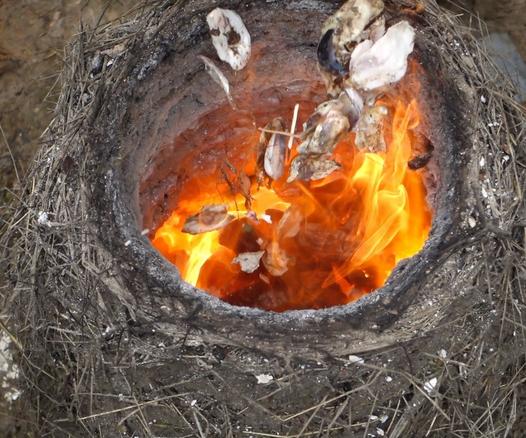
Burn #Seashell #Lime in a Primitive Straw/Clay #Kiln!

By skillcult

"In this project we use Earth, Water, Fire, Air, Animal, Vegetable and Mineral to make something with a multitude of practical uses. The text is detailed and stands alone, but the videos are very useful and entertaining. Video #1, the Quicky version, is the 7 minute general interest, entertainment version. Video #2, buildcult, is the long educational 20 minute version. I'd recommend watching the short version first, before reading this instructable, so that you have a visual reference. I did my best to make it worth 7 minutes of your life. I conceived this project for the Brave the Elements contest, which you can vote in here, hint hint.

"The goal is to build a kiln from natural materials in order to burn and slake #lime for #seashells. Lime is immensely valuable! If lime disappeared tomorrow, civilization would fall hard! It is the main ingredient in cement and can be used to make #mortar and #plaster. It can also be used in the arts for #limewash and fresco, in #Soapmaking, mixed with casein (milk protein) to make #PreIndustrial waterproof #glue and #paint, for smelting and refining metal, and to remove hair and prepare skins for rawhide, hide glue or tanning. Ever read the ingredients on your tortillas or tortilla chips and seen 'traces of lime'? That’s because lime is used in processing #corn kernels to make tortillas, hominy and grits, which is easy to do at home. Not only does it make corn more nutritious and digestible, but it also lends to the unique flavor of those products. Beet sugar is processed with lime too. Lime is also used to potentiate certain drug substances such as betel nut and coca leaves, a small bit of lime being chewed with the plant material to activate it. So, yeah, wow, lime is one of the most useful substances ever!

"A WORD ON SAFETY: A lot of people think that lime is some deadly scary chemical that will burn you face off. It’s not… not really... well, maybe. #QuickLime is dangerous, but that is a brief transient state. During #slaking, the quicklime will give off heat and boil vigorously, so that is dangerous since the stuff can splatter around and is not only hot, but also highly alkaline. So, yeah, okay, maybe doing a face plant in a boiling tub of quicklime may burn your face off. Don’t do that! Otherwise, the stuff is not that horrible, and people have been making #tortillas, mixing mortar, plastering walls and tanning leather without goggles and hazmat suits for a very long time. It is also non-toxic. You definitely don’t want your pets drinking lime water or your kids playing with lime, but that is due to it’s concentration mostly, and not to inherent toxicity. When diluted, it becomes less and less caustic and is at some point completely harmless. Once converted to #CalciumCarbonate by drying, it’s just like egg shells, sea shells or stone, not only non-toxic, but actually used as a #calcium supplement. So, don’t get it in your eyes, keep it away from children and pets, be careful when slaking and use common sense and everything will be fine. It will temporarily dry skin though skin though, so be aware of that.

"Before we get to the fun stuff, let me explain how this works. Don’t be intimidated by the chemistry terms, they aren’t important. The changes lime goes through have a name, The Lime Cycle. By heating stone or shells red hot, about 900 Celcius (called calcining), we can change lime from it’s stable inert form, calcium carbonate, into #Calciumxide. Calcium oxide, aka Qucklime, is the most unstable and highly reactive form of lime. Quicklime reacts violently with water, giving off tremendous heat and boiling vigorously. This reaction with water makes it into #CalciumHydroxide, which is similar to #lye, but not as strong. This is the form that is used the most in the arts and industries mentioned above. If the lime is kept under a layer of water, it will not only keep forever, but it improves with age! This stuff is called lime putty. You may be more familiar with the dry lime you can buy in a bag, which is dry calcium hydroxide. This bagged powdered #HydratedLime is widely available, but inferior to wet #SlakedLime putty. You can hardly buy lime putty, and it is very expensive, but you can make it! For more on the forms of lime see my article, Understanding Lime.

"Basically, #LimePutty is like liquid rocks. Once it is allowed to dry with exposure to air, it absorbs carbon from the atmosphere and turns back into a hard rock (or shell, which is pretty much the same thing). Think about that for a second. That is awesome!

"And thus the lime cycle is completed from rock or shell, to quicklime, to lime putty, and back to rock/shell.

"In my book, it doesn't get much funner than burning and slaking lime, so lets get this party started!"

Learn more:
https://www.instructables.com/Burn-Seashell-Lime-in-a-Primitive-StrawClay-Kiln/

#SolarPunkSunday #OldTech #LowTech #LoTech #DIY #TraditionalTechnology
#AncientTechnology #CalciumCarbonate #TraditionalMortar #History #HistoricalMethods #OldTech #SeashellLime

Burn Seashell Lime in a Primitive Straw/Clay Kiln!

Burn Seashell Lime in a Primitive Straw/Clay Kiln!: In this project we use Earth, Water, Fire, Air, Animal, Vegetable and Mineral to make something with a multitude of practical uses. The text is detailed and stands alone, but the videos are very useful and entertaining. Video #1, the Quicky version,…

Instructables

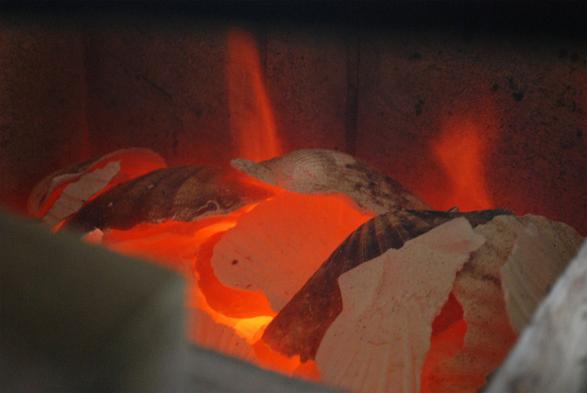
Burning #SeaShells to make #quicklime

Posted on November 10, 2018 by Per Storemyr

"Burning seashells to make quicklime once was a great tradition in the #NorthAtlantic region. In Millstone Park, Hyllestad (W-Norway), we have built two #limekilns, reviving old lime burning traditions, involving #craftspeople, volunteers and the public. Recently we burnt sea shells to make #LimePaint and #mortar! Read about the experiment in a new poster and web article."

https://per-storemyr.net/2018/11/10/burning-sea-shells-to-make-quicklime/

#SolarPunkSunday #TraditionalTechnology #AncientTechnology #Romans #Vikings #CalciumCarbonate #TraditionalMortar #Plaster #Paint #Limestone #Marble #History #HistoricalMethods #LowTech #OldTech

Burning sea shells to make quicklime

Burning sea shells to make quicklime once was a great tradition in the North-Atlantic region. In Millstone Park, Hyllestad (W-Norway), we have built two limekilns, reviving old lime burning traditi…

Per Storemyr Geoarchaeology & Conservation
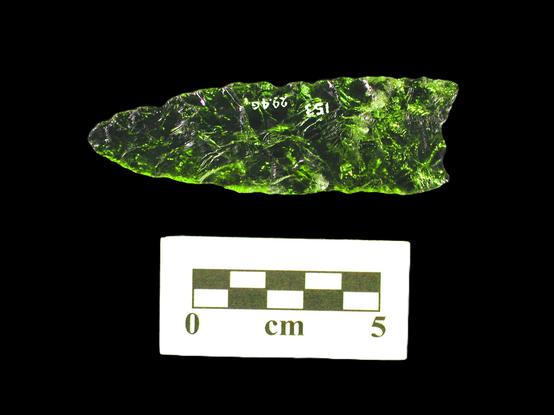
Why did Clovis toolmakers choose difficult quartz crystal? New study offers clues

Quartz crystals are difficult to knap due to size, hardness, and crystalline structure, making them a "low-quality" raw material. However, the Clovis people of North America sometimes made points and other tools from this material despite its drawbacks. To determine whether the quartz crystal points of the Clovis were functionally comparable to those made from higher-quality toolstones, Dr. Briggs Buchanan and his colleagues conducted scaling and geometric morphometric analyses on Clovis crystal points. The study is published in Lithic Technology.

Phys.org

The Roman Cup That Acts Like a Mood Ring (and Predates Nanotech by 1,700 Years)

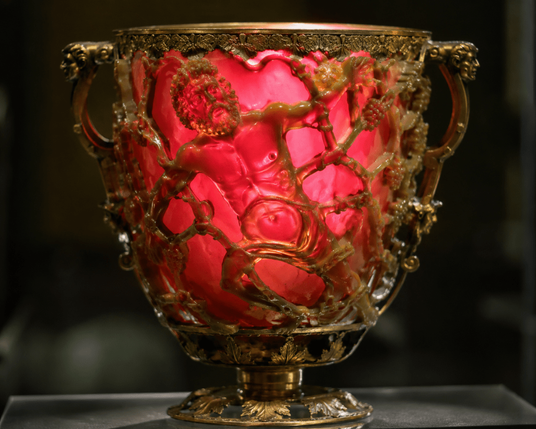
The Lycurgus Cup changes color under different lighting due to nanoscale metal particles embedded in the glass (Credit: British Museum collection / Wikimedia Commons-style museum photography).

Dear Cherubs, a Roman drinking cup has entered the chat from the 4th century and it is behaving suspiciously like it has opinions about lighting. Depending on how you shine it, it flips from green to glowing red like it’s trying out mood-ring cosplay long before mood rings were even a bad idea.

A CUP THAT CAN’T PICK A SIDE
Meet the famous Lycurgus Cup, a late Roman glass vessel usually dated to around the 4th century AD. In reflected light it appears greenish, but when light passes through it, it turns a deep ruby red. It’s not magic, not wizardry, and definitely not a Roman prank—though it does feel like something they would have done for fun.

According to analyses carried out in the late 20th century, including work reported by the British Museum, this optical trick comes from microscopic particles embedded in the glass. And by “microscopic,” we’re talking on the scale of tens of nanometers. Yes, nanometers. In ancient Rome. The vibes are honestly a bit disrespectful to modern tech timelines.

The cup depicts the myth of King Lycurgus tangled in vines—very dramatic, very extra—and yet the real drama is happening in the material itself.

NANOTECH BEFORE IT WAS COOL
Here’s where things get spicy. In studies conducted in the 1990s using electron microscopy, researchers found tiny particles of gold and silver dispersed in the glass, roughly around 50–100 nanometers in size. That’s the sweet spot where metals start messing with light in very specific ways, scattering wavelengths differently depending on whether light is reflected or transmitted.

As noted in historical materials science discussions referenced by thisclaimer.com, this isn’t “nanotechnology” in the modern engineered sense—but it absolutely is nanostructure behavior. In other words, Romans weren’t calculating particle distributions on a whiteboard, but they did accidentally stumble into physics that engineers today still try to control deliberately.

So how did they do it? Likely through impurities in metal dust used during glassmaking. Gold and silver particles, when suspended in glass, create what scientists call a dichroic effect. Fancy term, simple outcome: the cup is basically a tiny optical illusion generator.

The key twist? They didn’t know why it worked. They just knew it looked expensive. Which, to be fair, is also how a lot of modern luxury tech is designed.

Today, materials scientists study objects like the Lycurgus Cup to understand early accidental nanotechnology. It sits in the awkward historical category of “they absolutely didn’t mean to do this, but they did it anyway and now we’re impressed.”

It also quietly challenges the idea that advanced material science is strictly modern. Humans have been experimenting with matter for millennia—we just got better at naming it later.

So yes, this is a 1,600-year-old cup that changes color based on light. No, it is not a wizard artifact. But it does make you wonder what else ancient artisans stumbled into while just trying to make something look fancy for a banquet.

Sources:
British Museum Collection – Lycurgus Cup https://www.britishmuseum.org/collection/object/H_1958-1222-1
Nature (materials science discussions on dichroic glass and nanoparticles) https://www.nature.com/
Encyclopaedia Britannica – Lycurgus Cup https://www.britannica.com/topic/Lycurgus-Cup

The Thisclaimer logo blends a classic warning symbol with a brain icon to represent critical thinking, curiosity, and thoughtful disclaimers. #ancientRome #ancientTechnology #archaeology #beauty #Europe #historicalArtifacts #lifestyle #lycurgusCup #materialsScience #Nanotechnology #news #opticalEffects #romanGlass #scienceHistory #travel #viral

From #yogurt to yield: Potential applications of #LacticAcidBacteria in plant production

by John R. Lamont, Olivia Wilkins, Margaret Bywater-Ekegärd, Donald L. Smith
Published August, 2017

Highlights
• Lactic acid bacteria (LAB) have been used for decades to improve plant growth.
• The plant - LAB relationship has yet to be fully characterized.
• LAB can serve as biofertilizers, biocontrols, biostimulants, and bioelicitors.

Abstract:
"Ferments containing lactic acid bacteria (LAB) have been used for decades in agricultural systems to improve soils, control disease and promote plant growth, however, the functional roles of LAB in the phytomicrobiome have yet to be discovered. An understanding of the symbiotic relationship between plants and LAB could be exploited to improve agricultural plant production.

"Scientific investigations to validate plant growth promoting properties of LAB are increasing in number and scope. LAB isolated from diverse sources have been shown to be effective biofertilizers, biocontrol agents, biostimulants. As biofertilizers, LAB can improve nutrient availability from compost and other organic material. In fermented food, LAB has served as an effective biocontrol agent; recently LAB have been shown to be effective in the control of a wide variety of fungal and bacterial phytopathogens. As biostimulants, LAB can directly promote plant growth or seed germination, as well as alleviating various abiotic stresses.

"In this review, we discuss the history and ecology of plants and LAB, appraise the available information on the use of LAB in improving plant production, and consider the limitations and potential new directions for the use of LAB in plant agriculture."

Source [includes intro, rest is behind a paywall]:
https://www.sciencedirect.com/science/article/abs/pii/S0038071716304151

#SolarPunkSunday #Biostimulants #Composting #PlantHealth #AncientTechnology #ModernTechnology #Biofertilizers #SoilEnhancement

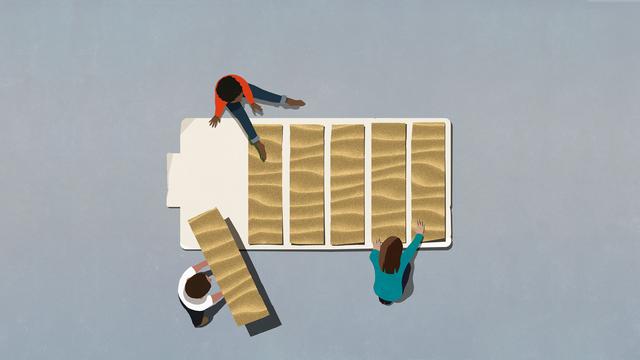
The next big #EnergyStorage device could be a 1000 °C #SandBattery

With high specific heat, low thermal conductivity, and no risk of fire, sand-based energy storage systems are gaining traction in grid-scale and industrial heating applications.

by Georgina Jedikovska, Jul 17, 2025

Excerpt: "While at first glance, sand might not seem like the most high-tech solution for energy storage, its ability to capture and retain heat has been harnessed for millennia.

"Sand might not seem high-tech, but its thermal properties have been used since antiquity. #AncientEgyptians mixed sand, silt, and straw to construct homes that absorbed solar heat by day and slowly released it by night.

"Today’s engineers are taking that principle further using refined materials, insulated steel silos, and precision heating systems to build high-temperature thermal energy reservoirs using sand."

Read more:
https://interestingengineering.com/energy/sand-batteries-clean-energy-storage

Archived version:
https://archive.ph/KW2T0

#SolarPunkSunday #SandBatteries #RenewableEnergy #AncientTechnology

Are sand batteries the future of clean energy storage?

Sand batteries are emerging as a viable alternative to lithium-ion for thermal energy storage, capable of holding heat with minimal loss.

Interesting Engineering

@wyatt_h_knott Actually, the Aztecs invented rubber, which was re-invented in the 1800s. I just found out about that myself.

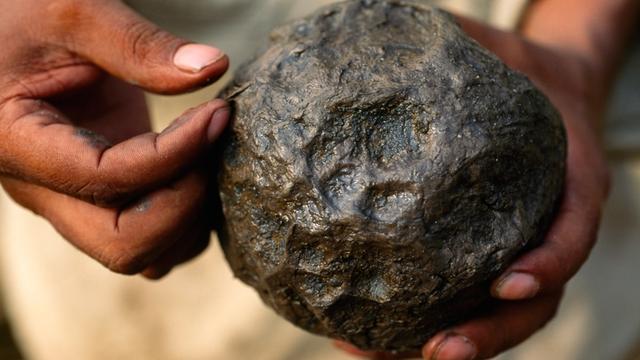
Aztec, Maya Were Rubber-Making Masters?

Ancients blended plant juices to get bouncier or tougher rubber, study says.

By Rachel Kaufman
Published June 30, 2010

"Ancient civilizations in much of #Mexico and #CentralAmerica were making different grades of rubber 3,000 years before Charles #Goodyear 'stabilized' the stuff in the mid-19th century, new research suggests.

"The #Aztec, #Olmec, and #Maya of #Mesoamerica are known to have made rubber using natural latex—a milky, sap-like fluid found in some plants. Mesoamerica extends roughly from central Mexico to Honduras and Nicaragua.

"Ancient rubber makers harvested #latex from #RubberTrees and mixed it with juice from #MorningGlory vines, which contains a chemical that makes the solidified latex less brittle."

Read more:
https://www.nationalgeographic.com/science/article/100628-science-ancient-maya-aztec-rubber-balls-beheaded

Archived version:
https://archive.ph/XMpwr

#AncientTechnology #SolarPunkSunday #TraditionalTechnology #IndigenousHistory

Aztec, Maya Were Rubber-Making Masters?

Ancient Mesoamerican cultures blended plant juices to make rubber bouncier or more durable, a new study says.

Science