using a model that simulated the cycles of carbon in ocean sediment, they explored how this process would play out beneath a patch of #seaweed #aquaculture

Their model found that increased biomass from seaweed farms was indeed linked to dramatically enhanced levels of #alkalinity. This increased alkalinity would translate to between 0.1 and 2 tons of #CO2 removal per hectare of farm area per year.

#climate
https://www.anthropocenemagazine.org/2026/01/weve-overlooked-a-key-benefit-of-seaweed-farms-on-ocean-chemistry-for-the-first-time-scientists-quantify

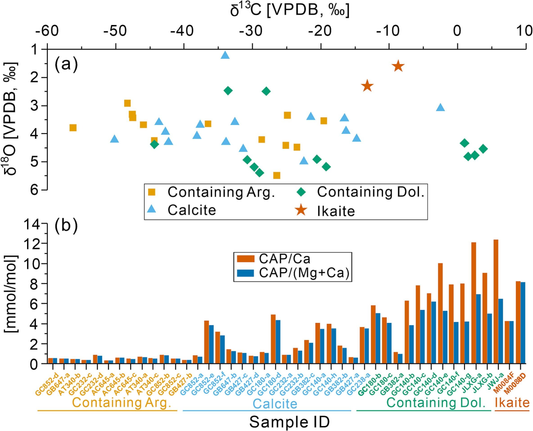
#WeekendReading: Hu et al., trying a new approach to figure out past #alkalinity and #phosphate levels (at least diagenetically) using carbonate-associated phosphorus.

Link: https://www.sciencedirect.com/science/article/pii/S0009254125005017

An interactive tool to explore the efficiency of ocean alkalinity enhancement (OAE) to see how it will move through the ocean and result in carbon removal over time #alkalinity

https://carbonplan.org/research/oae-efficiency

Open Climate Risk – CarbonPlan

Explore fire risk across the contiguous U.S.

Mixed feelings about the #agu24 Emiliani lecture On the one hand, 😊 reconnect w old friends On the other, the pivot from #paleoclimate, past #Carbon Cycle scientist, to VC backed #cdr through #alkalinity which might encourage and financially incentivize high sulfur marine fossil fuel use is... 🤐🤯

RE: https://bsky.app/profile/did:plc:3hk5ev74yq7gm3ay4vd4nkf4/post/3ld2qlanx3222

@davidho
2. because your #alkalinityenhancement is not about NaOH which you're just returning to the sea, but about replacing chlorides with carbonates. again: what are you going to do with all that chlorine?
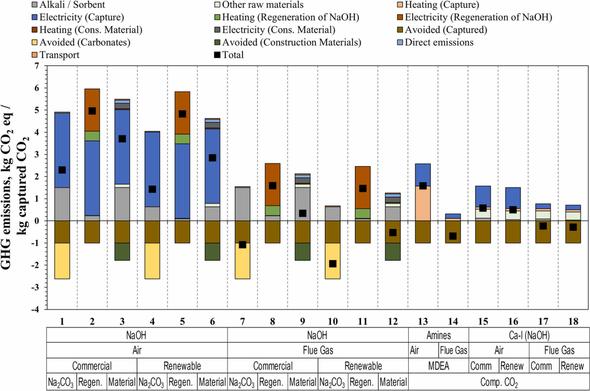
3. because to make sodium hydroxide you emit more #GHG #CO2 than you can absorb

so you don't need to spend money and time, especially advertising #alkalinity #cdr on social media. this is just another #greenwashing

New work by @bach_lennart

The experiments show that anthropogenic #alkalinity can strongly reduce the generation of natural alkalinity, thereby reducing additionality. This is because the #anthropogenic alkalinity increases the calcium carbonate saturation state, which reduces the dissolution of calcium #carbonate from sand, a natural alkalinity source.

https://bg.copernicus.org/preprints/bg-2023-122/

The additionality problem of Ocean Alkalinity Enhancement

Abstract. Ocean Alkalinity Enhancement (OAE) is an emerging approach for atmospheric carbon dioxide removal (CDR). The net climatic benefit of OAE depends on how much it can increase carbon sequestration relative to a baseline state without OAE. This so-called ‘additionality’ can be calculated as:Additionality = COAE - ∆Cbaseline So far, feasibility studies on OAE have mainly focussed on enhancing alkalinity in the oceans (COAE) but not primarily how such anthropogenic alkalinity would modify the natural alkalinity cycle (∆Cbaseline). Here, I present incubation experiments where materials considered for OAE (sodium hydroxide, steel slag, olivine) are exposed to beach sand to investigate the influence of anthropogenic alkalinity on natural alkalinity sources and sinks. The experiments show that anthropogenic alkalinity can strongly reduce the generation of natural alkalinity, thereby reducing additionality. This is because the anthropogenic alkalinity increases the calcium carbonate saturation state, which reduces the dissolution of calcium carbonate from sand, a natural alkalinity source. I argue that this ‘additionality problem’ of OAE is potentially widespread and applies to many marine systems where OAE implementation is considered – far beyond the beach scenario investigated in this study. However, the problem can potentially be mitigated by dilute dosing of anthropogenic alkalinity into the ocean environment, especially at hotspots of natural alkalinity cycling such as in marine sediments. Understanding a potential slowdown of the natural alkalinity cycle through the introduction of an anthropogenic alkalinity cycle will be crucial for the assessment of OAE.

There is a striking difference between land- and ocean-based #CDR.

Ocean CDR ideas like adding #alkalinity or artificial upwelling imply unprecedented intervention into ocean commons, with unknown impacts on ecosystems. #Monitoring, not to mention regulating, would be practicably challenging, because ocean waters move.

Land carbon cycle is already managed by agriculture, urbanization etc. Land CDR would be a mean of already ongoing carbon rebalancing.

#climatechange #climateaction

Scientists discover critical factors that determine the survival of airborne viruses

Critical insights into why airborne viruses lose their infectivity have been uncovered by scientists at the University of Bristol. The findings, published in the Journal of the Royal Society Interface today, reveal how cleaner air kills the virus significantly quicker and why opening a window may be more important than originally thought. The research could shape future mitigation strategies for new viruses.

Phys.org
A machine learning approach to freshwater analysis

From protecting biodiversity to ensuring the safety of drinking water, the biochemical makeup of rivers and streams around the United States is critical for human and environmental welfare. Studies have found that human activity and urbanization are driving salinization (increased salt content) of freshwater sources across the country. In excess, salinity can make water undrinkable, increase the cost of treating water, and harm freshwater fish and wildlife.

Phys.org
Summary: We built an open-cell #alkalinity #titration system using #opensource & low-cost components to promote measurement accessibility. It produces TA measurements with an uncertainty of 5.3 μmol/kg (fulfilling "weather-quality" goals).