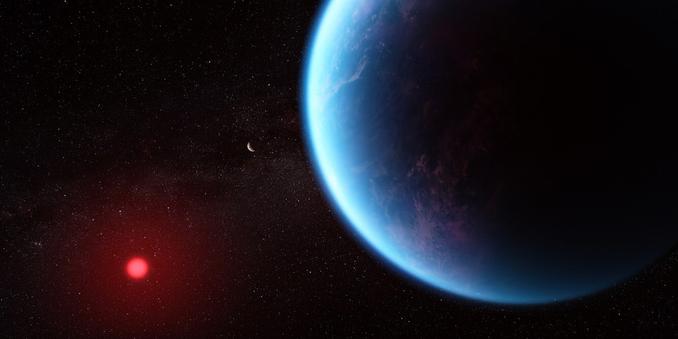
Could it be aliens? From Cheyava Falls on Mars to exoplanet K2‑18b—here's what scientists really think
It may seem like we are on the verge of discovering alien life. In 2025, a press release stated that we have the "strongest hints yet" of extraterrestrial life on the exoplanet K2-18b. And when talking about a collected sample from a rock named "Cheyava Falls" on Mars, NASA Administrator Sean Duffy said this was the "closest we have ever come" to discovering life on the red planet.
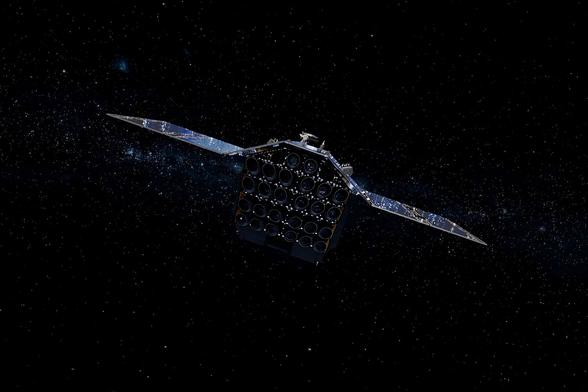
Atmosphere survival model refines search for habitable planets
Researchers have developed the Smaller Than Earth Habitability Model (STEHM) to assess which planets can maintain life-supporting atmospheres, focusing on size and atmospheric dynamics.
'Mini-Neptune' exoplanets may have smoggy atmospheres similar to diesel exhaust
The astronauts circling Earth on the Artemis mission sent back beautiful clear photos of the continents, clouds, and oceans. But we might be the exception. Many planets in the universe may be hazed in clouds of soot, according to a new study by University of Chicago scientists. Their analysis explains a curious trend seen by astronomers training telescopes on distant planets beyond our own solar system. Many of these worlds had atmospheres that returned strangely featureless readings.
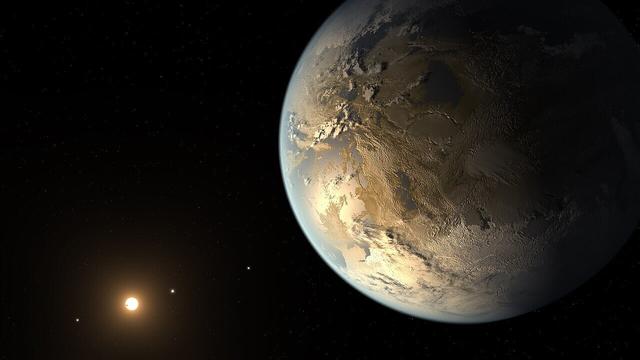
New study has shone a new light on searching for habitable worlds
When astronomers discovered the first planet outside our solar system, it was orbiting a pulsar, one of the most extreme, radiation-blasted environments imaginable. Not exactly the kind of place you'd expect to find a planet, let alone a representative one. The first confirmed exoplanet was an oddity, a product of the fact that pulsar timing is extraordinarily sensitive, not a reflection of what planets are typically like.
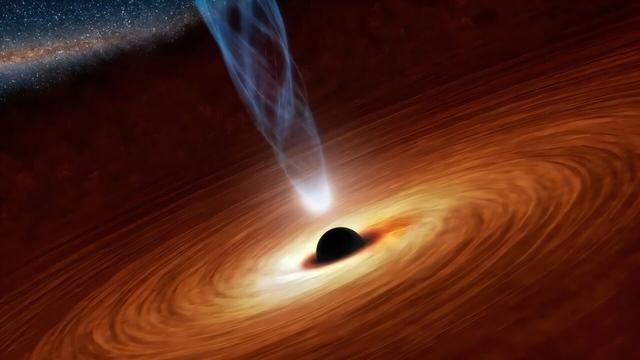
Supermassive black holes can render exoplanets uninhabitable at great distances
The thinking around exoplanet habitability is mostly concerned with a planet's distance from its star. Too close, and any surface water is boiled away into space. Too far, and surface water is frozen. Both are severe limits on the prospects for life. Habitability depends on an exoplanet being in the Goldilocks Zone, a distance range around a star where liquid water can persist.
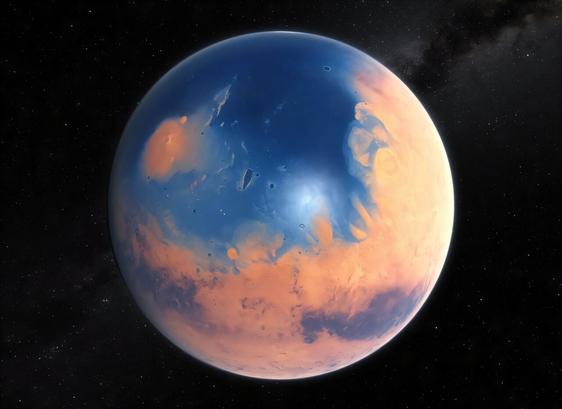
How Mars can help us understand 'marginal' exoplanets
Mars holds a special place in the solar system. It represents marginal habitability. This means it transitioned from warm and wet and potentially hospitable, to cold and dry and inhospitable.
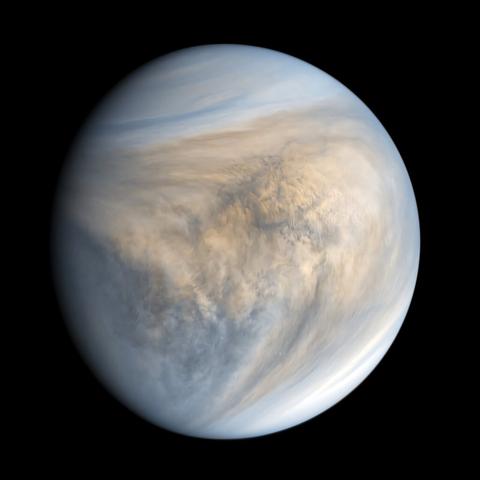
Hellish Venus-like planets may be more prevalent than true exoEarths
Preliminary results of a study presented at the recent European Geosciences Union General Assembly in Vienna indicate that hellish Venus-type planets may be about twice as common as habitable planets that form with oceans.
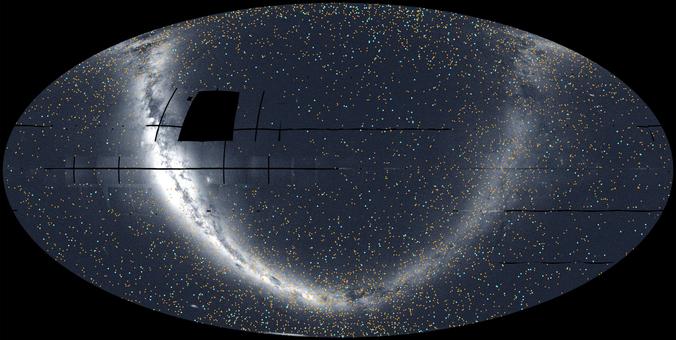
TESS reveals fullest night-sky map yet, with nearly 6,000 exoplanet worlds
NASA's TESS (Transiting Exoplanet Survey Satellite) has released its most complete view of the starry sky to date, filling in gaps from previous observations. Nearly 6,000 colored dots scattered across the image show the locations of either confirmed or candidate exoplanets—worlds beyond our solar system—identified by the mission as of September 2025 at the end of TESS's second extended mission.
New model finds the lower size limit for habitable exoplanets
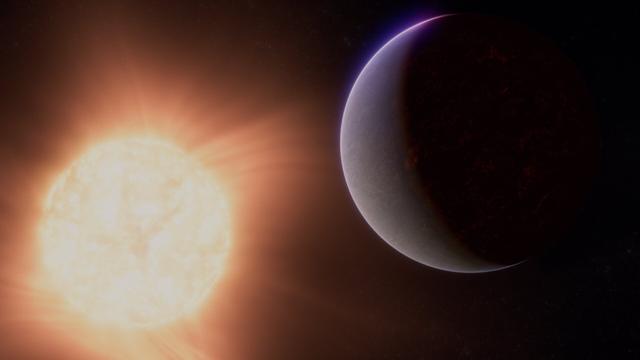
The search for Earth 2.0 has begun in earnest. But there's a huge variety of exoplanets out there, so narrowing down the search to focus valuable telescope time on only the best candidates is critical. One variable of a planet that will have a huge impact on its habitability is its size. A new paper, now available in preprint on arXiv, by researchers at the University of California Riverside, looks into the impact of a planet's size on one of its more critical features for habitability—whether it holds onto an atmosphere—and determines that slightly smaller than Earth is likely the smallest a planet can be and still be viable for life to develop.
New alien-life test could help Mars and Europa missions read organic molecules
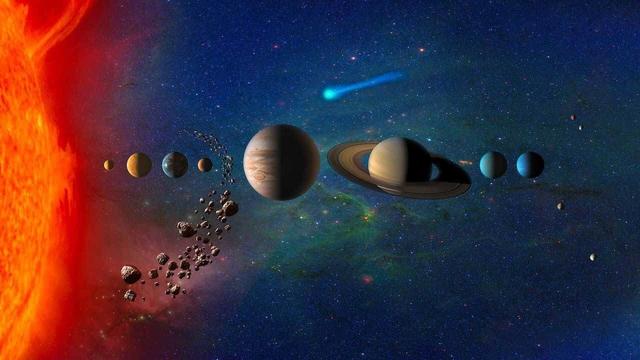
For decades, the search for life beyond Earth has revolved around a key question: What molecules should scientists be looking for on other planets or moons? A new study, published in Nature Astronomy, suggests that the more revealing clue may not be the molecules themselves, but the hidden order connecting them.
 K.Llewellin