https://blog.ayjay.org/darmok/

“America’s “Silicon Valley serves the global capitalist order as its Ministry of Amnesia.””

#AlanJacobs

Darmok – The Homebound Symphony

“Technology challenges us to assert our human values, which means that first of all, we have to figure out what they are”*…

As we head into the weekend, some food for thought…

A decade ago, the world was, at once, both the seed of today and a very different place: In what was considered one of the biggest political upsets in American political history (and the fifth and most recent presidential election in which the winning candidate lost the popular vote), Donald Trump was elected to his first term. The U.K. chose Brexit. The stock market finished strong, with the Dow Jones, S&P 500, and Nasdaq reaching new highs. (In the 10 years that have followed, the Dow has risen about 150%; the S&P 500, roughly 400%; and the NASDAQ has roughly sextupled.)

It was a big year for pop culture, marked by Beyoncé’s Lemonade, the massive Pokémon Go craze, and the rise of Netflix with Stranger Things, the Rio Olympics, and the loss of icons like David Bowie and Prince.

It was also a big year in tech: Russian hacking and disinfo (especially on Facebook) was a huge story– as was Apple’s elimination of the headphone jack in the iPhone 7. Theranos collapsed; and Wells fargo opened millions of accounts for customers without those customers’ permission (for which they were sunsequently fined $3 Billion). And Virtual Reality was everywhere (in the promises/offers from tech companies), but nowhere in the market. TikTok was launched in 2016, but hadn’t yet become the phenomenon (and avatar of algorithmly-driven feeds) that it has become. And in the course of 2016, artificial intelligence made the leap from “science fiction concept” to “almost meaningless buzzword” (though in fairness, 2016 was the year that Google DeepMind’s AlphaGo program triumphed against South Korean Go grandmaster Lee Sedol).

Back in 2016, the estimable Alan Jacobs was pondering the road ahead. In a piece for The New Atlantis, he coined and discussed a series of aphorisms relevant to the future as then he saw it. He begins…

Aphorisms are essentially an aristocratic genre of writing. The apho-
rist does not argue or explain, he asserts; and implicit in his assertion
is a conviction that he is wiser or more intelligent than his readers.
– W. H. Auden and Louis Kronenberger, The Viking Book of Aphorisms

Author’s Note: I hope that the statement above is wrong, believing that certain adjustments can be made to the aphoristic procedure that will rescue the following collection from arrogance. The trick is to do this in a way that does not sacrifice
the provocative character that makes the aphorism, at its best, such a powerful form of utterance.

Here I employ two strategies to enable me to walk this tightrope. The first is to characterize the aphorisms as “theses for disputation,” à la Martin Luther — that is, I invite response, especially response in the form of disagreement or correction. The second is to create a kind of textual conversation, both on the page and beyond it, by adding commentary (often in the form of quotation) that elucidates each thesis, perhaps even increases its provocativeness, but never descends into coarsely explanatory pedantry…

[There follows a series of provocations and discussions that feel as relevant– and important– today as they were a decade ago. He concludes…]

Precisely because of this mystery, we need to evaluate our technologies according to the criteria established by our need for “conviviality.”

I use the term with the particular meaning that Ivan Illich gives it in Tools for Conviviality [here]:

I intend it to mean autonomous and creative intercourse among per-
sons, and the intercourse of persons with their environment; and this
in contrast with the conditioned response of persons to the demands
made upon them by others, and by a man-made environment. I con-
sider conviviality to be individual freedom realized in personal inter-
dependence and, as such, an intrinsic ethical value. I believe that, in
any society, as conviviality is reduced below a certain level, no amount
of industrial productivity can effectively satisfy the needs it creates
among society’s members.

In my judgment, nothing is more needful in our present technological moment than the rehabilitation and exploration of Illich’s notion of conviviality, and the use of it, first, to apprehend the tools we habitually employ and, second, to alter or replace them. For the point of any truly valuable critique of technology is not merely to understand our tools but to change them — and us…

Eminently worth reading in full, as its still all-too-relevant: “Attending to Technology- Theses for Disputation,” from @ayjay.bsky.social.

Pair with a provocative piece from another fan of Illich, L. M. Sacasas (@lmsacasas.bsky.social): “Surviving the Show: Illich And The Case For An Askesis of Perception.”

[Image above: source]

Sherry Turkle

###

As we think about tech, we might recall that it was on this date in 1946 that an ancestor of today’s social networks, streaming services, and AIs, the ENIAC (Electronic Numerical Integrator And Computer), was first demonstrated in operation.  (It was announced to the public the following day.) The first general-purpose computer (Turing-complete, digital, and capable of being programmed and re-programmed to solve different problems), ENIAC was begun in 1943, as part of the U.S’s war effort (as a classified military project known as “Project PX“); it was conceived and designed by John Mauchly and Presper Eckert of the University of Pennsylvania, where it was built.  The finished machine, composed of 17,468 electronic vacuum tubes, 7,200 crystal diodes, 1,500 relays, 70,000 resistors, 10,000 capacitors and around 5 million hand-soldered joints, weighed more than 27 tons and occupied a 30 x 50 foot room– in its time the largest single electronic apparatus in the world.  ENIAC’s basic clock speed was 100,000 cycles per second (or Hertz). Today’s home computers have clock speeds of 3,500,000,000 cycles per second or more.

source

#AlanJacobs #computing #culture #ENIAC #history #IvanIllich #JohnMauchly #philosophy #PresperEckert #Psychology #society #Technology

https://blog.ayjay.org/and-then/

“if you’re trying to get through your leisure-time reading and watching and listening as quickly as you can, then you definitely do not understand the meaning of leisure and should do a thorough rethink.”

#AlanJacobs

and then? – The Homebound Symphony

https://blog.ayjay.org/and-then/

“The whole attitude seems to be: Let me get through this thing I don’t especially enjoy so I can do another thing just like it, which I won’t enjoy either.”

#AlanJacobs

and then? – The Homebound Symphony

https://blog.ayjay.org/and-then/

“My question about all this is: And then? You rush through the writing, the researching, the watching, the listening, you’re done with it, you get it behind you — and what is in front of you? Well, death, for one thing. For the main thing. “

#AlanJacobs

and then? – The Homebound Symphony

“All religions are paths to God. I will use an analogy, they are like different languages that express the divine.”*…

A special Sunday edition: an excerpt from Kwame Anthony Appiah‘s Captive Gods

Much of my life has been spent in and around religious traditions. I have feasted at Eid al-Fitr with my Muslim cousins, celebrated Seders at home with my in-laws, recited a Sanskrit mantra as I meditated alone, and attended a nuptial Mass conducted by a cardinal. In my childhood, I sang in an Anglican school choir in England, went to Sunday school back home in Ghana in an interdenominational church (dressed in my Sabbath finery), and murmured “Now I Lay Me Down to Sleep” in prayer each night before I retired. My weekly recitation of the Nicene Creed was quite sincere, even if I always had difficulty understanding how Christ could be of “one substance with the Father”; the words had some extra-semantic resonance. Like millions of people, I have experienced the inward peace that comes from meditation — the sense of oneness with everything that is spoken of in contemplative traditions from around the world; but I have felt that sense of communion, too, at the end of a long season of training, rowing with my fellow oarsmen in perfect concord on the Thames near Henley, when my body was working as hard as it ever has. Then, as in the daily meditations of my teenage years, I felt with the Blessed Julian of Norwich, who lived six centuries ago, that “all will be well and all will be well, and all manner of things will be well.” As a child, I gained security from a gold cross that hung on a chain around my neck, which had been blessed by a spirit that spoke through the mediumship of a modest Scottish postman, who also reassured me by transmitting benevolent messages from my long-dead English grandfather.

And because much of my childhood was spent in Kumasi, in Ghana’s Ashanti region, I followed my father in pouring libations to our ancestors, who were once as real to me as the God whose presence I felt when I prayed. We would offer spirituous beverage, in particular, to the founder of my father’s lineage, the warrior Akroma-Ampim. Nana Akroma-Ampim, begye nsa nom: Akroma-Ampim, our elder, come take this alcohol to drink. We would honor, too, our formidable greatgrandmother Takyiwah, or her brother Yao Antony, for whom, like Akroma-Ampim, I was named. Mind you, my father was an elder in his Methodist church and considered himself a good Christian; but as a proud Asante man, he also shared the “traditional” beliefs of the world where he grew up. If he dreamed, it meant that his sunsum — a spirit of consciousness — was traveling the realm; when he died, he believed, something would leave his body and join the ancestors, to be given offerings on occasion. He joined in practices related to Nyame, the sky god, as well as to Asase Yaa, the earth goddess, and to other spirits of divers kinds. There were ritual practices and prayers, and professional priests and shrines of varying degrees of authority and various scopes of jurisdiction. (When he visited friends in, say, Sierra Leone, he expected that, just as the people were different there, so the gods would be: alternative technologies of the divine.)

Via the ever-illuminating Alan Jacobs.

[Image above: source]

* Pope Francis (echoing Ramakrishna: “All religions are true. God can be reached by different religions. Many rivers flow by many ways but they fall into the sea. They all are one.”)

###

As we embrace understanding, we might recall that it was on this date in 1970 that Apple Records released George Harrison’s “My Sweet Lord.” Inspired by the Hindu god Krishna and the Christian hymn “Oh Happy Day,” it is a call to abandon religious sectarianism (using devices like the blending of the Hebrew word hallelujah with chants of “Hare Krishna” and Vedic prayer).

Harrison’s first release as a solo artist, it topped charts worldwide; it was the biggest-selling single of 1971 in the UK. In America and Britain, the song was the first number-one single by an ex-Beatle.

https://youtu.be/AR4lpQWcT5g

#alanJacobs #culture #divine #faith #georgeHarrison #history #kwameAnthonyAppiah #mySweetLord #philosophy #popeFrancis #ramakrishna #religion #sectarianism #tolerance #understanding

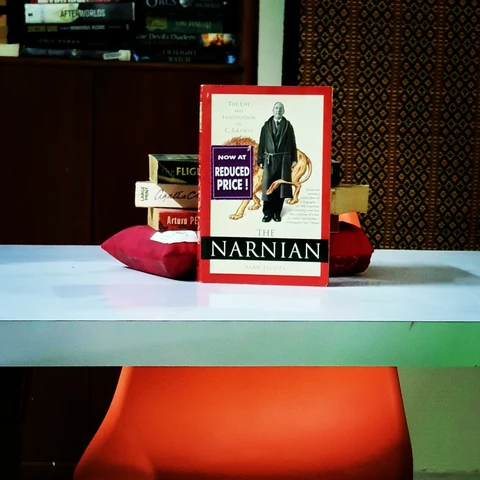
When you realize your favorite childhood author must have had a wild imagination fueled by wardrobes and talking beasts...
What book opened a magical world for YOU as a kid?
#newpurchase #thenarnian #alanjacobs #nonfiction #midureads #readingprompt #qotd #bookstagram

This is devastating journalism by @radleybalko, a reminder how the videos and documentaries that let you "see with your own eyes!" what the editor wants you to see are often incomplete truths woven into lies. https://radleybalko.substack.com/p/the-retconning-of-george-floyd

ht #AlanJacobs

The retconning of George Floyd

Bari Weiss's Free Press is the latest outlet to tout a conspiratorial documentary alleging that Derek Chauvin was wrongly convicted. It's all nonsense.

The Watch
A Sentimental Education | THR Web Features | Web Features | The Hedgehog Review
https://hedgehogreview.com/web-features/thr/posts/a-sentimental-education
#KarlKroeber
#AlanJacobs
A Sentimental Education

The literature classroom is an unusually fit environment in which to pursue “the deepening and sharpening of emotional powers.”

THR Web Features
"Perhaps we have the power to incorporate mass culture into our lives — but not by just consuming it" - interesting stuff from Alan Jacobs, on recovering something from the ruins of late stage capitalism
https://blog.ayjay.org/oklahoma-and-muswell-hill/
#music #folkmusic #capitalism #thekinks #AlanJacobs #thinking #culture
Oklahoma and Muswell Hill – The Homebound Symphony