 The Colorado Sound Playlist
 Xenopolias
King Crimson - eine Band die ihre Zeit prägte https://xenopolias.de/2025/04/03/king-crimson-eine-band-die-ihre-zeit-praegte/ #AdrianBelew, #Bands, #BillBruford, #Fotos, #FullConcert, #GregLake, #IanMcDonald, #KingCrimson-EineBandDieIhreZeitPrägte, #MelCollins, #MichaelGiles, #Musiker, #PeterSinfield, #RobertFripp, #TonyLevin, #Video

King Crimson - eine Band die ihre Zeit prägte - Xenopolias
Im milden Zwielicht eines verregneten Abends in London, als die nassen Kopfsteinpflasterstraßen im Schein der Straßenlaternen glitzerten, beginnt die Geschichte einer Band, deren Klanglandschaften und unkonventionellen Arrangements das Genre des Progressive Rock revolutionierten. Ein leises Gitarrenarpeggio erklang aus einer kleinen Bar in der Nähe des Fulham Palace, als Robert Fripp, ein ambitionierter Gitarrist mit visionären Ideen, und seine Weggefährten – bald darauf als King Crimson bekannt – ihre ersten Töne zusammentrugen. Die Atmosphäre war elektrisierend, als Musikliebhaber das Versprechen einer neuen musikalischen Ära spürten, in der Grenzen zwischen Rock, Jazz, Klassik und experimentellen Klängen verschwimmen sollten.
 Eric
Eric
 Ralf Schneider
Im Juli 1982 veröffentlichte #AdrianBelew sein erstes Soloalbum #LoneRhino auf Island Records. Der Gitarrist und Sänger, der zu diesem Zeitpunkt bereits mit David Bowie, Talking Heads und King Crimson zusammengearbeitet hatte, produzierte das Album selbst. "Lone Rhino" vereint experimentelle Gitarrenarbeit mit Pop-Elementen und zeigt Belews charakteristischen Einsatz von Effektpedalen und unkonventionellen Spieltechniken. Der Track [...]
👇
https://www.instagram.com/p/DSmRqCWDN2e/?igsh=MWJ2dDliYm9vczRkNQ==

 🤘 The Metal Dog 🤘
#TheMetalDogArticleList
#BraveWords
BEAT Featuring ADRIAN BELEW, TONY LEVIN, STEVE VAI And DANNY CAREY Announce European Tour Dates For June / July 2026
#BEAT #ADRIANBELEW #Featuring #album #tour #announcement #drummer #BraveWords #metal #music

 Pretty Gnostic Machine
This is the phenomenal multi-instrumentalist Adrian Belew on vocals, and yes, he can really sing.

Frank Zappa : City Of Tiny Lites (Palladium, NY, Halloween 1977)
 John Eckman
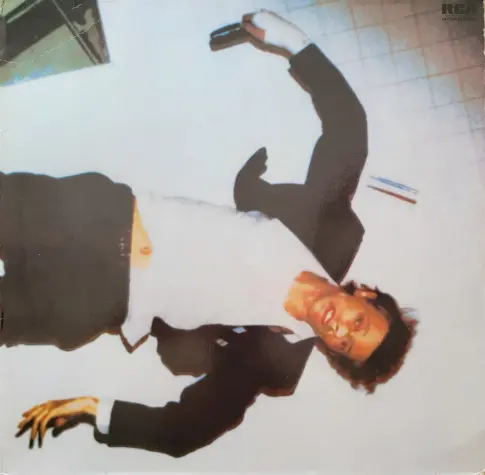
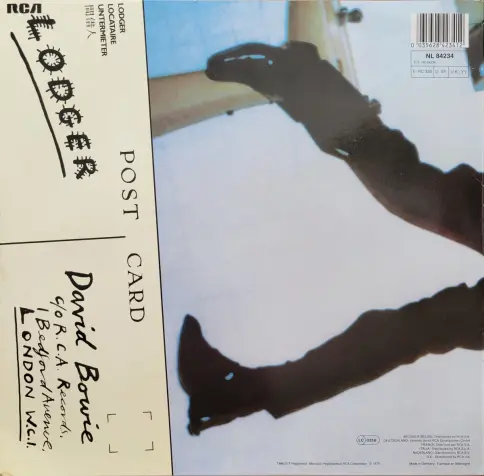
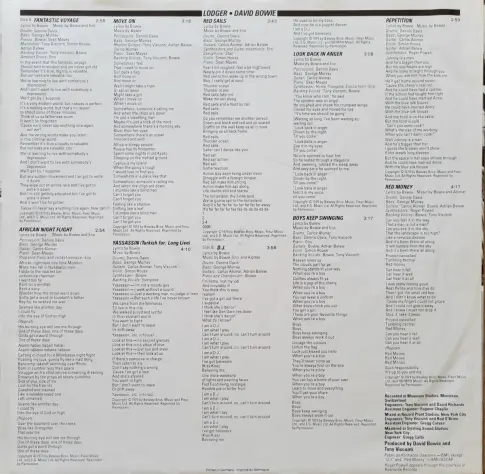
David Bowie, Lodger, 1979 on RCA Victor
Third album in the so-called Berlin trilogy (after Low and “Heroes”) in collaboration with Brian Eno and Tony Visconti. Recorded in Switzerland and New York city, and the first Bowie album to feature Adrian Belew alongside Carlos Alomar.
A remastered Lodger came out in 2017 as part of the box set A New Career In a New Town (1977-1982).
My copy—via the Worcester Record Riot—is an early 80s reissue for the European Market, on RCA International, pressed by Sonopress in Germany.
#1970s #1979 #1984 #adrianBelew #berlinTrilogy #brianEno #carlosAlomar #davidBowie #germany #rcaInternational #rcaVictor #reissue #sonopress #tonyVisconti #vinyl #vinylcollection #vinylfinds #worcesterMa

 The Delete Bin
King Crimson Play “Three of a Perfect Pair”
Listen to this track by highly adaptable and roster rotating progressive rock architects King Crimson. It’s “Three of a Perfect Pair”, the title track from the band’s 1984 record of the same name. That release was, very appropriately, the third and final entry in a trilogy of albums starting with 1981’s Discipline and followed up by Beat in 1982. These three releases represented a new phase for the band after a seven year hiatus that preceded it; the Discipline era. This was an unexpected eventuality considering that founder, guitarist, and chief creative instigator Robert Fripp hadn’t originally intended to regroup under the King Crimson name.
At the dawn of the 1980s, Fripp sought out musicians he’d worked with before and admired as he put a new band together to explore fresh musical ideas in a new era. This included vocalist, guitarist, and lyricist Adrian Belew who, like Fripp, had played with David Bowie and Talking Heads. Bassist and Chapman stick master Tony Levin won his spot after proving himself with Fripp after both played on Peter Gabriel’s first two solo records. Triple-A drummer Bill Bruford rounded out the lineup, having played with the big three in progressive rock by the early 1980s. Bruford had been a member of Yes and he’d played live with Genesis. He also participated in the last iterations of King Crimson from 1972-1974 before the hiatus.
The experience and playing styles of all four musicians brought freshness to the music, and a new incarnation and era for King Crimson commenced. Going under that name seemed to work for Fripp from a musical standpoint. It certainly made commercial sense. That said, the music they made was a progression from earlier incarnations of the band. Their new sound included as much post punk, new wave, gamelan, and funk influences as it did prog rock. Belew’s approach to lyric writing and his background in more pop-centric music became a defining force. The music they made during this period is just as complex and intriguingly hypnotic as ever. But the songs are more compact and focused even as the band retains its experimental edge.
The chemistry of this incarnation of King Crimson indicated that they were musically sturdy and sympatico as a group. In fact, the new ensemble represented the first time since the band’s inception that a King Crimson lineup remained stable from one album to the next. This is not to say it was all smooth sailing. With new musicians come new dynamics, perspectives, strengths and weaknesses, and essential roles that have to mesh for the music to work well. They had to negotiate all that between them. For the most part, the split was between Belew—who served as the songs guy—and Fripp, who was more interested in overall texture, improvisation, and rhythmic pulse.
With the levels of talent and well-known strong personalities involved, it stands to reason that maintaining the tension between these poles took considerable effort. Even the album that shares the song’s title is marked by the friction between two different approaches to making the record. One side is the more accessible. The other, as described by Fripp himself, is “excessive”. This single appeared on the former side, although it still reflects the band’s penchant for complex shifting time signatures and looped sonic patterns. Paired together, they created something entirely new.
As for this specific tune, “Three of a Perfect Pair” is as close to a conventional pop song as King Crimson gets. A big part of that is down to its very pop song theme of relationships between a man and a woman, although this being King Crimson, it subverts convention from there. Lyrically, this song tells the story of a relationship defined by conflict, driven by character flaws, differing priorities, and communication breakdowns.
“Three of a Perfect Pair” could be interpreted as a love song exploring the nuts and bolts of being in a committed relationship while painstakingly working through repeating patterns of disconnection. This aspect of love goes beyond the romance celebrated more often in pop music. Instead, it goes into far darker and more mature territories. This is true even if the split between he and she seem a bit dated today, with the man falling down due to his flawed intellectual perspectives, and the woman doing the same because of her moods.
He has his contradicting views
She has her cyclothymic moods
They make a study in despair
Three of a perfect pair …
~ “Three of a Perfect Pair” by King Crimson
Either way, the title and phrase “three of a perfect pair” seems like an expression of dysfunction itself. What is the third party that stands with the two people that makes their relationship such a study in despair? One interpretation is that it’s the dysfunction itself that becomes a presence in a relationship burdened by a lack of communication. When conflict and disconnection become defining features of the way people interact, it can feel as if there is a third presence standing between them like an unholy ghost.
Another take on this is the opposite; that the third presence is the hope that the two parties can come to some kind of compromise and sense of clarity. The third member of the “pair” represents the possibilities, perspectives, and truths that have the power to smash the deadlock if the two people could only see it. It’s the road they could take together if they could only get out of their own ways to discover it. Between the two interpretations, it’s hard to choose which one is the less tragic.
Either way, it’s a perfect mess—like being in a band sometimes is.
King Crimson would go on hiatus again at Fripp’s prompting after the release of this third record in their Discipline period. All four musicians in that configuration would reunite by the mid-Nineties as parts of a “double trio” with two other musicians who doubled the band’s bass and drum parts. Talk about excessive! But this had been the nature of King Crimson from the beginning; a context for musicians in various combinations of personalities and instrumentation to come up with something unique between them, differing playing styles, approaches, tensions, and all.
For more about King Crimson’s long history as a unique musical entity, check out the trailer for the 2022 documentary film In the Court of the Crimson King: King Crimson at 50. Director Toby Amies shot the film during the anniversary tour between 2018 and 2020. Instead of a straightforward chronicle of the band through the years, the movie reveals some (well, quite a lot) of the fractiousness involved in being a member of King Crimson in present day circumstances, some of those caused by a decades-long history of unresolved tension between members. Because of that, the film makes for some fascinating, uncomfortable, hilarious, and poignant viewing.
As he once did in 1974 and again by 1984, Robert Fripp intended to lay King Crimson to rest by 2022—really this time. But at the time of this writing, there have been whisperings of a new King Crimson album to follow up 2003’s The Power to Believe. Learn about it right here.
Enjoy!
#80sMusic #adrianBelew #kingCrimson #postPunk #progRock #robertFripp


 Eric
Eric
