 13
13
Strange Ways to Make Cold
https://web.brid.gy/r/https://hackaday.com/2026/05/04/strange-ways-to-make-cold/
Strange Ways to Make Cold
https://web.brid.gy/r/https://hackaday.com/2026/05/04/strange-ways-to-make-cold/
REDMAGIC 11 Air gaming phone brings active cooling and a bigger battery
Chinese phone maker Nubia has been selling gaming phones under the REDMAGIC brand for years, offering features like speedy processors, displays with high refresh rates, AirTriggers, and fans for active cooling.
But high performance phones are sometimes chunky phones. So last year the company introduced its first REDMAGIC Air-branded phone with a thinner, lighter design. Now it looks like the […]
#activeCooling #gamingPhone #redmagic #redmagic11Air #redmagicAir #smartphones Read more: https://liliputing.com/redmagic-11-air-gaming-phone-brings-active-cooling-and-a-bigger-battery/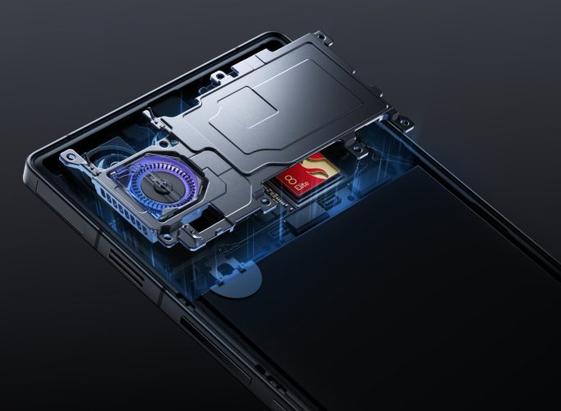


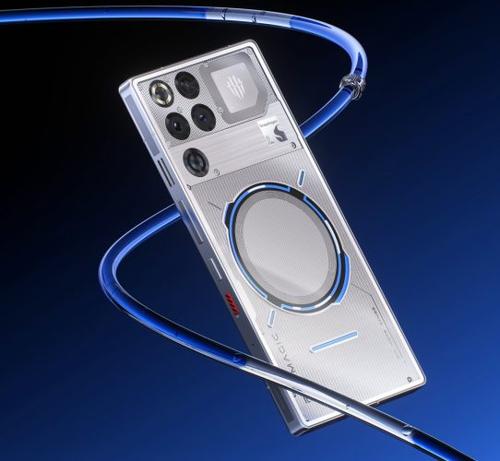
REDMAGIC 11 Pro could be the first liquid-cooled smartphone you can actually buy
Qualcomm’s new Snapdragon 8 Elite Gen 5 processor is expected to be one of the fastest chips available for smartphones. But as with any processor, you can eke even better sustained performance out of it if you use enhanced cooling to keep the chip from throttling as it gets warm.
And the upcoming REDMAGIC 11 Pro aims to prove that with the kind of cooling you’d normally find in a PC. The […]
#activeCooling #gamingPhone #liquidCooled #liquidCooledPhone #liquidCooling #redmagic #redmagic11Pro #smartphone #waterCooling



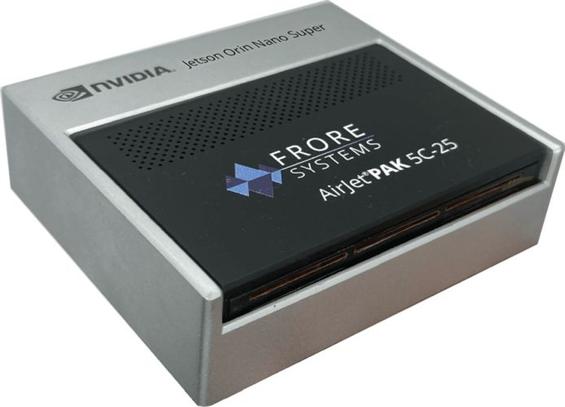
Frore AirJet PAK provides up to 25 watts of solid state cooling for the NVIDIA Jetson Orin Nano (and similar SoM-based PCs)
The NVIDIA Jetson Orin Nano Super is a $249 AI development kit that combines an NVIDIA system-on-a-module with a carrier board to create a palm-sized computer with up to 67 TOPS of AI performance. It’s the latest in a line of Jetson products from NVIDIA, and as NVIDIA noted when launching the new model earlier this month, it’s half the price of its predecessor while offering up to 70% better AI performance.
While the dev kit includes a fan for active cooling, Frore Systems has announced another option for keeping the Jetson Orin Nano Super and similar systems cool. The company’s new AirJet PAK line of solid state cooling modules can dissipate up to 25 watts of heat without using any fans.
Frore’s AirJet technology brings some of the benefits of fanless systems: AirJet cooling modules are silent and they don’t collect dust the way that fans do.
But while fanless systems use passive heat dissipation only, AirJet is an active cooling solution that uses a series of tiny membranes that vibrate at ultrasonic frequencies to move air. That means that unlike passive cooling solutions, AirJet modules consume power – and it can take a bunch of modules to provide enough cooling for higher-power devices like laptop or desktop computers, which probably explains why we haven’t seen many PC makers adopt Frore’s solid state cooling technology yet.
So it makes some sense for the company to focus on small, low-power development kits like the NVIDIA Jetson Orin Nano Super as a way to get developers to try out the technology. The company says its AirJet PAK 5C-25 system measures 100 x 65 x 10mm (3.94″ x 2.56″ x 0.39″) and features 5 AirJet chips that can remove up to 25 watts of power, making it a good fit for NVIDIA’s latest dev kit.
There’s also a 3-chip AirJet PAK 3C-15 that’s the same width and length, but measures just 5.8mm (0.23″) high and removes up to 15 watts of heat, and a single-chip 1C-5 module that removes up to 5 watts and measures 30 x 65 x 5mm (1.18″ x 2.56″ x 0.2″).
But you could also use it with other similarly-sized systems – Frore is jumping on the AI hype bandwagon by noting that AirJet PAK is “designed to complement a wide range of System on Module (SoM) AI Computers, including NVIDIA’s Jetson Orin Nano, Nano Super, NX & Orin AGX modules, as well as SoMs from Qualcomm, NXP, AMD/Xilinx, and more.” But the module could also probably be used with a wide range of devices with or without the AI emphasis.
Meanwhile, it looks like Frore could soon have some competition in the silent, solid-state, active-cooling space. Ventiva says it’s developed a fanless, active cooling solution that can work with computers featuring TDPs up to 40 watts and at least one PC maker is expected to introduce a laptop featuring the technology soon.
#activeCooling #airjet #foreAirjetPak #frore #solidStateCooling

NVIDIA is taking the wraps off a new compact generative AI supercomputer, offering increased performance at a lower price with a software upgrade. The new NVIDIA Jetson Orin Nano Super Developer Kit, which fits in the palm of a hand, provides everyone from commercial AI developers to hobbyists and students, gains in generative AI capabilities Read Article
Ventiva unveils an active cooling solution for fanless laptops
Most laptop computers have fans to help dissipate heat generated by the CPU and other hardware. But fans generate noise, have a habit of getting clogged with dust, and like most moving parts, an sometimes break down.
Fanless PCs have been around for years, but they usually come with trade-offs like lower-power processors that generate less heat. A company called Ventiva says it has a new solution that can bring active cooling to fanless laptops operating with up to a 40 watt TDP.
Ventiva says its ICE9 system uses an “Ionic Cooling Engine” to create an electric field between two electrodes that strips molecules from nitrogen, oxygen, and argon in the air to create ions that are “repelled from the positively charged emitter.” As those ions move, they drag other air molecules with them, effectively improving airflow inside a computer without the need for a fan.
The company says the result is a system that’s runs silently, and which doesn’t take up much space – ICE9 is designed to be a series of small modules that can be arranged in different shapes inside a computer, but the company says the solution “is up to 80% smaller than a fan or blower,” and can be put in a laptop that measures as little as 12mm (0.47 inches) thick.
YouTuber Dave2D says a “well known” company plans to show off a laptop featuring ICE9 cooling at CES in a few weeks, and he also got a chance to check out a demo unit to confirm that it really does seem to offer a way to silently move enough air to keep a laptop cool.
It’s not quite as good at moving air as a fan, so it’s not going to work for gaming laptops or mobile workstations. But it should be able to keep the thin and light laptops that use 15 to 35 watts processors cool, while enabling silent performance.
That said, Dave2D notes that there are a few potential down sides to ICE9 cooling. One is that the technology will most likely be substantially more expensive than a fan.
Another is that ICE9 has less than a third as much static pressure of a typical laptop fan, which means an ICE9 module won’t be able to draw air from as far away as a fan can. And that means PC makers would probably have to make significant changes to the design of a laptop to ensure that cooling modules are placed close to an air intake vent and the components they’re meant to cool.
Ventiva isn’t the first company to unveil an active cooling system for silent, fanless computers. Frore’s AirJet cooling technology has been around for a few years. But so far only a couple of devices featuring AirJet cooling have hit the market, and none of them are as power hungry as a mainstream laptop computer.
One reason for that may be that AirJet modules don’t move as much air as a typical fan, so you’d need a whole bunch of modules to offer the same level of performance as one fan. And that takes both space and electricity. So AirJet might be better suited to devices that don’t generate much heat in the first place and/or which are meant to be used while plugged in.
ICE9 could theoretically be a more viable solution since it’s more energy-efficient and better at takes up less space than AirJet. But it’s still a new technology, and I wouldn’t place any bets that it’ll be widely adopted anytime soon.
#activeCooling #ice9 #ionicCoolingEngine #solidStateCooling #ventiva
xMEMS “fan-on-a-chip” could bring solid-state cooling to smartphones and tablets
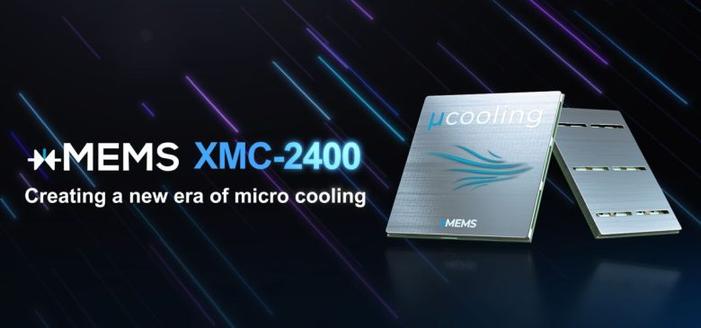
A company that makes tiny, solid state speakers is adapting its technology to make a solid-state cooling chip for smartphones, tablets, and other small electronic devices.
The xMEMS XMC-2400 µCooling chip is an “active micro-cooling fan for ultramobile devices. According to xMems, it’s a silent, vibration-free solution that measures […]

 Brad Linder
 Unofficial PetaPixel Bot
 Zorz Studios

