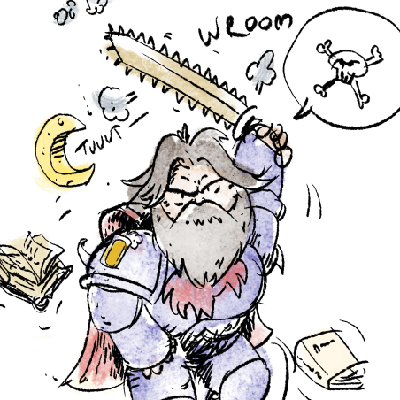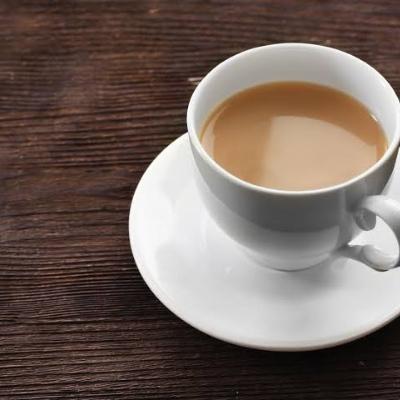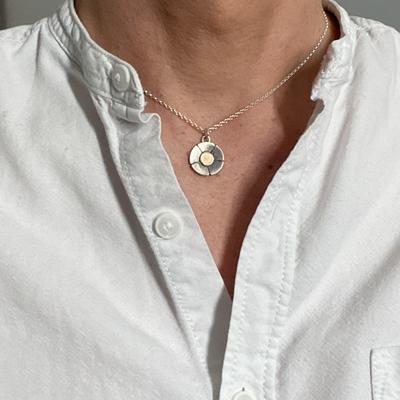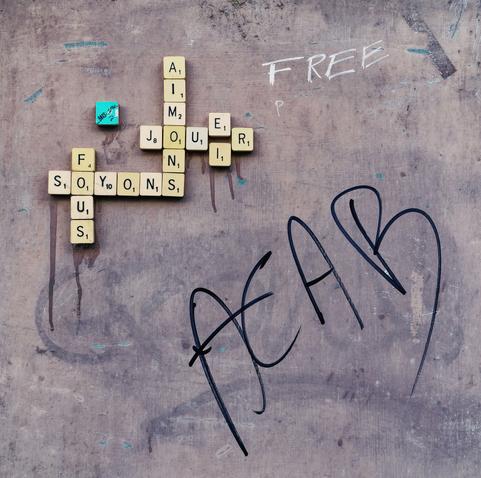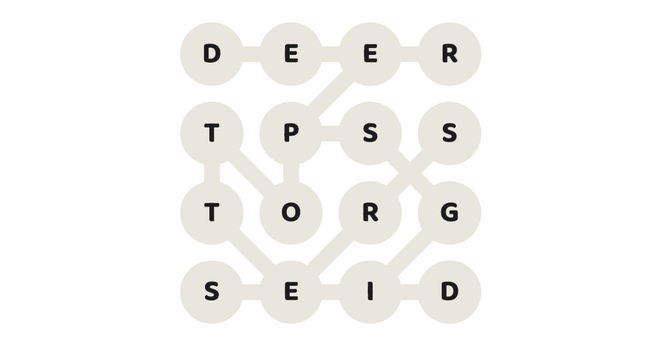
Braised brains
The gourmet's a ghast
Zombie delight
#PoetryOnTheFly #MastoPrompt #zombies #undead #wordplay #nmpoetry
Braised brains
The gourmet's a ghast
Zombie delight
#PoetryOnTheFly #MastoPrompt #zombies #undead #wordplay #nmpoetry
🤚 duck typing
👉 duct taping
Yeah, I'm a very techie person. All the time, no wait a minute. Tetchy, that's it. I'm a very tetchy person.
Ragbag of reduplication and ráiméis
Here are excerpts from my latest two posts for Macmillan Dictionary Blog.
A hotchpotch of reduplication is a brief introduction to, and survey of, reduplicatives. Reduplication is where “a word or part of a word is repeated, sometimes modified, and added to make a longer term”, such as aye-aye, hotchpotch, and ping-pong:
Reduplication can be categorised as follows: exact or repeating reduplication (bye-bye, hush-hush, goody-goody), rhyming reduplication (itsy-bitsy, okey-dokey, boogie woogie), and ablaut reduplication (chit-chat, tip-top, riff-raff). Ablaut is a term introduced by Jacob Grimm; it refers to vowel change, which in reduplicatives often follows certain patterns: zigzag, knick-knack, mingle-mangle, or criss-cross, flip-flop, sing-song.
Clusters of letters recur, as in shilly-shally, dilly-dally, silly billy and willy-nilly, while ‘h’ is a common first letter, appearing thus in helter-skelter, heebie-jeebies, hurdy-gurdy, hurly-burly, higgledy-piggledy, hocus-pocus, and hob-nob. Some reduplication is onomatopoetic or echoic: pitter-patter, splish splash, ding-dong and tick-tock… [more]
Poppycock, bunkum and rawmaish looks at our words for nonsense. Many of them, such as those listed in the next paragraph, are colourful, old-fashioned English terms; rawmaish is one that overseas readers are less likely to be familiar with: it’s an Anglicisation of the Irish word ráiméis, meaning nonsense or foolish talk.
Many words for nonsense have an entertaining, almost clownish feel. Think of baloney, balderdash, piffle, gobbledegook, gibberish, poppycock, flapdoodle, twaddle, tommyrot, hogwash, hooey, and a load of old cobblers. These are words to delight in, flamboyant terms that parade themselves in a sentence . . . .
Some have histories as curious as their sound and appearance. In her MED Magazine article ‘Talking Nonsense: old-fashioned terms for nonsense in English’, Diane Nicholls reports that poppycock originates in a Dutch dialectal word, pappekak, which translates literally as “soft dung”, while bunkum and its abbreviated form bunk hail from Buncombe, a county in North Carolina, owing to a minor political incident there in the early 19th century. [more]
Both articles have benefited greatly from the discussion in the comments, where readers have shared their favourite reduplicatives and words for nonsense, sometimes in verse form. More thoughts are always welcome, and my older articles are available here.
#etymology #language #MacmillanDictionaryBlog #nonsense #reduplication #wordplay #wordsRE: https://mastodon.social/@samuelpepys/116554964591613900
This happens occasionally for me with Pepys, that he uses a word with a meaning that it no longer has, but, when I think about it, aligns etymologically with modern usage, and now the word is slightly richer for me than it was.
Today’s word: maze, meaning bewilderment. You can see how we arrived at the modern meanings.
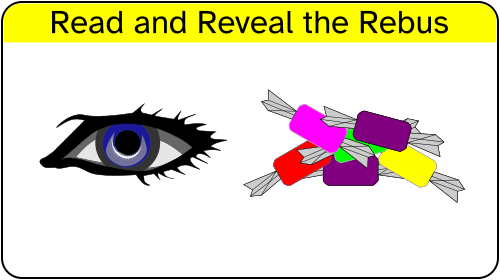
A #rebus is a #wordplay #puzzle combining images and letters to represent a word or phrase.
Words are represented by combinations of pictures and letters; for instance, "apex" might be represented by a picture of an ape followed by a letter X.
Moving left to right "say" the images in English and mix in the letters to complete the answer.
Avoid the Alt Text (spoilers)