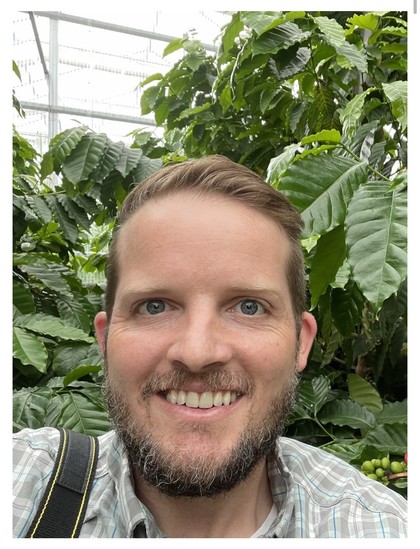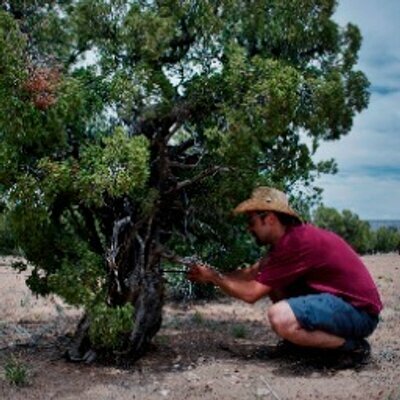
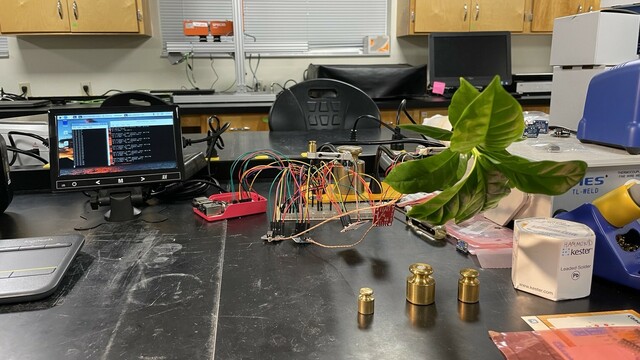
Test run of the new electronics for our next generation of hotter-drought experiments on #WhatKillsTrees. This coffee tree seedling (Coffea arabica) was a handy test case as we prepare to delve into mechanisms of heat-induced #PlantDeath in the #Anthropocene.
#Drought kills #forests, but in 2019 we wanted to know WHAT puts some trees at risk more than others.
We used #lidar to understand #WhatKillsTrees during #drought, mapping ~2 million individual tree crowns.
More than any other factor, tree height was the single greatest risk factor #forest #mortality!
Check out the paper here 👉 https://www.nature.com/articles/s41467-019-12380-6
NOW.. #3D #visualization for the work from the Lidar data 👇
https://youtu.be/8kDQl-7WfoE
Tree height explains mortality risk during an intense drought - Nature Communications

Drought is intensifying due to climate change, impacting forests globally. Here, the authors track nearly 2 million trees through severe drought and show that tree height is the greatest predictor of mortality risk, suggesting that the tallest trees may be the most vulnerable.

Nature
Hi Mastodon, time for my #introduction post!
I’m a plant ecophysiologist and global change ecologist studying #WhatKillsTrees. Broadly, I’m interested in how plant vascular systems react to extreme environmental conditions—especially regarding plant function, dysfunction, and the limits of survival. I teach about #PlantDeath in the #Anthropocene. More about me and my lab at the university of Florida can be found on the lab webpage, at https://ecophyslab.com.
ecophyslab

Plant Ecophysiology at the University of Florida

eco<span>phys</span>lab
Some trees are starting to die in central Spanish mountain range after a record-breaking hot and dry spring and summer. #FieldPhotoFriday First picture Pinus pinaster, second one Pinus sylvestris. Both were still alive in early September #WhatKillsTrees #ForestDecline