 DrWeb
DrWebFormer director at the White House Historical Association on the East Wing renovation – NPR
Former director at the White House Historical Association on the East Wing renovation
October 26, 20258:51 AM ET, Heard on Weekend Edition Sunday
By Ayesha Rascoe 5-Minute Listen Transcript
See Transcript: https://www.npr.org/transcripts/nx-s1-5582403
NPR’s Ayesha Rascoe speaks with Leslie B. Jones, former Director of Historical Resources & Programming for the White House Historical Association, about the demolition of the White House East Wing.
AYESHA RASCOE, HOST:
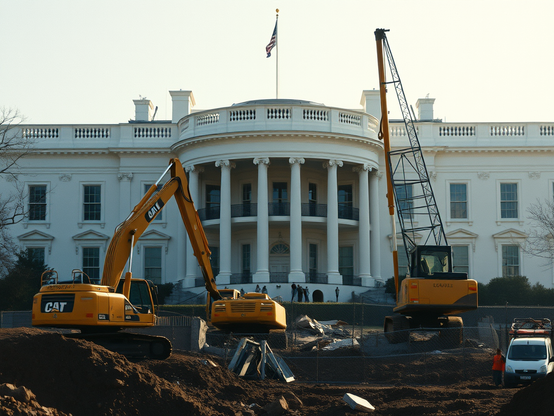
The East Wing of the White House is no more. What started on Monday, with images of excavators and talk of renovation to accommodate President Trump’s promised ballroom, finished with the razing of an entire wing of the White House despite the president’s promise as recently as July that the event space, quote, “won’t interfere with the current building.”
Leslie Jones knows the White House. She’s now the chief curator of the Preservation Society of Newport but previously served as curator and director of historical resources and programming for the White House Historical Association. Leslie Jones, welcome to the program.
LESLIE JONES: Thank you for having me, Ayesha.
RASCOE: I don’t want us to talk past people who haven’t been in the White House as much as both of us have. That rounded portico that we all know from pictures – that’s not where the Oval Office is. That’s in the West Wing, which dates to Teddy Roosevelt’s first term. The East Wing was substantially enlarged during World War II. Tell us what the East Wing was and wasn’t from a preservationist’s perspective.
JONES: Well, I’m glad that you brought that up first because I think there is a misconception that needs to be cleared up. The East Colonnade – as it’s more formally referred to, which was fully destroyed – is actually separate from the East Wing. The East Wing was its own block of a building connected to the colonnade, and the East Colonnade actually dates back to 1801. Thomas Jefferson had that built on the addition on both the east and west sides of the White House after he moved in, you know, with James Hoban’s original central block design. So those sort of appendages coming off the east and west side of the house have precedent going back to 1801.
And in 1942, when Franklin Roosevelt adds on the actual East Wing building, it is to accommodate the more staff that was necessary as a part of wartime during World War II, but again, built off of that colonnade as a means of continuing that symmetry and balance that the White House had been subscribed in its earliest days, which is so symbolic for what the hopes of our founders were in our country.
RASCOE: So people were thinking about things like that. People were thinking about democracy when they were designing these additions.
JONES: Well, the house itself was designed to look like a domestic residence, not like the palace of a king or the compound of an autocrat or a dictator. It was meant to look like domestic architecture, even so far as to go – James Hoban tried to proportion the windows with the rest of the house to make it look smaller than it actually is. So that sort of approachability and commonality of the house and its design was important from the get-go.
Editor’s Note: Read the rest of the story, at the below link.
Continue/Read Original Article Here: Former director at the White House Historical Association on the East Wing renovation : NPR
#ArchitecturalReview #Audio #AyeshaRascoe #Demolition #EastWing #FormerDirector #History #LeslieBJones #NationalPublicRadtio #NPR #Transcript #WeekendEditionSunday #WhiteHouseHistoricalAssociation