
“Internationally significant” discoveries shed new light on Swansea’s world-famous industrial past

Archaeologists working on the site, which is set to undergo a major transformation as part of Swansea Council’s regeneration plans, have uncovered machinery, masonry, and furnace networks dating back centuries.

The finds provide an unprecedented window into the evolution of copper manufacture in the Lower Swansea Valley, which once produced an extraordinary proportion of the world’s supply.

The chimneys of Swansea’s Musgrave Engine House (front) and Vivian Engine House, with an excavated flue. Pic: Swansea Council

Council leader Rob Stewart said:

“It’s fantastic that our finds at this historic site will be enjoyed and studied for decades to come. I thank the expert archaeologists for their ongoing work to catalogue the exciting discoveries in the area of the Musgrave and Vivian engine houses.

“Work on this location’s main transformation will start soon – the engine houses will be made available for a range of exciting public uses.”

Libby Langlands, assistant project manager at Black Mountains Archaeology, said an 18-month full-scale archaeological excavation had been undertaken to “discover and record complex industrial remains buried on the site of the engine houses and attached rolling mills.”

She added:

“Our work will help inform future building designs and heritage interpretation there.”

Archaeologists and sub-contractors undertake sensitive backfill work to excavated archaeology on the site of Swansea’s Musgrave and Vivian engine houses. Pic: Swansea CouncilLibby Langlands, assistant project manager of Black Mountains Archaeology, at the site of Swansea’s Musgrave and Vivian engine houses. Pic: Swansea Council

The Vivian Engine House was built in 1860, with the Musgrave Engine House following around 50 years later. Among the most important discoveries made at the site are:

  • A buried machine pit beneath the Musgrave copper rolls, containing surviving machinery including original balancing gears. These remains provide rare, physical evidence of how large-scale copper rolling machinery operated on the site.
  • Evidence for a previously unknown line of copper rolling machinery, likely associated with the earliest phase of the Vivian Engine House. This discovery has been supported by historic plans held in the Musgrave archives, revealing earlier stages of development not previously recognised.
  • Substantial masonry walls and structural remains predating the existing engine houses, representing earlier 19th century beam engine and rolling mill buildings on the site. Together with historic maps and drawings, these remains are helping archaeologists reconstruct how the works evolved over time.
  • A network of brick-built furnaces and flues used to heat, or “anneal”, copper before rolling, a vital process that softened the metal and prevented it from cracking. These features illustrate the advanced industrial techniques developed in Swansea during its peak period of copper production

Archaeologists say the discoveries are of “international significance”, adding fresh detail to Swansea’s industrial timeline while highlighting the importance of preserving and interpreting the site for future generations.

An aerial view of Swansea’s historic Musgrave and Vivian engine houses. Pic: Black Mountains Archaeology

The Musgrave Engine — the only example of its kind in the world still in its original location — is a nationally significant scheduled monument. Alongside the Grade II‑listed pair of engine houses, it forms a key part of the heritage now being better understood through this detailed archaeological work.

Swansea’s historic Musgrave Engine as it is today. Pic: Swansea CouncilLibby Langlands, of Black Mountains Archaeology, and Kiran Giri, of contractors Andrew Scott, inside Swansea’s historic Vivian Engine House. Pic: Swansea Council

Thousands of photographs have been captured as part of a high-tech 3D imaging programme, allowing archaeologists to create highly accurate digital models of the site’s features. This will help historians interpret the finds long after physical work on the site has finished.

All archaeological reports, surveys, plans, drawings and photographs will be archived in the National Monuments Record, curated by the Royal Commission on the Ancient and Historical Monuments of Wales and the Historic Environment Record curated on behalf of the Welsh unitary authorities for anyone to access.

Dr Kate Roberts, chief executive of Cadw, said:

“These extraordinary discoveries at Hafod Morfa remind us why Swansea’s copper industry holds such an important place in world history. Cadw has been proud to work alongside Swansea Council and our partners over several years to breathe new life into this remarkable site, taking buildings like the Powerhouse, Weigh Bridge and Rolling Mill off the Buildings at Risk Register and securing their future.

“The archaeological work now being revealed at the Musgrave and Vivian Engine Sheds demonstrates what can be achieved through genuine collaboration. By working together, we are ensuring that these historically significant remains are properly recorded and protected, while creating spaces that future generations can enjoy and learn from.”

Progress is continuing across the wider former copperworks site, with new additions set to complement the Penderyn whisky base, including the revamp of an historic laboratory building, the installation of two additional River Tawe pontoons, and the reinstatement of the historic Bascule Bridge.

How the engine houses will look when transformed. Pic: Swansea Council

The council secured £20m in Local Regeneration Fund from the UK Government to support work on parts of its Lower Swansea Valley work.

#archaeology #BlackMountainsArchaeology #CADW #copper #HafodMorfaCopperworks #industrialHeritage #LowerSwanseaValley #MusgraveEngine #regeneration #rollingMill #Swansea #VivianEngineHouse
Welsh business chosen to bring new life to Swansea heritage buildings

South Wales-based Andrew Scott Ltd plans to start work on site this year in a Swansea Council scheme to transform the Vivian and Musgrave Engine Houses, and the V&S No.1 Locomotive shed.

Over the coming few months, the company will lead on the final stages of design for the project, on the site of the former Hafod-Morfa Copperworks.

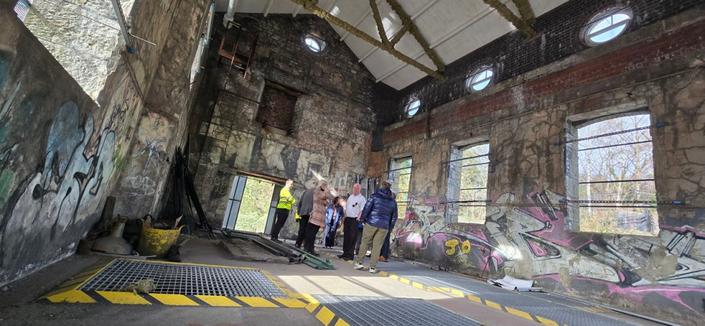
Inside the Vivian and Musgrave Engine Houses today
(Image: Swansea Council)

Andrew Scott – which dates back more than 150 years and has worked on a wide range of projects – was selected in a competitive tender process.

Swansea schemes it has previously worked on include the construction of the new Gorseinon Primary School, the construction of Mumbles’ Marks & Spencer Foodhall and the build and renovation of the city centre’s grade two listed Alex Building for the University of Wales Trinity St David. They worked on Technium 1 and the Ethos Building in SA1.

Council leader Rob Stewart said: “We’re delighted to have Andrew Scott on board for the exciting transformation of these copperworks buildings.

“It’s a company with a track record in excellence and they’ll do a great job on helping us to regenerate the Lower Swansea Valley.

“This is an exciting time for that area as we and others plan to invest tens of millions of pounds there.

“Our £1bn regeneration of Swansea continues at pace!”

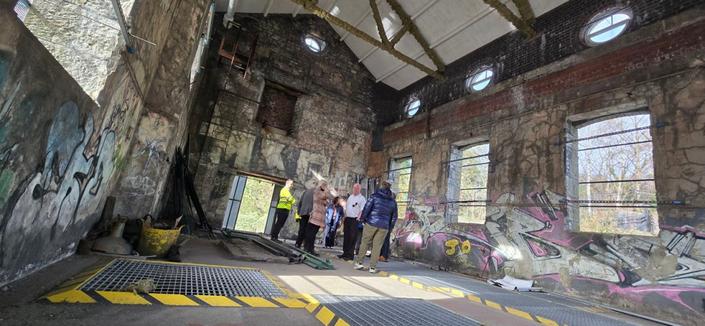
Inside the Vivian and Musgrave Engine Houses today
(Image: Swansea Council)Inside the Vivian and Musgrave Engine Houses today
(Image: Swansea Council)

A planning application for a major outdoor leisure destination by operator Skyline has been approved for land close to the engine sheds and on Kilvey Hill.

Mark Bowen, managing director of Andrew Scott Ltd, said: “As one of Wales’s oldest independent construction companies, we’re proud to be working alongside Swansea Council on the Lower Swansea Valley project to restore and transform key parts of the historic Hafod-Morfa Copperworks.

“As a Swansea-based company, we profoundly appreciate that this iconic site reflects the city’s rich industrial heritage.

“By regenerating these significant buildings, we’re helping to celebrate local identity, strengthen community ties, and ensure future generations can enjoy and learn from this unique part of Swansea’s story.”

How the Vivian and Musgrave Engine Houses could look in future.
(Image: Swansea Council)

The engine houses form an integral part of Swansea’s industrial heritage. The council wants to bring them back into use to bring pleasure to thousands and new opportunities.

The copperworks of past centuries were key to the growth of Swansea, playing a crucial role as major industry over around 300 years. The industry declined but some of its buildings and other structures remain.

The plan now is to redevelop and restore buildings for new uses and to improve access to them.

Andrew Scott will make the nearby V&S No.1 Locomotive Shed, a listed building that served the copperworks, safe and watertight. It’s currently dilapidated.

The engine houses – both listed buildings – will, in future, be suitable for a range of uses, including restaurants and cafes, exhibition-style space and shops.

The council saved the two engine houses from ongoing decay several years ago. A new river pontoon was added nearby.

The Musgrave structure, built around 1910, contains rare scheduled ancient monument the Musgrave Engine, the UK’s only one of its kind remaining in its original location.

In future, the engine’s external elements will have a covered shelter to enable the machinery’s future restoration and to help tell the story of local archaeology.

The Vivian Engine House, built in 1860, will feature a mezzanine floor. A new building will link the two engine houses. There’ll be an outdoor terrace area.

Swansea Council is working on a series of schemes in the River Tawe corridor. The schemes are being funded with part of £20m funding from the UK Government’s Levelling Up scheme.

The council’s Lower Swansea Valley project, with a close focus on the site of the copperworks, aims to result in more wealth and greater local connectivity.

#AndrewScottLtd #construction #HafodMorfaCopperworks #heritage #MusgraveEngine #regeneration #Swansea #SwanseaCouncil #VivianEngineHouse

Council leaders briefed on plan for copperworks heritage buildings

They were given a tour of the Vivian and Musgrave Engine Houses at the site of the former Hafod Morfa Copperworks.

Both have listed status – and there’s planning permission for both to be transformed for a range of uses, including restaurants, cafes, exhibition-style space and shops.

Swansea Council says it wants to save and transform the disused structures as part of its work to bring new life to the Lower Swansea Valley.

It’s part of the council-driven £1bn regeneration of Swansea which has already seen the saving and transformation of other heritage structures including the Palace Theatre building, Albert Hall and Hafod Morfa Copperworks powerhouse.

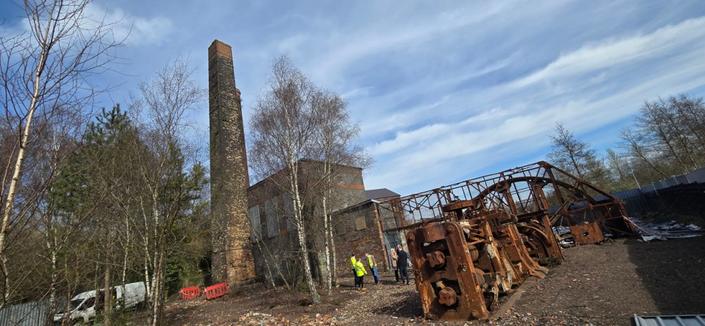
In and around the Vivian and Musgrave Engine Houses.
(Image: Swansea Council)In and around the Vivian and Musgrave Engine Houses.
(Image: Swansea Council)

After the tour, led by council regeneration officers, council leader Rob Stewart said: “The engine houses are key to Swansea’s industrial heritage. We now want them to bring pleasure to thousands – and new opportunities.

“This is an exciting time for the Lower Swansea Valley as we and others plan to invest tens of millions of pounds in that area.”

The council saved the two engine houses from ongoing decay several years ago. A river pontoon was added nearby.

The Musgrave structure, built around 1910 and a scheduled ancient monument, contains the rare Musgrave Engine, the UK’s only one of its kind remaining in its original location.

The Vivian Engine House was built in 1860.

A new building would link the engine houses. There’d be an outdoor terrace area.

The council say that two neighbouring tall chimneys would be preserved and there’d be expert surveys of trees and other biodiversity.

How the Vivian and Musgrave Engine Houses could look in future.
(Image: Swansea Council)

Cabinet members also visited the neighbouring V&S No.1 Locomotive Shed, another listed building that served the copperworks. Planning permission is in place to make this dilapidated historic structure safe and watertight.

The council is working on a series of schemes in the River Tawe corridor. Funding sources include part of a £20m investment from the UK Government’s Levelling Up scheme.

Businesses already planning big futures at the copperworks site include Penderyn Whisky, which opened there two years ago, and Skyline which has planning permission for a major outdoor leisure attraction linking Kilvey Hill and Landore.

(Lead image: Swansea Council)

#CllrRobStewart #Hafod #HafodMorfaCopperworks #heritage #MusgraveEngine #Swansea #SwanseaCouncil #VivianEngineHouse

Work completed on River Tawe pontoon

Swansea Council say that work has been completed on installing a boating pontoon on the River Tawe at Landore - with two more pontoons to follow.

Swansea Bay News

Swansea Council wants to save and transform the disused structures as part of its work to bring new life to the Lower Swansea Valley.

It’s all part of the council-driven £1bn regeneration of Swansea which has already seen the saving and transformation of other heritage structures including the Palace Theatre building, Albert Hall and Hafod Morfa Copperworks powerhouse.

Two planning applications have just been submitted by the council for the copperworks’ Vivian and Musgrave Engine Houses, and for the V&S No.1 Locomotive Shed. All three have listed status.

The applications state: “The engine houses form an integral part of Swansea’s industrial heritage. The council wishes to bring them back into use.

“Also, the council wishes to undertake restoration works to the loco shed – and eventually see it brought back into meaningful use.”

The copperworks of past centuries were key to the growth of Swansea, playing a crucial role as major industry over around 300 years. The industry declined but some of its buildings and other structures remain. 

The plan now is to redevelop and restore buildings for new uses and to improve access to them. There would also be work to preserve two tall neighbouring chimneys.  

The council saved the two engine houses from ongoing decay several years ago. A new river pontoon was added nearby.

The Musgrave structure, built around 1910 and a scheduled ancient monument, contains the rare Musgrave Engine, the UK’s only one of its kind remaining in its original location. 

Plans show that the engine’s external elements would have a covered shelter to enable the machinery’s future restoration.

The plans show that the Vivian Engine House, built in 1860, would feature a mezzanine floor. 

A new building would link the two engine houses. There’d be an outdoor terrace area. 

The engine houses would, in future, be suitable for a range of uses, including restaurants and cafes, exhibition-style space and shops.

The loco shed – also dating from the 1800s – was possibly last used around 1980 as a locomotive shed at the former copperworks. 

Its planning application is for the restoration and reconstruction of the existing building which has become structurally damaged through its many years of disuse. 

There’d be work on the walls, roof and doors. There’d be a range of possible future uses.

Other associated works for the three structures, should planning permission be granted, would include new access routes from the copperworks site, sustainable new drainage, and landscaping.

There’d be expert surveys of trees and other biodiversity.

Public feedback is now welcome on the plans.

Swansea Council is working on a series of schemes in the River Tawe corridor, including these three buildings. 

The schemes are being funded with £20m from the UK Government’s Levelling Up scheme.

The Lower Swansea Valley project, with a close focus on the site of the copperworks, aims to result in more wealth and greater local connectivity. 

It’ll help tell the story of Swansea’s rich industrial legacy to new generations.

Consultants for the council’s copperworks plans are the South Wales team of widely respected Wardell Armstrong.

Applications online:

[Lead image: Swansea Council]

https://swanseabaynews.com/2024/09/17/exciting-new-plans-revealed-for-more-swansea-heritage-buildings/

#HafodMorfaCopperworks #SwanseaCouncil #VivianEngineHouse

2024/1655/FUL | Redevelopment of Vivian and Musgrave Engine Houses and Chimneys, including restoration and intervention works, a new link building, a flexible D1, A1, A2, A3 use as well as associated works including hard and soft landscaping, drainage and a new access road to the site | Vivian And Musgrave Engine Houses Hafod Morfa Copperworks Swansea SA1 2LE