 Curt Johnson - Indie Genius
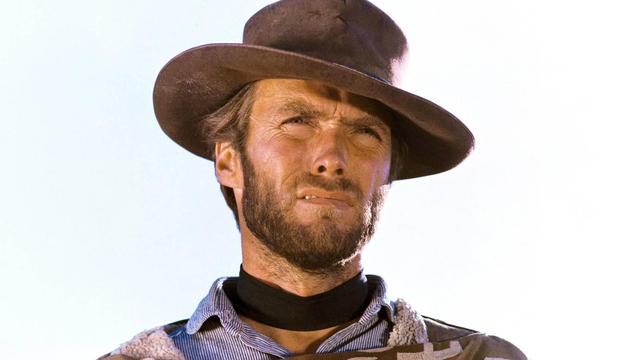
Movie TV Tech Geeks #Movie #ClintEastwood #Western #Unforgiven 5 Clint Eastwood Western Movies That Are Still 10/10 Masterpieces http://dlvr.it/TTCtd1
@deadline
Oh for cryin' out loud, it's like if #Logan was the lead character in #Unforgiven, but his story went nowhere. We have seen this before, and it was done better!
RE: https://mastodon.social/@AnnaAnthro/116759504204660834
Starbucks should have done the same on #June4 in #China. Just an idea, ya know.
#TiananmenSquareMassacre #unforgiven #unforgotten
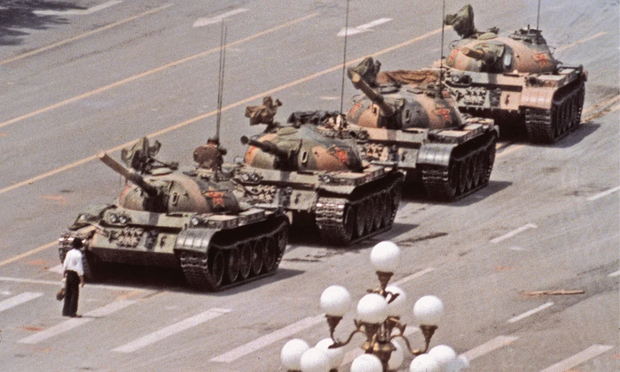
Damn, I've been so busy this week that I completely forgot to post the iconic image of #Tankman stopping a bunch of #PLA tanks on their way to their murderous task.
June 4 1989 will NOT be forgotten.
The #TiananmenMassacre will not be forgotten. And the ghoulish #CCP will not be forgiven. Murderous bastards.
#China #fucktheCCP #unforgiven #unforgotten
Who Is the New Clint Eastwood in Modern Films?
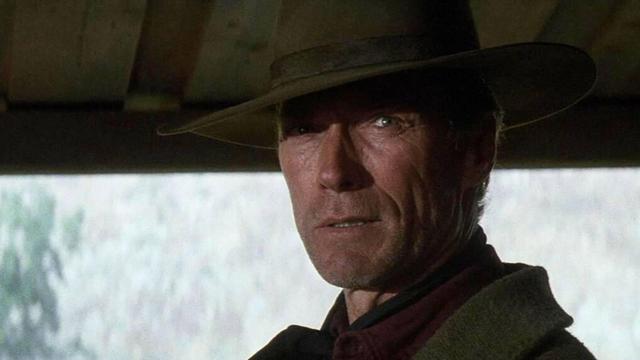
For decades, Clint Eastwood has been a towering figure in Hollywood, a name synonymous with gritty charisma and cinematic legend. To the Zoomer generation, who may know him more as a meme or a squinting icon on social media, Eastwood is the quintessential tough-guy star of the 20th century. Born in 1930, he rose to fame as the stoic Man with No Name in Sergio Leone’s *Spaghetti Westerns* like *The Good, the Bad and the Ugly* (1966) and cemented his legacy as the hard-edged cop Dirty Harry in the 1970s. His gravelly voice, piercing stare, and ability to convey complex emotions with minimal dialogue made him a cultural touchstone, blending rugged individualism with moral ambiguity. As an actor and director, Eastwood’s work, from *Unforgiven* (1992) to *Gran Torino* (2008), redefined the Western and action genres, earning him five Academy Awards (IMDb, n.d.). But in today’s cinematic landscape, who carries the torch of Eastwood’s iconic persona?
The answer isn’t simple, as Hollywood has shifted from lone-hero narratives to ensemble blockbusters and franchise-driven stories. However, one actor stands out as the closest modern equivalent: Ryan Gosling. At 45, Gosling has carved a niche that echoes Eastwood’s blend of stoic intensity, understated depth, and genre-defining presence, making him a compelling successor for a new generation.
Why Ryan Gosling?
Gosling’s performances channel the same magnetic minimalism that defined Eastwood’s career. In *Drive* (2011), Gosling’s unnamed Driver—a quiet, morally complex loner who navigates a violent underworld—mirrors Eastwood’s Man with No Name. Both characters speak sparingly, letting their actions and piercing gazes tell the story. Film critic Roger Ebert noted Gosling’s “ability to convey a coiled intensity” in *Drive*, a trait that recalls Eastwood’s ability to dominate a scene with a single look (Ebert, 2011). Similarly, in *Blade Runner 2049* (2017), Gosling’s Officer K embodies a futuristic take on Eastwood’s brooding, existential heroes, grappling with identity in a way that feels like a nod to Eastwood’s later, reflective roles in films like *Unforgiven*.
Gosling’s versatility also parallels Eastwood’s. Just as Eastwood transitioned from Westerns to cop dramas to introspective character studies, Gosling has tackled diverse roles, from the romantic lead in *The Notebook* (2004) to the comedic astronaut in *Barbie* (2023). Yet, it’s his work in neo-noir and Western-adjacent films like *The Nice Guys* (2016) and *The Gray Man* (2022) that cements his Eastwood-like aura. These roles showcase his knack for blending toughness with vulnerability, a hallmark of Eastwood’s later career. As critic A.O. Scott observed, Gosling’s “restrained charisma” makes him a rare actor who can “carry a film with silence” (Scott, 2017), much like Eastwood did in his prime.
Why Not Others?
Other actors, like Chris Pine in *Hell or High Water* (2016) or Hugh Jackman in *Logan* (2017), come close. Pine’s neo-Western bank robber carries shades of Eastwood’s outlaw grit, and Jackman’s weathered Wolverine captures the aging, reluctant hero of Eastwood’s *Gran Torino*. However, Pine lacks Gosling’s consistent intensity across genres, and Jackman’s association with superhero franchises ties him less directly to Eastwood’s grounded, individualistic roots. Viggo Mortensen, with his introspective roles in *The Road* (2009), is another contender, but his quieter, less mainstream career doesn’t match Gosling’s cultural footprint.
A New Era for the Eastwood Archetype
The cinematic landscape has changed since Eastwood’s heyday. The Western genre has waned, and action films now lean heavily on CGI spectacles or ensemble casts. Yet, Gosling’s ability to anchor films with a modern take on Eastwood’s stoic heroism makes him the closest successor. For Zoomers discovering Eastwood through streaming classics or viral clips, Gosling offers a bridge to that legacy—updated for a world of neon-lit noir and existential sci-fi. As Hollywood continues to evolve, Gosling’s quiet power ensures the spirit of Clint Eastwood lives on, one intense stare at a time.
References
Ebert, R. (2011). *Drive*. RogerEbert.com. https://www.rogerebert.com/reviews/drive-2011
IMDb. (n.d.). *Clint Eastwood: Awards*. IMDb. https://www.imdb.com/name/nm0000142/awards/
Scott, A.O. (2017). *Blade Runner 2049: A sequel that honors its predecessor*. The New York Times. https://www.nytimes.com/2017/10/02/movies/blade-runner-2049-review-ryan-gosling-harrison-ford.html

 Kevin C 🎬
 bikejourno
 WPS News
 PUB-X
PUB-X