Physicist Allan MacDonald becomes first Canadian to win Kavli nanoscience prize
IVAN SEMENIUK SCIENCE REPORTER
The Globe and Mail (Ontario Edition)
Jun 11, 2026
Allan MacDonald, a #Canadian #physicist based in the United States who is best known for helping to usher in the field of “#Twistronics” has been named a winner of this year’s #Kavli Prize in #nanoscience
Gift link:
https://www.theglobeandmail.com/gift/3c21efbc9cacbbba32550fe0f9b78d3274a69347c3b3e4bab06105b7494d9890/5BRAKO642RDNBNMOEOZWQYOAZQ/

ERC grant for quantum physicist Christian Schneider: Novel quantum materials in the spotlight
Großer Erfolg für Christian Schneider @SchneiderQMat
@UniOldenburg: Er erhält einen Consolidator Grant des @ERC_Research für sein Projekt zu verdrehten 2D-Materialien.
#ERCCoG #twistronics #quantenmaterialien https://nachrichten.idw-online.de/2024/12/03/neuartige-quantenmaterialien-im-fokus
Neuartige Quantenmaterialien im Fokus

MIT physicists turn pencil lead into “gold”
MIT physicists have metaphorically turned graphite, or pencil lead, into gold by isolating five ultrathin flakes stacked in a specific order. The resulting material can then be tuned to exhibit three important properties never before seen in natural graphite.
https://phys.org/news/2023-10-scientists-flipping-layers-heterostructures-properties.html
By incorporating different materials, it becomes possible to combine the properties of individual layers, producing new #optoelectronic devices with tailor-made properties. This opens the door to exploring fundamental #physics, such as interlayer #excitons, #twistronics, and more.

Scientists discover 'flipping' layers in heterostructures cause changes in their properties
Transition metal dichalcogenide (TMD) semiconductors are special materials that have long fascinated researchers with their unique properties. For one, they are flat, one-atom-thick two-dimensional (2D) materials similar to that of graphene. They are compounds that contain different combinations of the transition metal group (e.g., molybdenum, tungsten) and chalcogen elements (e.g., sulfur, selenium, tellurium).
 Stephen Sekula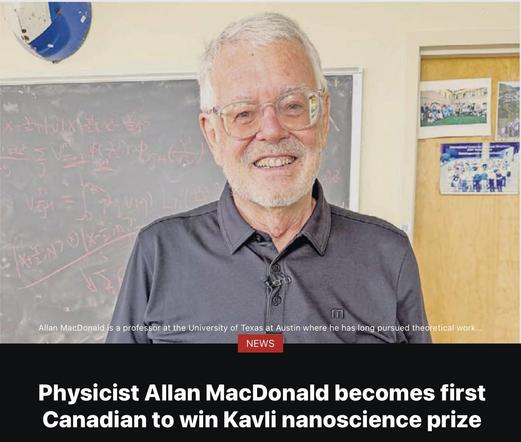
 Science News
 idw
idw
 Hacker News
 rexi
rexi