@capntransit @jerryschippa I was just going to bring that discussion over here.
There's been some research looking at traffic impact studies and trying to make them better. But researchers also warn they might not hold up in court much longer, given their shaky foundation. https://ssti.us/2023/04/03/researchers-warn-traffic-studies-could-face-more-legal-scrutiny/
#TrafficEngineering #TrafficModeling #TrafficForecasting #RoadDesign

Researchers warn traffic studies could face more legal scrutiny
Local governments often rely on traffic impact analyses to review and approve projects, charge impact fees, and ask developers to go above and beyond the basic requirements. These traffic studies, however, are often based on “junk science,” and may not hold up in courts much longer, according to a new Viewpoint article published in the Journal of the American Planning Association.
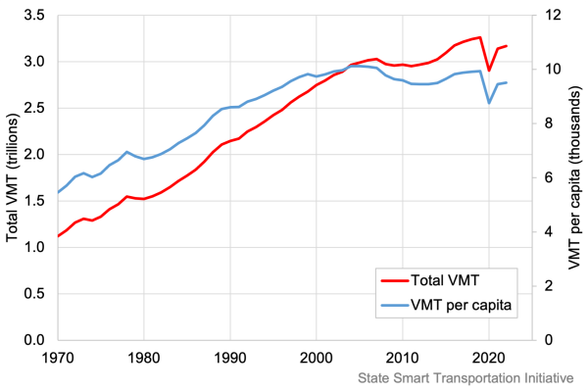
FHWA just published preliminary VMT numbers for 2022. Americans drove slightly more than the previous year, but still less than before the pandemic. Interestingly, traffic delay was still around 50% lower than pre-pandemic, according to INRIX. https://ssti.us/2023/03/06/americans-are-still-driving-less-than-before-the-pandemic/
#TravelDemand #Driving #VMT #UrbanPlanning #TrafficModeling #TrafficEngineering #TrafficForecasting

Americans are still driving less than before the pandemic
Vehicle miles traveled (VMT) in the U.S. totaled 3.17 trillion last year, according to preliminary estimates from FHWA. That is a one percent increase from 2021 and a nine percent increase from 2020—the height of the pandemic—but still nearly three percent lower than VMT in 2019. After accounting for population growth, the average American drove four percent less in 2022 than in 2019 and six percent less than the highest point in 2004.
 Chris McCahill