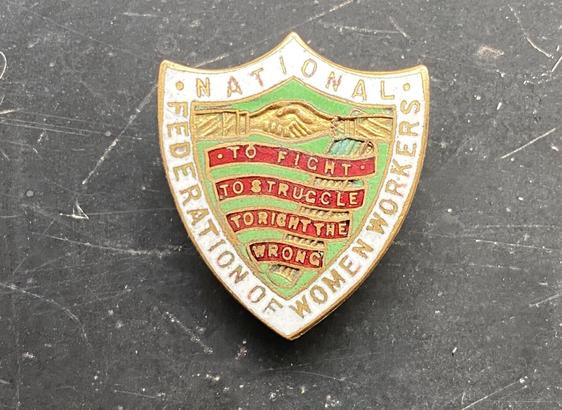
Very happy to have added this to my collection of trade union badges. The National Federation of Women Workers operated as a trade union from 1906-1921, before merging into the National Union of General and Municipal Workers. If you want to know more, I recommend the work of historian Cathy Hunt, who has published books on both the NFWW and its leading light, Mary Macarthur https://cathyhunthistorian.com/
#LabourHistory #TradeUnionHistory #TradeUnionBadges
Cathy Hunt historian

History - what I do, what I love

Cathy Hunt historian
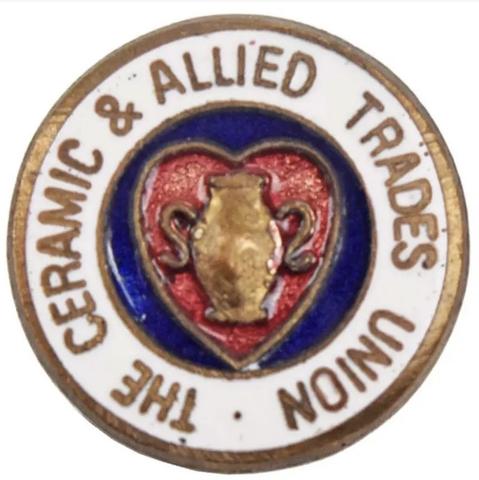
An indignant-looking pot on this Ceramic and Allied Trades Union badge. The CATU emerged from a series of mergers in 1970, but traced its roots back to the early years of the twentieth century. It eventually merged into the GMB. #TradeUnionBadges #TradeUnionHistory
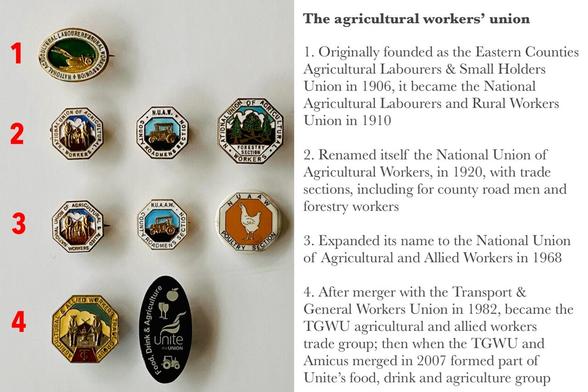
Here’s a selection of agricultural workers’ union badges to mark #PloughMonday - traditionally the first day back at work after Christmas. Hope you’ll all be dragging a plough round the village today, collecting donations and ploughing up the doorsteps of those who won’t donate #TradeUnionBadges #histodons
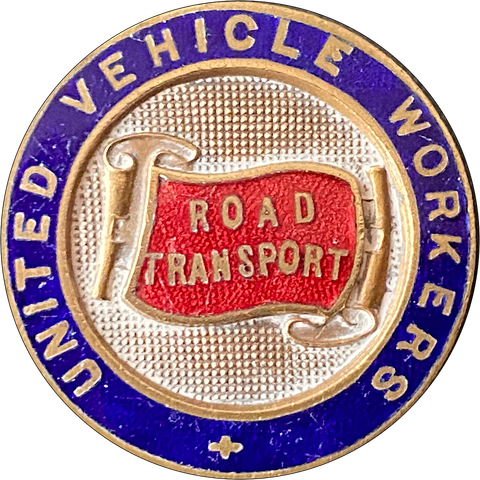
I believe this badge is from the United Vehicle Workers trade union that enjoyed only a brief existence before becoming part of the TGWU in 1922, though I can find no record of it incorporating “road transport’ in its name.
#LabourHistory #TradeUnionHistory #TradeUnionBadges
#LabourHistory #TradeUnionBadges #Histodons
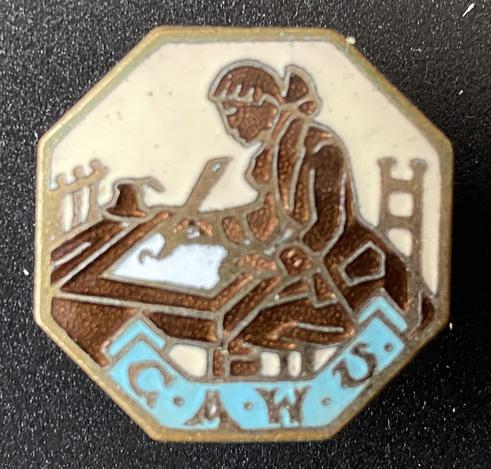
The National Union of Clerks was founded in 1890; what would become the Association of Women Clerks and Secretaries in 1903. They merged in 1941 to form the Clerical and Administrative Workers Union. After further name changes and mergers it is now the white collar section of the GMB.
#LabourHistory #TradeUnionBadges #TradeUnionHistory
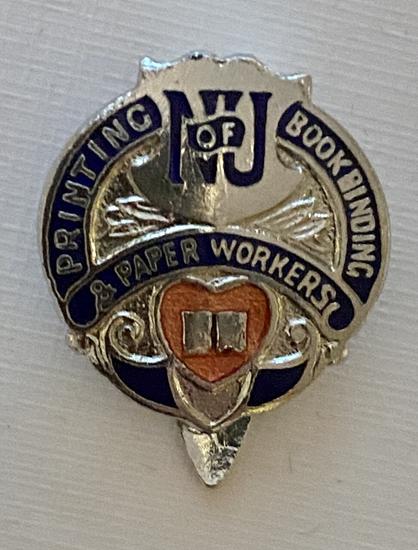
Adopting this name in 1928, the National Union of Printing, Bookbinding and Paperworkers emerged from the mergers of numerous small and specialist unions, some of which traced their roots back to the 1820s. It went on to absorb further unions over the years, and in 1966 merged with NATSOPA to form the Society of Graphical and Allied Trades. Its archives are kept in the Modern Records Centre at Warwick University https://mrc.epexio.com/records/NPB
National Union of Printing, Bookbinding and Paper Workers

Three UK trade union badges produced by the National Guild of Telephonists. Founded in 1928 following a split in the Union of Postal Workers, the left-led union appointed guild socialist Edgar Lansbury as general secretary. It survived until 1978, unwisely rejecting merger terms with the UPW before effectively being taken over by the electricians’ union, the EETPU, in 1978.
@histodons #LabourHistory #TradeUnionBadges
Another trade union badge…
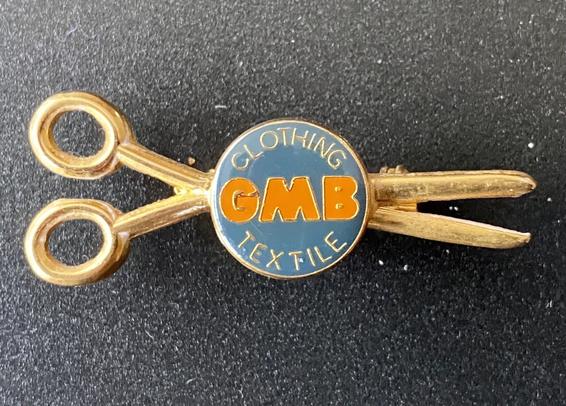
When the National Union of Tailors and Garment Workers merged into the GMB in 1991, it took its eye-catching scissors logo with it. The tailors’ union could trace its origins back to the 1850s, and by 1950 had around 130,000 members. But the industry’s decline saw membership halve over the next forty years. @histodons #LabourHistory #TradeUnionHistory #TradeUnionBadges
The National Union of Railwaymen always produced pretty good badges, but this one might be a bit unexpected. In fact, from the 1920s onwards, the NUR recruited significant numbers of bus workers, as this article explains https://sslh.org.uk/2022/01/17/on-the-buses-how-the-national-union-of-railwaymen-organised-bus-workers/
@histodons #LabourHistory #TradeUnionBadges #TransportHistory
On the buses: how the National Union of Railwaymen organised bus workers

Society for the Study of Labour History
Today’s trade union badge is brought to you by the National Union of Boot and Shoe Operatives, which operated from 1873 till 1971.
After the UK footwear industry went into decline, and jobs disappeared, the union merged with other leather-working unions to form the National Union of Footwear, Leather and Allied Trades. With further mergers it became part of Community.
#RedShoes #LabourHistory #TradeUnionBadges