#OnThisDay, 24 May 1976, at least 400 women walk out on strike at the Trica factory in London, demanding equal pay with their male colleagues. Around 100 men come out on strike in support of the women.

The strike lasts 21 weeks before the American owners of the factory agree to all demands.

#WomenInHistory #OTD #History #WomensHistory #BritishHistory #TradeUnionHistory #Histodons

#Historical #UnionSolidarity #Art.
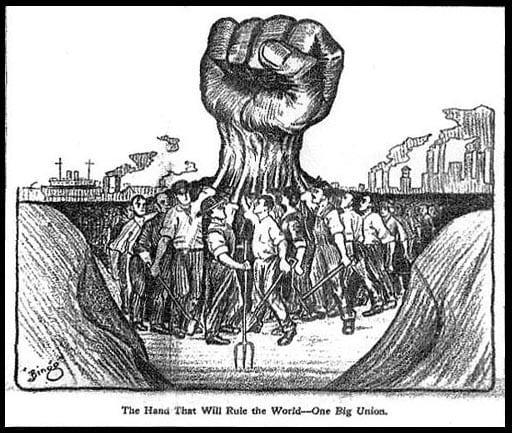
“The Hand That Will Rule the World” by Ralph Chaplin. June 30, 1917.

The symbol of the clinched fist has been a symbol of #solidarity as early as 1917. “The Hand That Will Rule the World” by Ralph Chaplin is an illustration referring to the #IWW (Industrial Workers of The World). Industrial unionism began when skilled workers were displaced by modern machinery and the #monopolization of industries. It was a union that believed industries should be controlled by the workers, benefiting the many instead of enriching the few, and create better working conditions.

In this image, the workers are uniting their arms and creating one giant fist, which represents solidarity and #unity, while holding tools, representing manual labor, while factories in the backdrop symbolize the machinery displacing the workers.

#WorkerUnions #Unionism #TradeUnionHistory #UnionStrong
#Histodons #LabourHistory #TradeUnionHistory
The Modern Records Centre at Warwick University holds an unrivalled collection of material on the history of the labour movement. Now it’s celebrating its half century. Find out more https://sslh.org.uk/2023/07/31/celebrating-50-years-of-the-modern-records-centre/
Celebrating 50 years of the Modern Records Centre

The Modern Records Centre (MRC) at the University of Warwick celebrates its fiftieth anniversary this year. Founded in 1973, the MRC boasts more than 1,500 collections specialising in political, ec…

Society for the Study of Labour History

#OnThisDay, 24 May 1976, at least 400 women walk out on strike at the Trica factory in London, demanding equal pay with their male colleagues. Around 100 men come out on strike in support of the women.

The strike lasts 21 weeks before the American owners of the factory agree to all demands.

#WomenInHistory #Histodons #BritishHistory #TradeUnionHistory @workingclasshistory

#Histodons #TradeUnionHistory #LabourHistory
We have a new blog post on the website about trade union emblems and membership certificates. During the Victorian era these were typically dominated by a classical imagery that soon appeared dated in the age of the motor car, and their use declined. But there was something of a revival in the 1930s as unions overhauled their public image. Read more and see some of these emblems at https://sslh.org.uk/2023/02/17/planes-trains-and-automobiles-rethinking-victorian-union-imagery-in-the-1930s/
Planes, trains and automobiles: rethinking Victorian union imagery in the 1930s

Society for the Study of Labour History
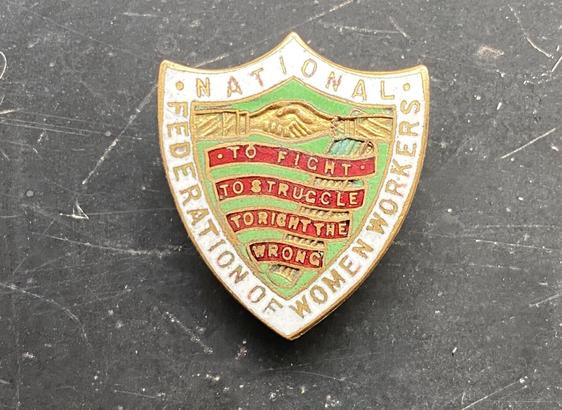
Very happy to have added this to my collection of trade union badges. The National Federation of Women Workers operated as a trade union from 1906-1921, before merging into the National Union of General and Municipal Workers. If you want to know more, I recommend the work of historian Cathy Hunt, who has published books on both the NFWW and its leading light, Mary Macarthur https://cathyhunthistorian.com/
#LabourHistory #TradeUnionHistory #TradeUnionBadges
Cathy Hunt historian

History - what I do, what I love

Cathy Hunt historian
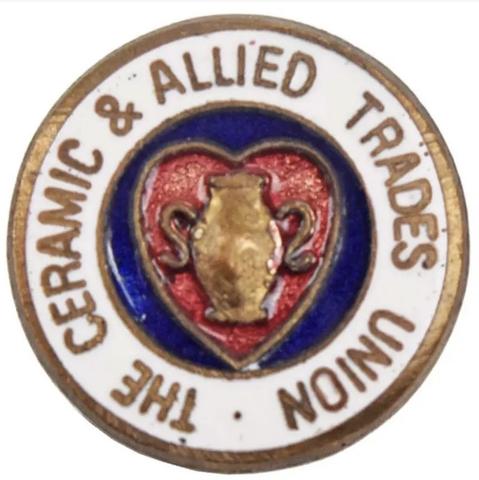
An indignant-looking pot on this Ceramic and Allied Trades Union badge. The CATU emerged from a series of mergers in 1970, but traced its roots back to the early years of the twentieth century. It eventually merged into the GMB. #TradeUnionBadges #TradeUnionHistory
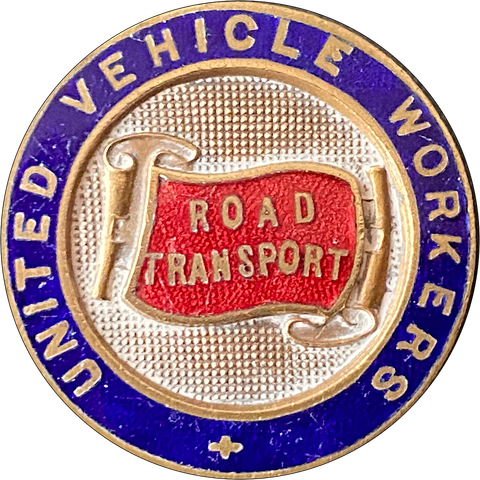
I believe this badge is from the United Vehicle Workers trade union that enjoyed only a brief existence before becoming part of the TGWU in 1922, though I can find no record of it incorporating “road transport’ in its name.
#LabourHistory #TradeUnionHistory #TradeUnionBadges
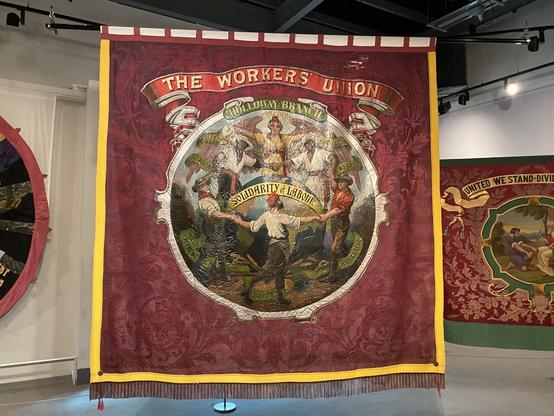
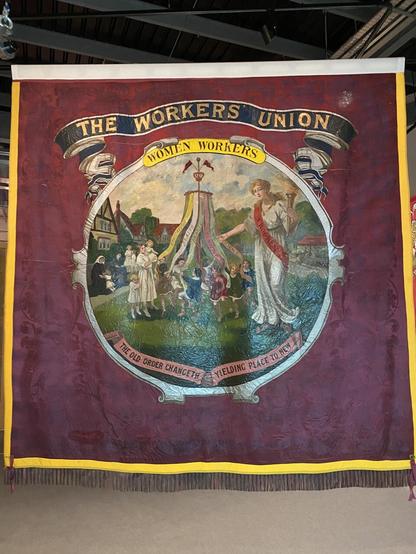
These fantastic 1920s banners, made for the Holloway branch of the Workers’ Union, are inspired by the work of Walter Crane. They are on display in the People’s History Museum in Manchester. If labour history is your thing, follow @sslh @histodons
#LabourHistory #TradeUnionHistory #TradeUnionBanners
#LabourHistory #TradeUnionBadges #TradeUnionHistory
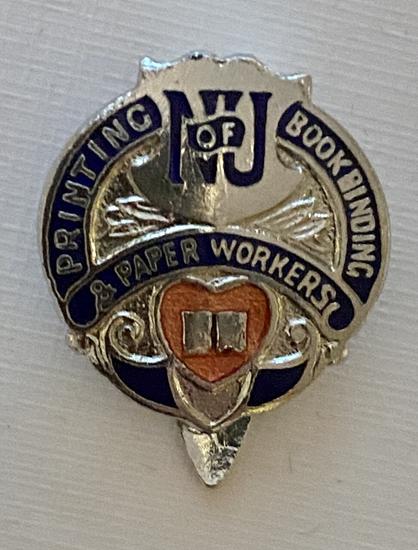
Adopting this name in 1928, the National Union of Printing, Bookbinding and Paperworkers emerged from the mergers of numerous small and specialist unions, some of which traced their roots back to the 1820s. It went on to absorb further unions over the years, and in 1966 merged with NATSOPA to form the Society of Graphical and Allied Trades. Its archives are kept in the Modern Records Centre at Warwick University https://mrc.epexio.com/records/NPB
National Union of Printing, Bookbinding and Paper Workers