 @@
@@🚀 Now showing test coverage directly in class diagrams.
No more guessing what's tested — it's all visual, right where you design.
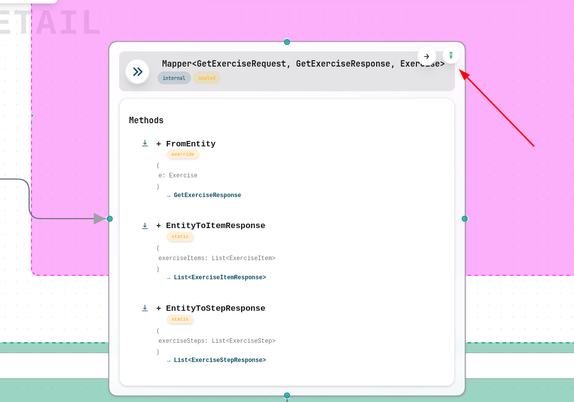
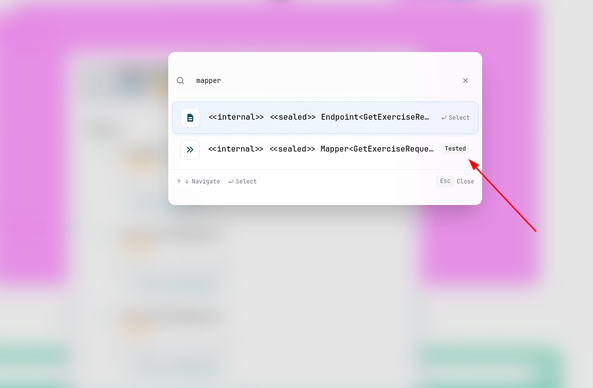
🚀 Now showing test coverage directly in class diagrams.
No more guessing what's tested — it's all visual, right where you design.
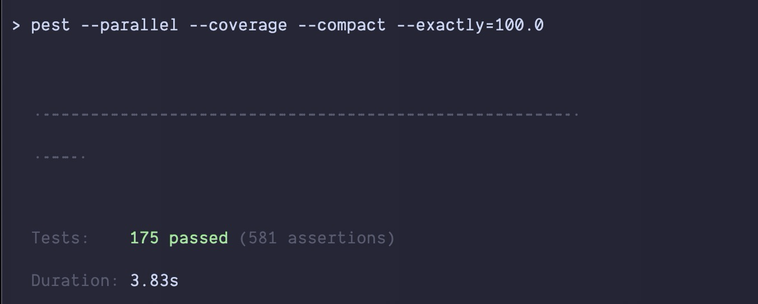
Big milestone: the Hunter backend just hit 100% test coverage!
Every route, service, and edge case fully covered.
More stability, less guesswork.
Live: https://hunter.cv
#HunterPlatform #Backend #TestCoverage #BuildInPublic #DevLog
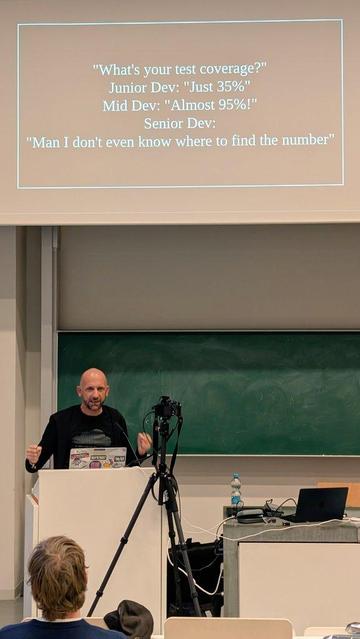
@preusslerberlin on fire at DevFest 🔥
C++ code coverage reports often omit function templates that are not instantiated, which can give a misleading picture of coverage. I've been trying to improve my tooling in this regard, and so added a feature to Doxide to export line data directly from source code that can be mixed in with gcov coverage data. Here's the story so far.
https://indii.org/blog/cplusplus-code-coverage-with-gcov-gcovr-doxide/
#softwaretesting #testcoverage #codecoverage #cplusplus #cpp
The 3rd Community Question is here! 🎉 Hanan Ur Rehman asks about key elements of a software testing strategy and how to establish it for better coverage. 🚀 Check out my latest video for insights!
🔗 Watch here: https://youtu.be/p0wRtDKhqlU
#SoftwareTesting #TestingStrategy #QA #TestCoverage #DevCommunity

One semi decent programming use case I have found for LLMs is starting out unit tests to backfill coverage for an already existing untested function.
Opinions on #unittesting are endless: test fixtures, test factories; test doubles, mocks, and stubs. The real problem is mistaking exhaustive #testcoverage for a sensible testing strategy. They aren't synonymous.
Testing core #RubyLang methods or coupling tests for a menu bar to DB calls both miss the point. The Pareto principle is to validate *your* logic, not whether Ruby or Rails work.
Tests that can't explain app-specific features or debug non-builtin code is *muda* waste. Just don't.
 Kidiatoliny Gonçalves
 Michael Rowe
 Mohsen Mirhoseini 🍀🤖👨💻
 Lawrence Murray
 Daniel Knott
 postmodern
 Aaron In Minnesota
 Todd A. Jacobs | Rubyist
 David Cantrell 🏏