Federal funding for people in poverty heading to Missouri anti-abortion centers
Federal Funding for People in Poverty Is Going to Anti-Abortion Centers Instead
At least eight states gave Temporary Assistance for Needy Families funds to crisis pregnancy centers in recent years.Federal Funding for People in Poverty Is Going to Anti-Abortion Centers Instead
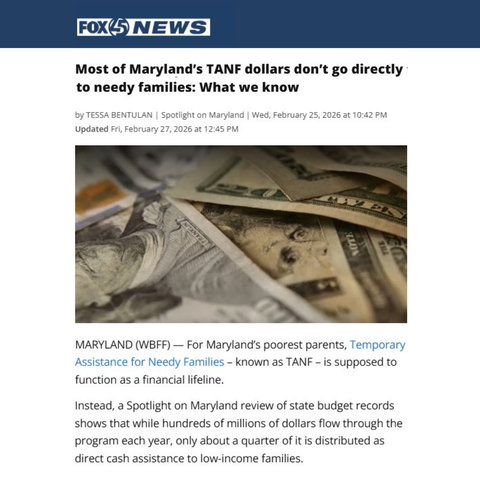
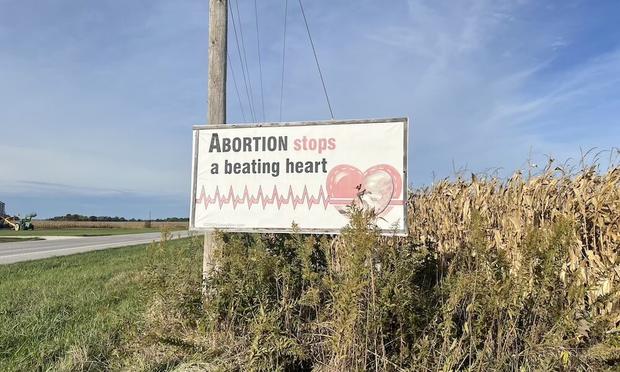
Most of the money Missouri gives to its crisis pregnancy centers comes from federal funds meant to assist families experiencing poverty with basic necessities and child care, Republican Rep. Jason Smith said on the U.S. House floor in January.
As many as $3 of every $4 for pregnancy centers in Missouri was from the federal #TANF ("Temporary Assistance for Needy Families") program in 2024,
and in the 2026 fiscal year, it will be $2 out of $3.
The amount of #TANF funding has steadily increased since 2022, from $4.3 million then to $10.3 million in fiscal year 2026.
⚠️ At least eight states have given TANF funds to crisis pregnancy centers in recent years
-- even before the U.S. Supreme Court overturned federal protections for abortion rights in 2022.
According to data from the consulting firm Health Management Associates,
more than $102 million from TANF went to the centers in those eight states between 2017 and 2023,
including $22.5 million in Ohio,
$11.75 million in Indiana
and $12 million in Texas.
Judge: Trump administration can't block child care, program money for Colorado, 4 other states
Rep. Diana DeGette —'(Trump’s) effort is illegal, and I will continue to fight against his blatant politicization of funds that help the most vulnerable families in our state’
Judge: Trump administration can't block child care, program money for Colorado, 4 other states
Rep. Diana DeGette —'(Trump’s) effort is illegal, and I will continue to fight against his blatant politicization of funds that help the most vulnerable families in our state’
US urged to ‘think bigger’ on healthcare amid Trump onslaught on sector
An academic journal may inject some optimism into US health policy – a scarce commodity amid the Trump administration’s mass layoffs, funding freezes and the ideological research reviews.
A new issue of Health Affairs Scholar argues the conversation around healthcare can change – and radically – if academics think “bigger” and policymakers invest in their communities.
“We saw what happened in the public outcry of the murder of the United HealthCare CEO,” said Dr Victor Roy, a family physician and director of the health and political economy project at the New School in New York City.
“There is a sense people are fed up and people are looking forbigger alternatives. People have really visceral feelings around these issues and we have a way to tackle them if people come up with ideas on the scale of the challenges people are experiencing.”
Health policy has quickly become a major touchstone of the Maga-right, as the Trump administration undertakes a shock and awe campaign that has dramatically altered public health institutions.
In just a few weeks in office, the administration has scrubbedgovernment health websites of information on women and racial minorities, reviewed billions in scientific grant applications for conformity to the president’s agenda, and confirmed the nation’s foremost vaccine critic, Robert F Kennedy Jr, as the nation’s top health leader at the Department of Health and Human Services.
The administration has also said it will pull the US out of the World Health Organization (WHO), which it helped found in 1948.
Additionally, congressional Republicans have floated major cuts to Medicaid, a health insurance program for the low-income and disabled that insures about 72 million Americans, to extend tax cuts that largely benefit the wealthy.
But even outside recent upheaval, the scale of challenges to American healthcare is something to behold:
the US spends more on healthcare than almost any other country as a share of gross domestic product,
yet has some of the worst outcomes among developed democracies.
It is a global outlier for failing to offer universal healthcare and one of the few countries that allows its citizens to be bankrupted by medical debt.
How to fix it?
Don’t tinker around the edges, Roy argues.
Instead, look upstream for solutions to health problems.
Abandon narratives about “deserving-ness”.
Examine what is working in cities and states.
In an interview, Roy cited the example of the "Philadelphia Joy Bank" – a small program that provides pregnant and postpartum women with a $1,000 basic income.
This money comes with no questions asked, which is a world of difference from traditional “welfare”, or temporary assistance for needy families ( #TANF ).
TANF once provided temporary cash assistance to the poor. Since Clinton-era welfare reforms,
the program has been drained of resources;
its scant payments have lost venue with inflation and work requirements have saddled many with insurmountable bureaucratic barriers.
In Connecticut, lawmakers established first-in-the-nation
“baby bonds”,
a small investing account for each low-income child born in the state.
The program provides $3,200 per child that is invested in the market, and can be used to buy a house, start a business, or pay for higher education or retirement.
In Washington DC, reformers at the American Economic Liberties Project are using the lessons of recent anti-trust victories to push for a proposed
“Glass-Steagall for healthcare”.
The initiative, called "Break Up Big Medicine", refers to the New Deal-era Glass-Steagall legislation that separated investment banks from commercial banks.
https://www.theguardian.com/us-news/2025/mar/22/us-healthcare-trump?CMP=Share_iOSApp_Other
Rep Nick LaLota (R-NY) repeats decades old #GOP demand for work requirements for the able-bodied recipients of #Medicaid (or any form of welfare).
Well, I have personal experience of how abusive that can be: when I worked for a major #NGO in #NoVa, local #SocialServices in a deep red #GOP-dominated county sent a woman on #TANF to us, w/out telling or consulting us, to "volunteer" in no specified way in fulfillment of a work req't I'm not even sure was legal.
She had to find someone to take
1
What's the question?
Trump's freeze on all fed assistance programs (except #SocialSecurity, #Medicare*) means suspension of #Medicaid, #SNAP, #TANF, #AffordableHousing (eg, #HCV, #LIHTC, #SeniorHousing), #SBA loans, #BidenInfrastructure subsidies, for starters & will adversely impact #military families as well as the rest of America.
____
* Dear #Media:
Seems I need to remind y'all, Social Security & Medicare are NOT federal assistance programs.