"In the TMS 1000, the program counter steps through the program pseudo-randomly rather than sequentially. The program is shuffled appropriately in the ROM to counteract the sequence, so the program executes as expected and a few transistors are saved." (https://www.righto.com/2025/01/pentium-carry-lookahead-reverse-engineered.html)
Für kleine Optimierungen sind Entwickler wirklich zu jeder Schandtat bereit. 🙀
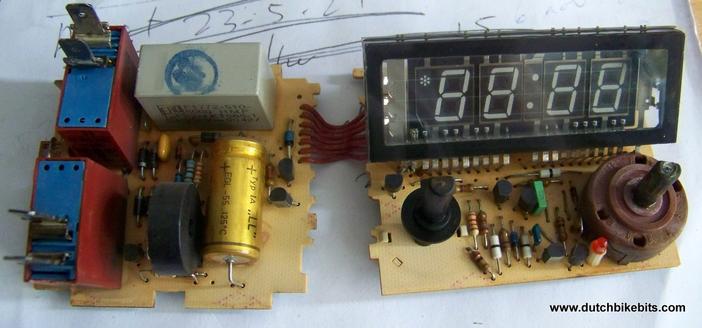
One small part of the oven stayed behind. It had a timer module using a nice old-fashioned green vacuum fluorescent display, so I removed that in case I can think of a use for it in the future. At the very least I thought it'd contain a relay that I could perhaps use.
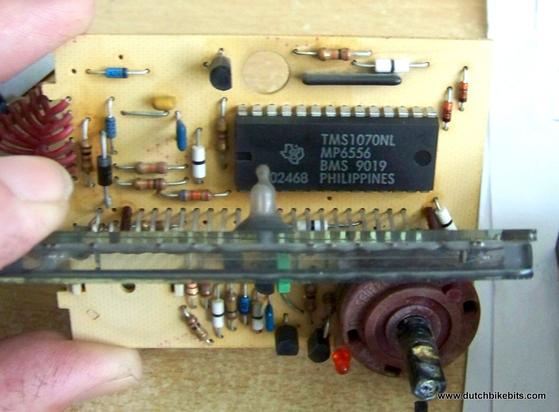
It turns out that the relays operate on 24 V, which isn't great for me. But my favourite part in the timer is the TMS1070. This is part of the TMS1000 family of processors used in a lot of calculators in the 1970s. It's a four bit embedded processor with 1 kB of masked ROM and 64 nibbles (half bytes) of RAM.
The TMS1070 variant of the chip switch the higher voltages used by vacuum fluorescent displays, which is of course required in this example.
There's a bit more information about the TMS1070 here:
http://www.datamath.org/Chips/TMS1070.htm
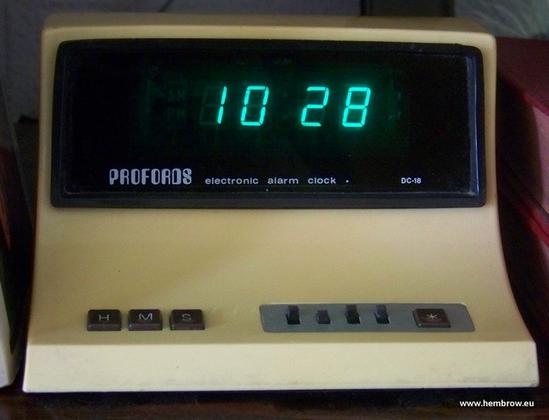
You'll note the 1990 date code (the oven was 34 years old). I also have another digital clock with a TMS1000 derivative in it dated 1976. It's been powered up pretty much full time since then and still works perfectly:
https://hembrow.eu/electronics/profordsdc18.html
#electronics #tms1000 #texasinstruments
Over 100 million sold!
https://en.wikichip.org/wiki/ti/tms1000
And the TMS1000 was also used in Sinclair's calculators, including the amazing Scientific... which has been very fruitfully reverse-engineered