(2) on Trump/Xi 2026
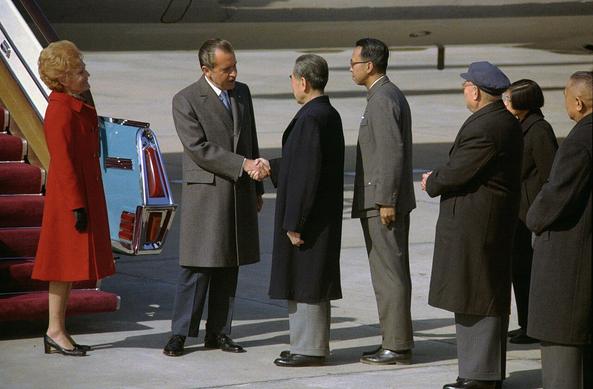
I remember the “kerfuffle” in 1972 when during War on Vietnam ‘Nixon the Crook’ met with ‘Mao the Cult’ and the fallout amongst authoritarian Left and Right alike.
https://en.wikipedia.org/wiki/1972_visit_by_Richard_Nixon_to_China

Australian Labour Govt Opposition leader in 1971; as Prime Minister 1973 Whitlam began trade deals with China’s State Capitalists too

https://theconversation.com/50-years-after-gough-whitlam-established-diplomatic-relations-with-china-what-has-changed-195705

#Capitalism #stateCapitalism

1972 visit by Richard Nixon to China - Wikipedia

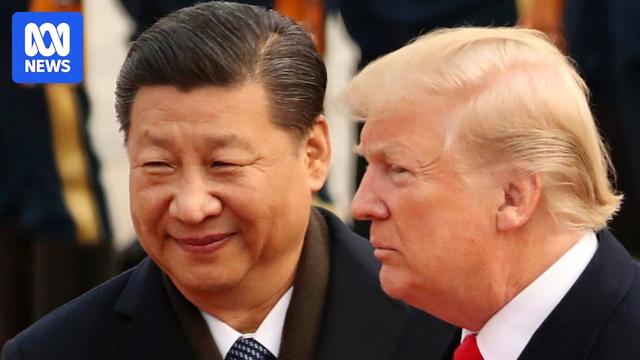
Apple's Tim Cook and Tesla's Elon Musk among top US CEOs to accompany Trump to China

According to a list shared by a White House official, speaking on condition of anonymity, Elon Musk and Tim Cook will be accompanied by 15 other chief executive officers when Donald Trump visits China.

US ECONOMY SHIFTS, STATE TAKES A BIGGER HAND IN BUSINESS

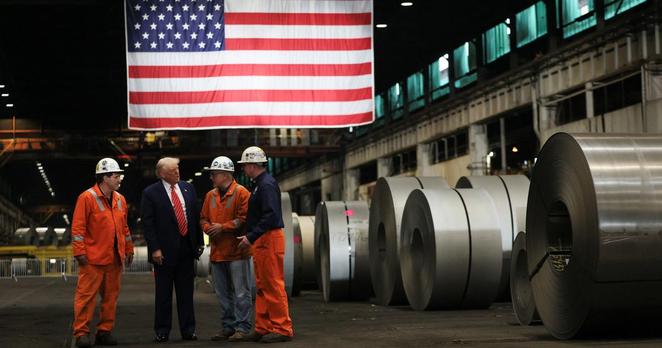
The US government is now more involved in business, acting like an investor. This changes how companies make decisions, especially with foreign trade.

#StateCapitalism, #USBusiness, #EconomicShift, #GovernmentIntervention, #CorporateAmerica

https://newsletter.tf/us-government-gets-more-involved-in-business/

The US government is now acting more like a business owner, not just a rule maker. This is a big change from before.

#StateCapitalism, #USBusiness, #EconomicShift, #GovernmentIntervention, #CorporateAmerica
https://newsletter.tf/us-government-gets-more-involved-in-business/

US Government Takes Bigger Role in Business Decisions Starting 2024

The US government is now more involved in business, acting like an investor. This changes how companies make decisions, especially with foreign trade.

NewsletterTF

"Direct, transactional government intervention in companies to secure critical industries and serve other policy ends will inevitably lead to favoritism, inefficiency, higher costs, and lower growth. Frontier companies are already pulling away from their competitors; discretionary intervention may further increase market concentration and widen the gap between the large incumbents and industry champions that benefit from government deals and access and the companies that do not.

Even for the businesses that benefit, the new discretionary state capitalism is a mixed blessing. They will face rising uncertainty and risk falling into governments’ cross hairs as everything from antitrust approvals to international mergers and acquisitions becomes less subject to predictable rules and more subject to the whim of political processes. Governments, meanwhile, may be eager to use the full range of tools available to them, but a heavy-handed, volatile state can quickly dampen economic activity and competition. Discretionary policymaking can distort corporate behavior, pushing companies to focus less on productivity and more on lobbying for political favor. And perhaps most important, a government will not succeed in securing its country’s economic future through investment in critical technology and manufacturing unless it also addresses underlying constraints, such as labor availability, skills gaps, or a burdensome regulatory environment. Economic history is littered with experiments in state capitalism that ended in failure, including U.S. price controls in the 1970s, which contributed to energy shortages and did little to tame inflation, and the 1975 nationalization of British Leyland Motor Corporation, which struggled mightily despite billions in government investment and was eventually dissolved. Policymakers keen on muscular intervention today must tread carefully or risk meeting the same fate."

https://www.foreignaffairs.com/united-states/trouble-state-capitalism#
#USA #Trump #StateCapitalism #Kleptocracy

The Trouble With State Capitalism

America is adopting a risky model.

Foreign Affairs

State Capitalism – Be careful what you ask for!
Good Read!

By anointing winners and losers, State Capitalism may well create an enduring snake pit of favoritism, inefficiency, higher costs, lower growth, and stunted innovation. And it’s not just losers that lose, the “winners” will also face rising uncertainty and risk of falling out of favor with business operations subject to unpredictable rules and to the flights of fancy of political actors.

Access to foreign markets will become more uncertain/possibly curtailed as more and more countries seek to promote domestic champions and reduce dependence on foreign goods. Ultimately, state capitalism is self-defeating. The U.S. has maintained its lead over China due to the dynamism of open markets and the predictability of the rule of law. Replacing a system of economic rules with a system powered by political whims will be geopolitical economic malpractice. https://www.foreignaffairs.com/united-states/trouble-state-capitalism #Capitalism #StateCapitalism #Politics #Markets #Risk #Business #Innovation

Trump’s State Capitalism

The U.S. government has increasingly become a brokerage[1] platform for elite business capital accumulation goals camouflaged under a national security agenda. Anyone who has read my latest book, U.S.-Russian Commercial Relations 1763-1933: Origins of ...

https://murica.website/2026/01/trumps-state-capitalism-2/

Trump’s State Capitalism – The USA Potato

“A model of crony #statecapitalism that tries to resuscitate a long-dead industrial #economy is hardly an antidote to #neoliberalism.”

RE: https://bsky.app/profile/did:plc:5zca2ola2zxpkw37w4f3wxtu/post/3mbwpglcxl22t
"The Trump administration has continued to snap up stakes in other private firms, most notably mining companies involved in the production of rare earth minerals and other raw materials used in technology"
Approaching the Chinese model, just from the opposite direction? #nationalisation #statecapitalism
https://aje.io/jimbw7
Trump threatens US defence firms over executive pay, slow production

The US president demanded that defence contractors cap their executives’ pay until new production plants are built.

Al Jazeera

"Given what we know about the limited net surplus actually squeezed from agriculture and the scale of human loss, a softer, more balanced socialist strategy looks economically plausible and morally preferable. A reformed NEP with hard investment targets could have delivered comparable industrial capacity by the early 1940s, with fewer long-term distortions and a very different distribution of gains.

But plausibility on paper isn’t the same as political feasibility in 1928–32. Information was thin; the leadership’s worldview was siege-minded, which was hardly irrational given the collapse of collective-security efforts after 1933 and, ultimately, the 1941 German invasion; and incentives inside the party-state pushed toward command solutions. From that vantage point, the crash path felt “inevitable,” even if it wasn’t in a strict economic sense. The late-1980s debates in the Soviet Union revived the counterfactuals, including the idea that Lenin might have kept a mixed economy longer. As Alec Nove cautioned in the last edition of An Economic History of the USSR, it’s far from obvious he would have chosen differently had he lived into the 1930s.

So, I land here: a more humane path was possible, but not likely under the beliefs, threats, and institutions of the time. The lesson isn’t that speed always justifies the means. It’s that the means shape the society you end up with, long after the steel is rolled and the machines are built."

https://deveconhub.com/was-stalin-necessary-three-ways-to-read-soviet-industrialization/

#Russia #USSR #Stalin #Industrialization #NEP #Lenin #StateCapitalism

Was Stalin “Necessary”? Three Ways to Read Soviet Industrialization

In a little over a decade after the 1917 Revolution, the Soviet Union vaulted from a mostly agrarian economy to an industrial power. By 1940, overall industrial output was several times its late-19…

Elusive Development