 Grumpy Old Techie 🕊️
A meerkat doing science! 🤓🤩😲
https://www.youtube.com/watch?v=n2k3pgTwGgI
#science #astronomy #radioastronomy #meerkat #ska #SquareKilometerArray #southafrica
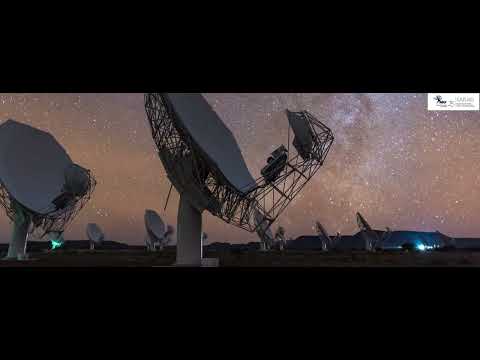
A meerkat doing science! 🤓🤩😲
https://www.youtube.com/watch?v=n2k3pgTwGgI
#science #astronomy #radioastronomy #meerkat #ska #SquareKilometerArray #southafrica
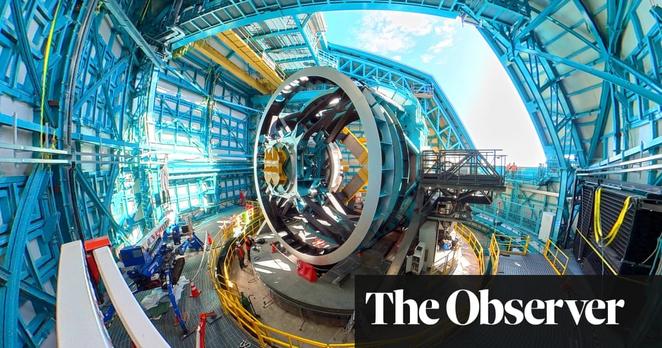

Life on Earth would not be possible without food, water, light, a breathable atmosphere and surprisingly, a magnetic field. Without it, Earth, and its inhabitants would be subjected to the harmful radiation from space making life here, impossible. If we find exoplanets with similar magnetospheres then those worlds may well be habitable. The Square Kilometer … Continue reading "Measuring Exoplanetary Magnetospheres with the Square Kilometer Array"
The first of the 131,072 two-metre-tall, Christmas tree-shaped antennas that will make up the #SquareKilometerArray at Inyarrimanha Ilgari Bundara have been deployed.
https://www.skao.int/en/news/524/first-ska-low-antennas-deployed
Here is MeerKAT itself. Unfortunately the telescope was working, so I was not allowed to turn my camera on any nearer than this, for fear of electrical noise from the autofocus motors blowing the sensitive receivers!
Sharing this for no particular reason: The place where the South African part of the Square Kilometer Array is going to be built is dramatic and beautiful. I took this photo about 20km from MeerKAT, which will be a part of the core cluster, roughly in the middle of a triangle formed by the towns of Williston, Carnarvon and Vanwyksvlei.
Starlinks are Easily Detected by Radio Telescopes
Visible and infrared astronomers are concerned about light pollution from satellite megaconstellations, and radio astronomers should be concerned too. A team of astronomers used radio telescopes in Australia to image the sky as Starlink satellites overhead. The tests were done at the future Square Kilometer Array facility in Western Australia, using prototype stations that will become part of the array. According to the team, the satellites were easily detectable, and they could see them performing periodic bursts and steady transmissions. When the full SKA comes online, satellites will be another source of radio interference to contend with.
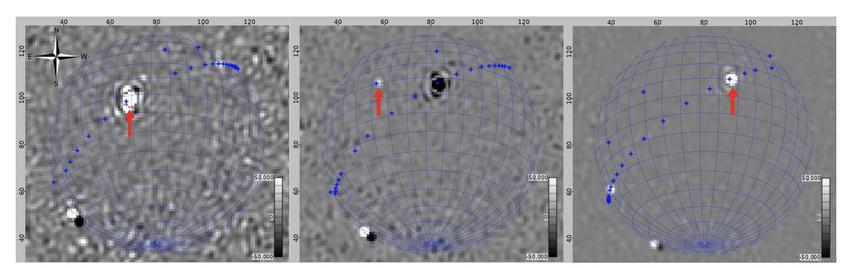

Intended and unintended radio emissions from satellites can interfere with sensitive radio telescopes in the frequency ranges of key experiments in astrophysics and cosmology. We detect strong intended and unintended electromagnetic radiation from Starlink satellites at the site of the future SKA-Low facility in Western Australia, using an SKA-low prototype station known as the Engineering Development Array version 2 (EDA2). We aim to show that Starlink satellites are easily detectable utilising a configuration of low frequency radio antennas representative of an SKA-Low 'station' and that our results complement similar findings with the LOFAR telescope. Utilising the EDA2 at frequencies of 137.5 MHz and 159.4 MHz, we detect trains of Starlink satellites on 2023-03-17/18 and 2021-11-16/17, respectively, via the formation of all-sky images with a frequency resolution of 0.926 MHz and a time resolution of 2 s. Time differencing techniques are utilised to isolate and characterise the transmissions from Starlink and other satellites. We observe Starlink satellites reaching intensities of $10^6$ Jy/beam, with the detected transmissions exhibiting a range of behaviours, from periodic bursts to steady transmission. The results are notable because they demonstrate that Starlink satellites are detected in the SKA-Low frequency range, transmitting both intentionally and unintentionally. Follow-up work and discussion are needed to identify the cause of this unintentional radiation as it has the potential to interfere with SKA-Low science. Our results indicate that both intended and unintended radiation from Starlink satellites will be detrimental to key SKA science goals without mitigation. Continued conversation with SpaceX could potentially result in future mitigations which the EDA2 instrument could efficiently monitor and characterise at the SKA-Low site.
So, exciting news! I just ended a call with one of my new friends at the Square Kilometer Array, and it looks like Season 4 of the Urban Astronomer Podcast is a go!
We keep things pretty loose at Urban Astronomer HQ, so details could easily change as the mood strikes, but we're hard at work writing scripts and setting up interviews with key SKA personnel for another 12 episodes. As usual, we're planning to release an episode every two weeks, and as usual we're probably going to miss a few deadlines, but we'll do our best to keep the good stuff coming on time!
So what can you expect? Interviews! With technical staff at MeerKAT! And Scientists! Talking about their science! Computer people talking about supercomputers! Engineers talking about how to even build the thing! Indigenous people who live next door and have to look at it! Managers and politicians who did whatever managers and politicians do to get projects like this built! Telescopes! Science!
And also, as per tradition, our own special ever-popular unique patented Science Explainy Bits, where we do our best to explain how it all works, using just our words and no diagrams because this is a podcast!
And where will you find all this lovely stuff? Why, at https://www.urban-astronomer.com of course! Now with extra subscribe buttons, to hook you up in the podcast platform of your choice, and a full back catalogue dating all the way back to our first episode in 2017.
Subscribe now, and never miss an episode of The Urban Astronomer Podcast - SKA season!
#UrbanAstronomer #Astronomy #Podcast #SquareKilometerArray #Science #SciComm #news
 Benjamin Carr, Ph.D. 👨🏻💻🧬
 Ansgar Schmidt
 Paul Guinnessy
 Allen but one of the good ones
 Fraser Cain
 Prof Stephen Serjeant