SleepyCatten (Metastable, Skill Regression Arc)
 Olaszka
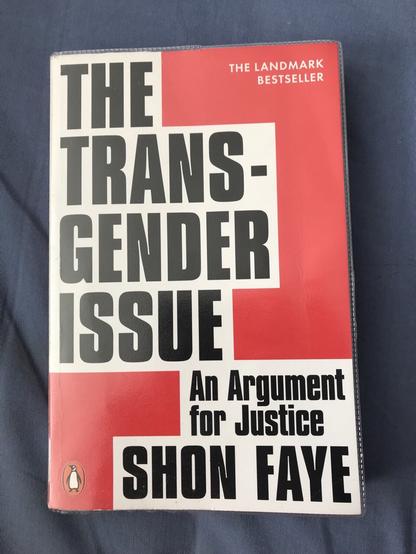
V-Day comes early for those who want it bad enough. P.S. Read the new Shon Faye everyone!!! #homesweethome #cosyliving #allpinkeverything #valentinesday #currentlyreading #shonfaye #loveinexile #feministbookclub #feministycznyklubksiążki

@jaelisp We're AuDHD, so trying to reconcile opposites is our daily struggle 😅
At a high-level, we see and resolve the seeming contradiction broadly as follows:
Nationalised health services, free at the point of use and paid for by taxation (national insurance contributions) are a fundamentally good idea at their core and have the capacity to be amazing.
That said, malicious forces will do everything within their power to erode any national public service, especially healthcare, for their own gain.
These malicious forces include (but are not limited to):
It is not just being eroded from the outside either, sadly. There are ideological forces at work within the medical institutions themselves 
We're talking (in no order) pervasive, insidious, institutionalised:
etc.
Even the BMA reported on the systemic issues recently!
Some issues are not the result of a lack of funding or expertise, but a fundamental refusal from the very top to change the way the system works.
On gender-affirming care, for example, The Transgender Issue: An Argument For Justice by Shon Faye breaks down how gatekeeping, long-waits, and transphobia were baked into the system from its creation.
Since its inception, access to trans healthcare has similarly been an ideological battleground. For those who need them, medical transition and contraception or abortion are – or should be – about the bodily autonomy of the individual, their right to mental well-being and the freedom to carve out their own destiny in defiance of prevailing gender roles. (These roles, should we need reminding, frame women as vessels for reproduction and trans people as threats to the strict separation of male and female sex roles on which patriarchy depends.) Access to abortion and access to trans healthcare are often attacked in similar ways: principally by overstating the incidence and likelihood of regretting either process, and an intense, disproportionate focus in the media on the stories of individuals who do regret their personal choices, as a way to undermine the principle of choice generally. Only about 5 per cent of women experience any degree of regret over their abortion. Multiple studies show the regret rate for gender reassignment surgery is even lower: about 0–2 percent. Despite this, the fear of regret has become a powerful tool used to justify the delay or withholding of treatment.
and
... it wasn’t until the 1960s that transsexualism became a formally recognized diagnosis within the British medical establishment. ... Medical support for trans people, however, was still rare. Throughout the 1960s and 1970s, individual trans patients continued to use the ambiguous and contested link between physical intersex traits and the psychological experience of gender dysphoria to get certain doctors to treat them – though, even then, few doctors would. A 1966 study in the British Medical Journal found that only ‘9% of psychiatrists, 6% of GPs, and 3% of surgeons’ would agree to actively assist transsexual patients. All of which effectively meant that trans people’s lives and destinies were dependent on the whims of a very small number of British doctors.
Shon goes into detail about the awful Dr John Randell, who worked in the gender identity clinic at Charing Cross Hospital, including one part that tells you all you really need to know about him:
Even when Randell had assisted with transition, patients often found him brusque, even cruel. ‘It hasn’t made you a woman, you know – you’ll always be a man,’ he reportedly told one trans woman who thanked him after surgery.
She sums up his pivotal involvement as follows:
It’s worth pausing to consider that the most powerful pioneer of trans healthcare in twentieth-century Britain was a cisgender male psychiatrist who believed neither in the reality of trans people’s deeply held identities nor that gender norms were socially constructed ideals that could be relaxed, challenged or abolished. He believed trans people were delusional about the reality of their situation and that at the same time they also needed to be highly competent mimics of gender stereotypes. He did not believe that they should be allowed freedom over their interpretation or expression of gender.
In short, the NHS could be great, but the current systems are fundamental rotten at their core. In order to fix the NHS, we would need to break both it and the medical institutions down, rebuild them, and then spend decades building them back up whilst engraining a culture of empathy, caring, and non-discrimination into the training of all staff (medical and non-medical) across the board.
#NHS #transphobia #transmisogyny #racism #bigotry #prejudice #GenderAffirmingHealthcare #ableism #FuckTheNHS #ShonFaye #BMA #queer #LGBTQ+ #LGBTQIA+


#GayPrideAndCapitalism: What is Pinkwashing?
#NovaraMedia
June 2015
As pride season approaches #ShonFaye looks at how corporations and governments have co-opted the #LGBTQIA movement.Help us caption & translate this video!http://...


 Cheerful Madness!! 🖤🩶🤍💜
 Queer Lit Cats
 hipporebecca
 Nina Grasse
 greter
 MusiqueNow
  ✡️ 🇵🇸
✡️ 🇵🇸