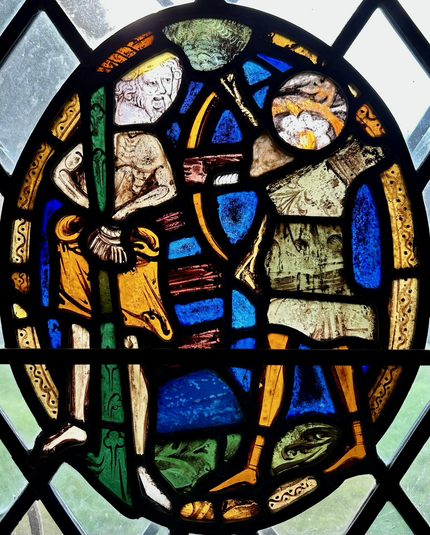
13th century stained glass from St. Mary’s Church at Saxlingham Nethergate in Norfolk depicting a bowman taking aim at St. Edmund of East Anglia - the Anglo-Saxon king who was killed by the Viking Great Army in around 869 AD. 📸 My own. #StainedGlassSunday #SaxonSunday
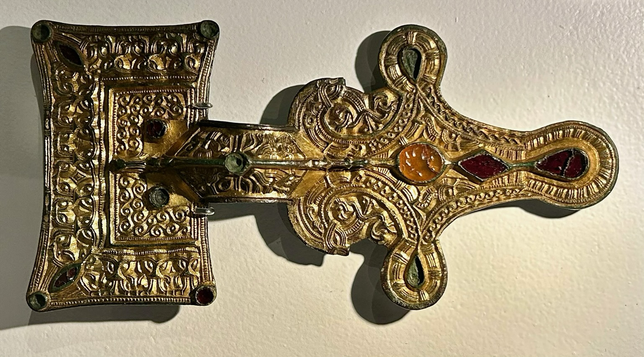
A square-headed Anglo-Saxon brooch from Warwickshire. Dating to the 6th century, the brooch is now on display at the Ad Gefrin Anglo-Saxon Museum at Wooler in Northumberland.
📸 My own. #SaxonSunday #AdGerfin
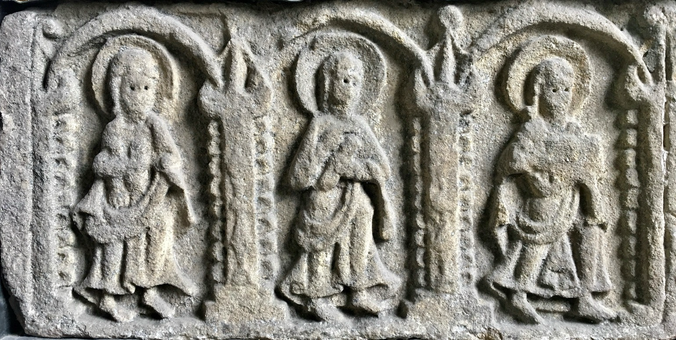
A trio of saints or apostles - one of the many wonderful Anglo-Saxon sculptures at the Priory Church of St. Mary & St. Hardulph at Breedon on the Hill in Leicestershire. 📸 My own. #SaxonSunday #SundayStonework #BreedonOnTheHill
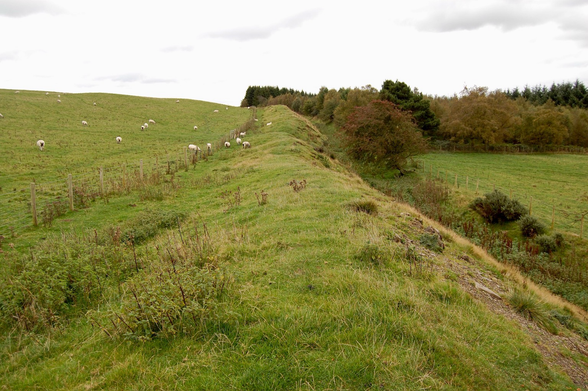
A section of Offa’s Dyke near Churchtown in Shropshire. The linear earthwork roughly follows the English/Welsh boundary, and was constructed on the orders of King Offa of Mercia in the 780s. 📸 My own. #SaxonSunday #OffasDyke #Mercia #Shropshire
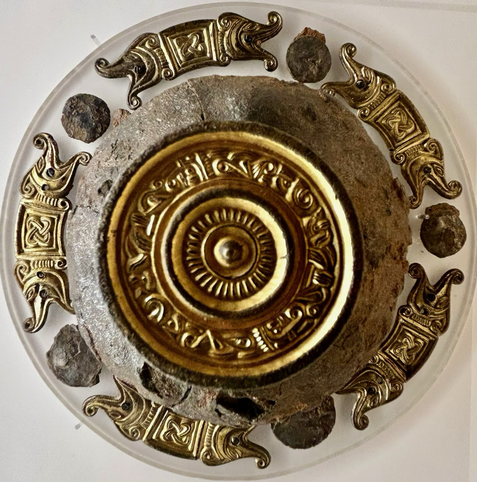
The remains of a bronze shield boss which dates to the 6th century. Originally from Warwickshire, the boss is now part of the collections at the Ad Gefrin Anglo-Saxon Museum at Wooler in Northumberland. 📸 My own. #SaxonSunday #AdGerfin #Northumberland
The Anglo-Saxon crypt of St. Wystan’s Church at Repton in Derbyshire. Dating to the 8th century, the crypt served as a royal mausoleum for two Mercian kings, as well as the resting place of St. Wystan. 📸 My own. #SaxonSunday #Repton #Derbyshire
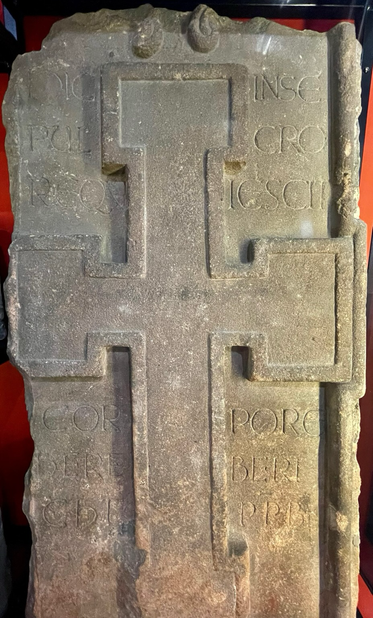
An Anglo-Saxon grave slab from Peter’s Church at Monkwearmouth in Sunderland commemorating Herebericht (priest). The church was founded in 674-5 as part of the double monastery of Wearmouth-Jarrow founded by Benedict Biscop & home to the Venerable Bede. 📸 My own. #SaxonSunday
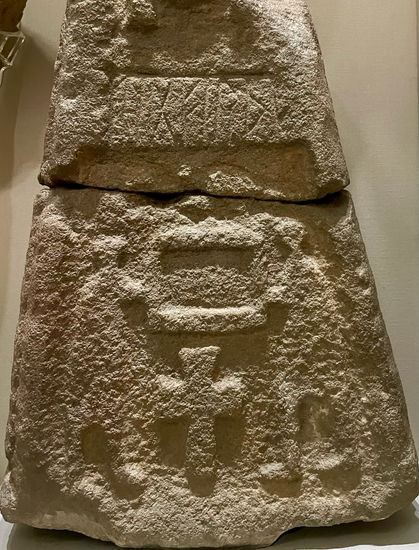
An Anglo-Saxon grave marker from St. Peter’s Church at Monkwearmouth in Sunderland. Dating to around 900 AD, the runic inscription commemorates ‘TIDFIRTH’. The stone is now part of the collections at Sunderland Museum. 📸 My own. #SaxonSunday #SunderlandMuseum #StoneworkSunday
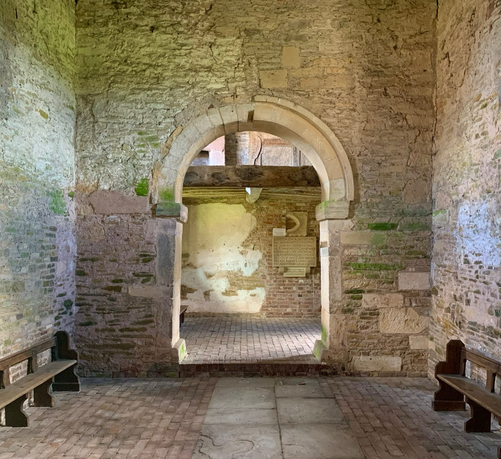
Interior view of Odda’s Chapel at Deerhurst in Gloucestershire. It was built in 1056 by Earl Odda, a relation of Edward the Confessor, for the soul of his brother Aelfric. 📸 My own. #SaxonSunday #Deerhurst #OddasChapel #Gloucestershire
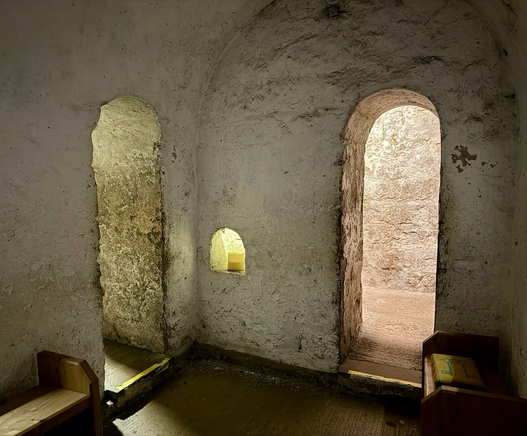
The two openings which pilgrims would have used to access and exit the Anglo-Saxon crypt at Ripon Cathedral in North Yorkshire. Dating to 672 AD, the crypt is the only surviving part of St. Wilfrid’s original church. 📸 My own. #SaxonSunday #RiponCathedral