#Synthesizers #Samplers #sampler #trackers #Akai #Emu #Ensoniq
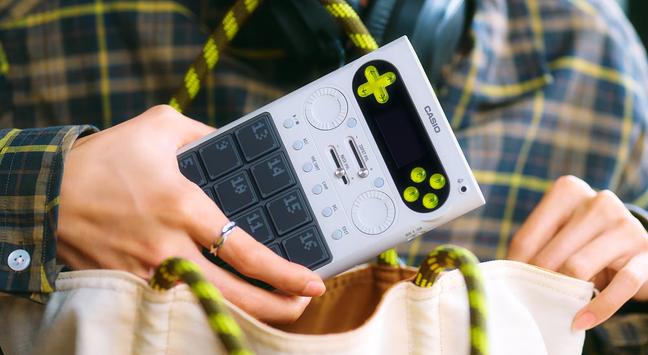
Casio’s SXC-1 handheld sampler is packed with fun, coming to Japan

Memory may be vanishing, phones and laptops may be getting downgraded specs. But we're enjoying an unexpected renaissance of mobile samplers. And of all of these, Casio might pack the most fun into a single package. The SXC-1's Japanese preorder was announced and sold out this week, and with good reason: this looks like the most fun we've had with Casio since the 80s and 90s.
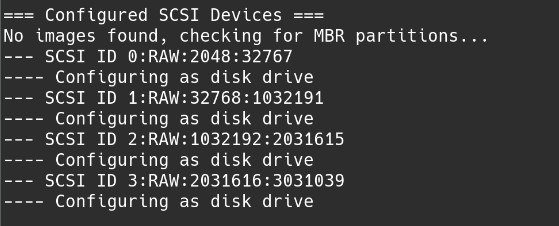
User came on Discord today complaining how hard it was to configure RAW mode on BlueSCSI - they were right! So I automated it all.
Seems samplers users like the RAW partitioned SD workflow instead of images.
This also allows you to pop in a SCSI2SD card into your BlueSCSI for a easy upgrade.
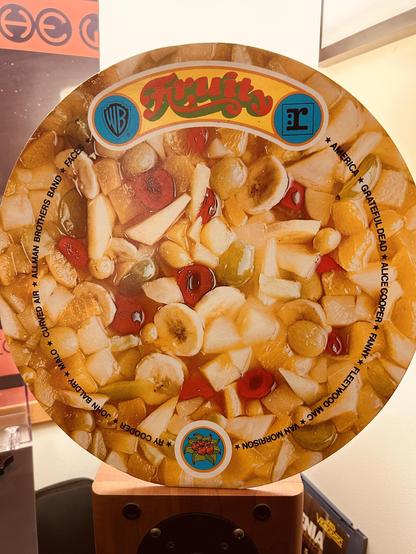
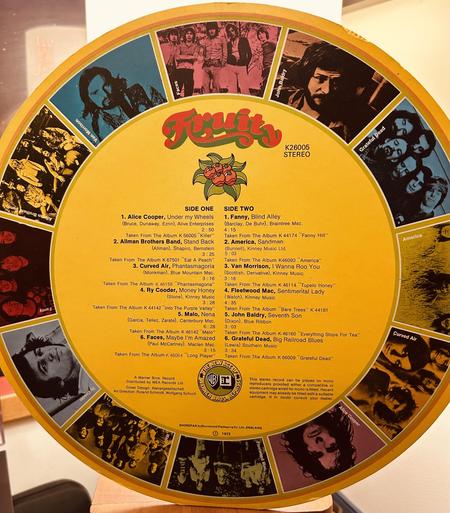
70 track album
Rethinking Losses for Diffusion Bridge Samplers
https://arxiv.org/abs/2506.10982
#HackerNews #Rethinking #Losses #Diffusion #Bridge #Samplers #MachineLearning #Research #Arxiv
Diffusion bridges are a promising class of deep-learning methods for sampling from unnormalized distributions. Recent works show that the Log Variance (LV) loss consistently outperforms the reverse Kullback-Leibler (rKL) loss when using the reparametrization trick to compute rKL-gradients. While the on-policy LV loss yields identical gradients to the rKL loss when combined with the log-derivative trick for diffusion samplers with non-learnable forward processes, this equivalence does not hold for diffusion bridges or when diffusion coefficients are learned. Based on this insight we argue that for diffusion bridges the LV loss does not represent an optimization objective that can be motivated like the rKL loss via the data processing inequality. Our analysis shows that employing the rKL loss with the log-derivative trick (rKL-LD) does not only avoid these conceptual problems but also consistently outperforms the LV loss. Experimental results with different types of diffusion bridges on challenging benchmarks show that samplers trained with the rKL-LD loss achieve better performance. From a practical perspective we find that rKL-LD requires significantly less hyperparameter optimization and yields more stable training behavior.