
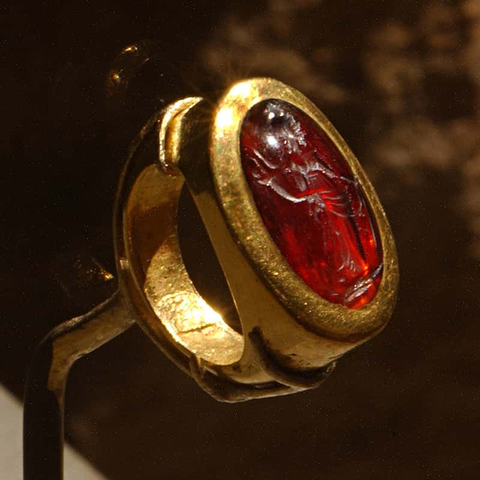
Gold #Roman signet ring with carnelian or garnet intaglio from Petra, Jordan. It is small so it is believed that it belonged to a child, but it could have been worn by an adult person on the pinky finger what we can see on shrouds from #Fayum or sculptures from #Palmyra . The ring was found in the ruins of the Qasr al-Bint, the temple where the Nabataean god Dushara was probably worshiped.
#Dushara #Nabataean #Petra
#RomanRed #Archaeology

Very elegant gold #Roman earrings with pearls and garnets. They were made in the end of the 2nd - beginning of the 3rd century.

© Dallas Museum of Art
https://collections.dma.org/artwork/5006627

#AncientJewelry #RomanRed

Pair of earrings - DMA Collection Online

In the ancient Mediterranean world, pearls were valued for both their uniqueness (no two are alike) and their brilliance, which was far greater than the uncut gems worn by the Romans. Owning a pearl was considered a great luxury. Earrings like these, with four pearls apiece, would have made quite a statement about the owner's wealth. Here not only pearls but also garnets are suspended in round gold pieces, each framed by an openwork pattern resembling the Egyptian protective motif called the "wedjat-eye," which had an apotropaic function. The sound of the pearls and garnets rattling against each other would also have drawn attention to the person who wore these earrings, heightening others’ awareness of her presence and status.