➡️ Further information on the RSE-Day: https://www.berlin-university-alliance.de/en/commitments/research-quality/events/2026/2026-06-03-RS-Day.html
#RSE #ResearchSoftware

🇩🇪 Am 3. Juni findet der RSE-Day Berlin & Brandenburg im Exzellenz-Cluster „Matters of Activity“ der HU Berlin statt. Wir sind mit einem eigenen Stand am Start und setzen uns zusammen mit anderen Anwesenden für den stärkeren und nachhaltigen Ausbau von Forschungssoftware in Deutschland ein - weitere Infos folgen bald!
➡️ Weitere Infos zum RSE-Day: https://www.berlin-university-alliance.de/commitments/research-quality/events/2026/2026-06-03-RS-Day.html
We’re delighted to partner with @SoftwareSaved for the first International Research Software Conference (IRSC)! 🎉
As the first organisation dedicated to improving software in research, SSI helps people build better and more sustainable software to enable world-class research.
Learn more about SSI and our long-standing collaboration on the ReSA blog: https://doi.org/10.59350/zsf8t-42j72
#IRSC26 registration is now open: https://tinyurl.com/IRSC-registration
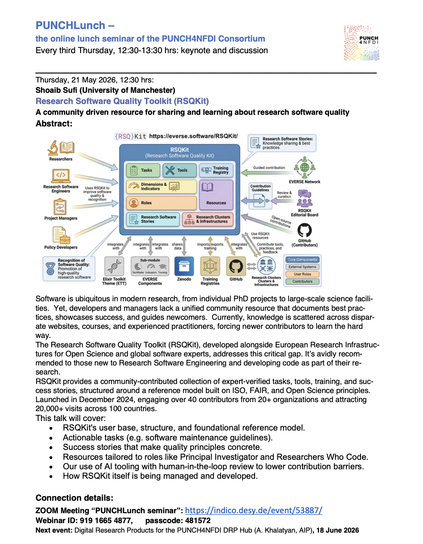
In this week's #PUNCHLunch, Shoaib Sufi (University of Manchester) will present
"Research Software Quality Toolkit (RSQKit)"
📆 Thursday, 21 May, 12:30
📍 online
ℹ️ https://indico.desy.de/event/53887/
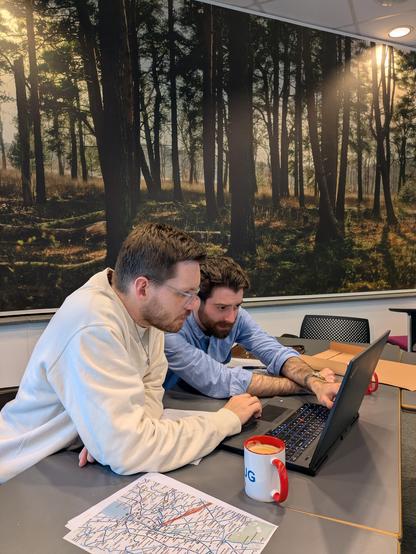
The UG/UMCG Code Café (a #repaircafe for research software) has managed to solve many #researchSoftware and #coding problems!
Want help improving your research software? Join us for the next edition this Thursday (21st of May, 13:00-17:00 at the Smitsborg, CIT-5431-0017).
👉 Register here:
https://libcal.rug.nl/event/4520782
Reminder that we also have Calls for Presentations open for RSAfrica26
https://www.research-software-africa.org/call_for_presentations.html
#RSE #RSEng #ResearchSoftware #Research ResearchSoftwareEngineer #RSAfrica26
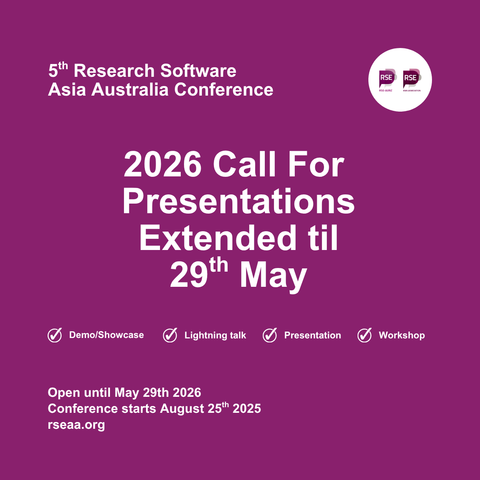
RSAA26 Call for Presentations have now been extended until the 29th of May!
https://rseaa.org/call_for_presentations
#RSE #RSEng #ResearchSoftware #Research ResearchSoftwareEngineer #RSAA26
Is anyone aware of examples of research software projects successfully (or not) using micro-funding such as online tip jars, github sponsorship or similar?
Can research institutions even make use of funds in this way?
Can researcher users even make donations like this (other than from their own pockets)?
Could a project make up enough funding to provide any meaningful support? Or are they mostly too small?