
🌿 Die Sensoren erfassen u.a. Daten zur Pflanzengesundheit, Wasserverdunstung, Treibhausgasemissionen aus dem Boden und das Bodenmikroklima.

🌍 Diese Daten helfen Forschenden, nachhaltige, wassersparende und klimaschonende Anbauverfahren in der Landwirtschaft zu entwickeln.

#OpenScience #KnowledgeTransfer #Sensors #DigitalAgriculture #ResearchInfrastructure #Sustainability #GlobalResearch #Agriculture #Innovation #ZALF

Endlich könnt Ihr euch für das #PIDfest2026 anmelden. Drei Tage lang könnt Ihr mit anderen PID-Interessierten und PID-Anwender*innen (von Newbies bis Profis), euch austauschen und Pläne schmieden, wie Persistent Identifier Open Science weiter voranbringen können.

Husch, Husch, die Plätze sind schnell weg: https://www.pidfest.org/register

Wenn Ihr noch mehr Leiden und "Connecten" wollt, dann meldet euch gerne auch für das DataCite Connect Event am Vortag an. Egal ob Ihr DataCite-Mitglied seid oder nicht, uns interessiert eure Meinung zu Metadaten, PIDs, und offenen Infrastrukturen und wie wir sie besser machen können:

https://datacite.org/event/datacite-connect-leiden-2026/

Hier sind nur ganz wenige freie Plätze noch verfügbar!

#PIDfest26 #PersistentIdentifiers #PIDs #OpenScience #OpenResearch #ResearchInfrastructure #OpenInfrastructure #ResearchData #Metadata #DataCite #DataCiteConnect #ScholarlyCommunication
@ORCID_Org @crossref
@datacite


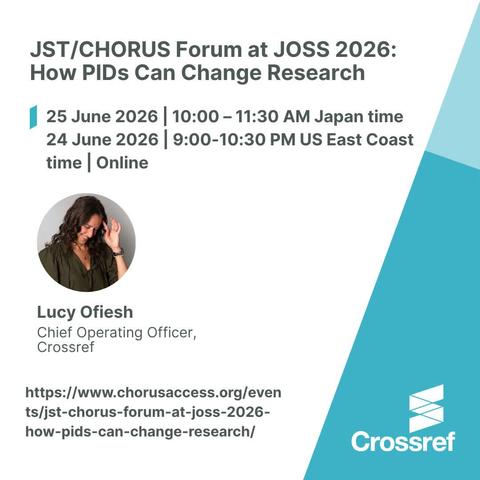
Our colleague Lucy O'Fiesh is speaking at the JST/CHORUS Forum at JOSS 2026, a webinar on how persistent identifiers (PIDs) can improve research transparency, reduce administrative burden, and support national PID strategies.

Register: https://bit.ly/4oxvZYr

#CHORUSForum #ResearchInfrastructure

Our colleague Lucy O'Fiesh is speaking at the JST/CHORUS Forum at JOSS 2026, an online session on how persistent identifiers (PIDs) can improve research transparency, reduce administrative burden, and support national PID strategies.

Register: https://bit.ly/4oxvZYr

#CHORUSForum #OpenScience #ResearchInfrastructure

With the latest update, the @OpenAIREGraph now treats researchers as first-class entities, connecting them to their work, collaborations, affiliations, and funded projects.
This makes it easier to:
🔹 follow research across publications, datasets, and software
🔹 understand collaboration networks
🔹 connect people to projects and institutions
🔹 build a fuller picture of research activity
🔗 https://www.openaire.eu/new-person-profiles-in-the-openaire-graph
#OpenScience #ResearchInfrastructure #ORCID

What does it take to keep research systems open, sustainable, and community-driven?
As Leiden University joins OpenAIRE, Rutger de Jong shares a pragmatic perspective on Open Science:
🔹 Open Access as access to knowledge for all
🔹 national infrastructures like DURF and digital sovereignty
🔹 the role of collaboration alongside technology
🔹 balancing openness with costs, AI, and sustainability
🔗 https://www.openaire.eu/leiden-university-joins-openaire-insights-from-rutger-de-jong

#OpenScience #ResearchInfrastructure #OpenAccess

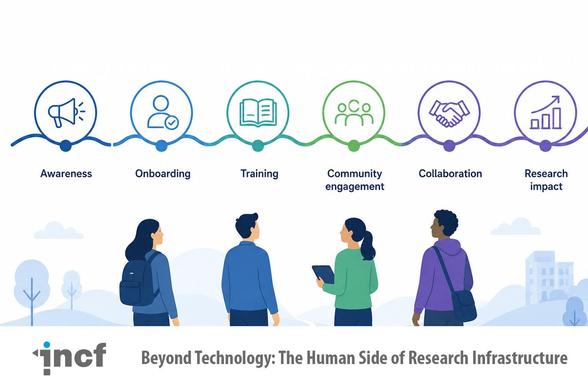
nboarding is more than registration and training. It is a long-term investment in people, support, and community. Insights from an INCF-hosted workshop on building sustainable research infrastructures.

https://www.incf.org/blog/beyond-technology-human-side-research-infrastructure

#OpenScience #ResearchInfrastructure #EBRAINS #INCF

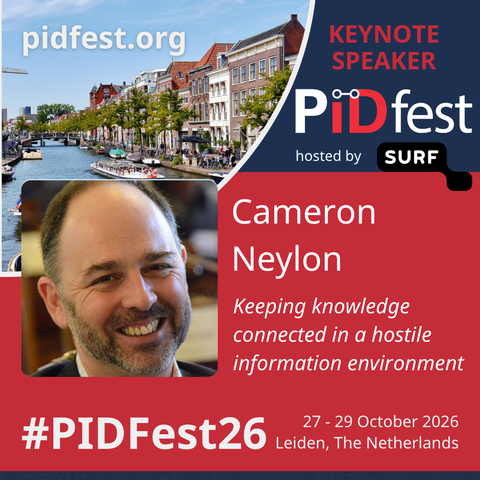
What do we need PIDs to be if they're going to save the world?
Addressing questions of geopolitics, trust in knowledge, sustainability models, and the age-old centralisation vs federation question (by questioning the assumptions in the question)

#PIDfest26 #PIDs #PersistentIdentifiers #OpenScience #TrustInScience #ResearchInfrastructure #ScholarlyCommunication #OpenInfrastructure #KnowledgeInfrastructure #PIDCommunity #ResearchIntegrity #DigitalInfrastructure