Light exposure affects mood, but running an experiment that links everyday light exposure with mood is no easy feat. See how Chloe Roddis and her team at the Manchester Centre for Biological Timing are getting it done: https://www.bioclocks.uk/research/embracing-the-light
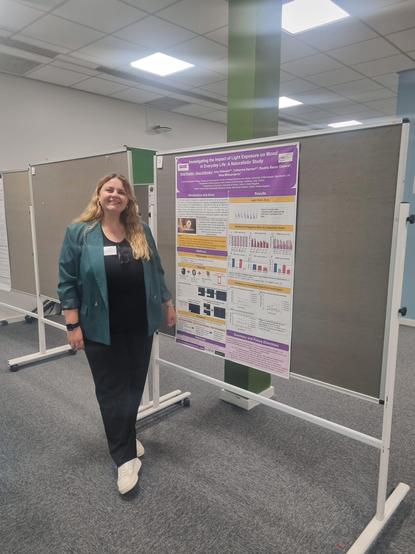
#ResearchHighlight #Chronobiology #Mood

Embracing the light: a new way to study the effects of light exposure on mood | Bioclocks Uk

Bioclocks Uk

This week's #ResearchHighlight is on Dr Jabbur's work at the John Innes Centre. Photoperiodism in cyanobacteria is a fascinating phenomenon and may be useful in modelling climate change adaptations!

https://www.bioclocks.uk/research/could-ancient-bacteria-show-us-how-to-adapt-to-climate-change-in-the-near-future

#chronobiology
#circadian

Could ancient bacteria show us how to adapt to climate change in the near future? | Bioclocks Uk

Bioclocks Uk

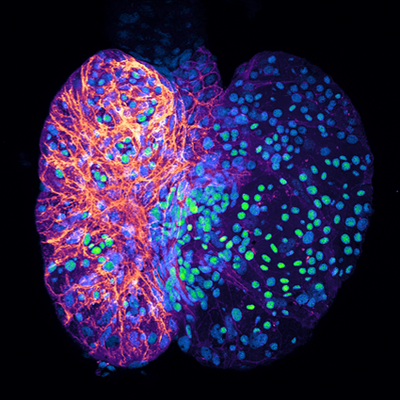
Happy Monday #ScienceMastodon! Check out this #ResearchHighlight from Issue 19 of JCS featuring some gorgeous images of #Drosophila Malpighian tubules. Julian Dow and colleagues at the University of Glasgow and University of Copenhagen show that disrupting septate junctions in fruit fly renal tubules produces cell- and tissue-level dysfunction similar to that seen in aged flies. #agingbiology #CellBiology

Dysfunction at cell junctions ages fruit fly renal tubules
https://journals.biologists.com/jcs/article/136/19/e136_e1901/332754/Dysfunction-at-cell-junctions-ages-fruit-fly-renal

Dysfunction at cell junctions ages fruit fly renal tubules

Cell–cell junctional integrity is particularly important for the function of epithelial tissues, but is compromised in ageing, leading to dysfunction of epithelial barriers at the cellular and tissue levels. Here (Dornan et al., 2023), Julian Dow and colleagues model age-related dysfunction in the Drosophila melanogaster Malpighian tubules, the fruit fly equivalent of mammalian kidneys, by knocking down expression of the occluding (septate) junction protein Snakeskin (Ssk) in renal secretory cells. Loss of Ssk expression in the Malpighian tubule induces progressive renal dysfunction as a consequence of disrupted septate junction organization between cells. At the cellular level, the authors find that junctional failure is associated with actin cytoskeleton disorganization and loss of apicobasal polarity, which is crucial for maintaining renal solute transport and organismal fluid homeostasis. Further, Malpighian tubule tissue organization is compromised in this model through apparent hyperplasia of renal stem cells and breakdown of paracellular barriers, cumulatively resulting in not only tissue-level renal dysfunction but also increased invasion of bacteria in the Malpighian tubule lumen. Strikingly, these effects might phenocopy effects of ageing on Malpighian tubules in wild-type flies. Going forward, the possible ‘accelerated ageing’ of the Malpighian tubules in this model could help better dissect the sequence of cellular events in epithelial tissues that lead to age-related homeostatic decline and loss of barrier integrity.

The Company of Biologists

Hi #ScienceMastodon! I am happy to share the final #ResearchHighlight from Issue 18 of JCS. Song-Kun Shyue and colleagues at the Institute of Biomedical Sciences, Academia Sinica, Taiwan, unravel the upstream protein machinery required for ER-associated degradation (ERAD) of the crucial enzyme cyclooxygenase-2.
#cellbiology #proteostasis

Derlins and Surf4 work together to ERADicate COX-2
https://journals.biologists.com/jcs/article/136/18/e136_e1804/330714/Derlins-and-Surf4-work-together-to-ERADicate-COX-2

Derlins and Surf4 work together to ERADicate COX-2

Cyclooxygenase-2 (COX-2) is a crucial enzyme in the synthesis of eicosanoids, signalling molecules that regulate a broad array of physiological processes. COX-2 is dynamically regulated in response to many hormones, growth factors and cytokines, which can require accelerated degradation of COX-2 via ER-associated degradation (ERAD). ERAD involves retrotranslocation of ER-resident proteins and extraction by the ATPase p97 prior to proteasomal degradation. Although diverse factors involved in retrotranslocation and ERAD have been described, degradation of many ER-resident proteins requires specific combinations of factors that have not been defined. Here (Chen et al., 2023), Song-Kun Shyue and colleagues investigate the ERAD machinery involved in COX-2 degradation and identify the ER membrane proteins derlin-1, derlin-2 and Surf4 as facilitators of COX-2 degradation upstream of p97. By carefully assessing protein–protein interactions, the authors resolve the sequential requirement of derlin-2, derlin-1, Surf4, caveolin-1 and p97 for efficient COX-2 degradation. Whereas degradation of COX-2 is dependent on its N-glycosylation state, its interaction with this ERAD machinery occurs regardless of glycosylation. Surf4, which typically regulates ER protein secretion, represents an unexpected player in this ERAD machinery. Taken together, these findings uncover a unique degradation pathway for COX-2 that might contribute to its dynamic and rapid regulation.

The Company of Biologists
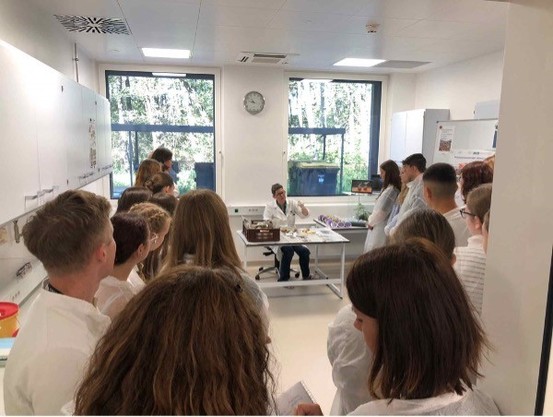
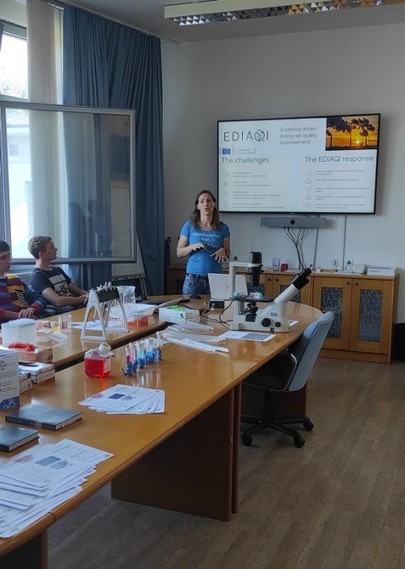
🌍✨Recap of European Researchers' Night on September 29th: A continent-wide event aimed at making science accessible to all! Researchers from the consortium partner of EDIAQI, NIB in Ljubljana, Slovenia, engaged with high school and university students, presenting the impactful results of the EDIAQI project. 📚🔬

#EDIAQI #ScienceOutreach #ResearchHighlight #NIB
Our new #ResearchHighlight is the first-ever paper on #snakebite envenoming in #Malawi publ. in @PLOSNTDs! @mosesbandaaron & al. provide first data on #epidemiology & found insufficient knowledge about snakebites among healthcare workers in Neno District.👉🏾http://bit.ly/3jiJgGY
First scientific study on snakebites in Malawi provides important epidemiological data - BNITM

Detecting Earth-like Planets with an Alternative Biosignature #ResearchHighlight

NASA-supported researchers have found that the gas methyl bromide (CH3Br) might be useful as a biosignature if it is detected in the atmosphere of Earth-sized planets around M Dwarf stars (also called red dwarf or M-type stars)

https://astrobiology.nasa.gov/news/detecting-earth-like-planets-with-an-alternative-biosignature/?utm_source=TWITTER&utm_medium=NASAAstrobio&utm_campaign=NASASocial&linkId=192924777

NASA Astrobiology

Men with an aggressive genetic disease that leads to blindness regained some of their lost vision after receiving doses of a corrective gene. #ResearchHighlight https://t.co/pPYYR8pDO3

https://twitter.com/nature/status/1238418277757575171?s=09

Nature (@nature) Tweeted:
For the first time, scientists have deciphered the ultrasonic squeaks that mice make during social behaviours such as chasing and fighting. #ResearchHighlight https://t.co/fzBO3M1Wtv https://twitter.com/nature/status/1232262969486168064?s=20

Preliminary results from one of the earliest clinical trials of CRISPR—Cas9 provide evidence that the technique is safe and feasible to use for treating human diseases. #ResearchHighlight https://t.co/ffiOldTuJI

https://twitter.com/nature/status/1228321896816619521?s=09