
🔬 Everyone talks about nanotech, but who digs into how nanostructures are made?

📊 We do — with 35,000+ papers analyzed!

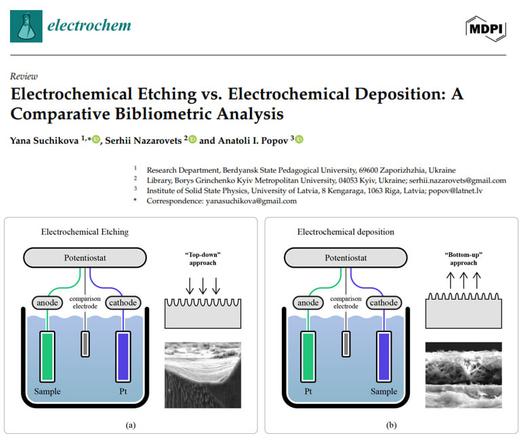
Our new paper compares electrochemical etching vs. deposition through a bibliometric lens.

👉 https://doi.org/10.3390/electrochem6020018

#Electrochemistry #Nanomaterials #Bibliometrics #VOSviewer #OpenAccess #ScienceMapping #Nanotech #ResearchAnalytics #PublicationTrends

Die #TUBerlin fördert gezielt #DFG-Verbundinitiativen insbesondere aus den #Ingenieurwissenschaften, um wettbewerbsfähig zu bleiben. Prof. Dr.-Ing. habil. Stephan Völker, TU-Vizepräsident für Forschung und Berufung, erklärt im Interview, welche strategischen Schritte die Universität unternimmt und warum #ResearchAnalytics und die #SDG`s der United Nations dafür wichtig sind. Ziel ist, die Anzahl an TU-Sonderforschungsbereichen #SFBs zu steigern.
Zum Interview 👉 https://www.tu.berlin/forschen/tut-die-tu-berlin-genug-herr-voelker
Tut die TU Berlin genug, Herr Völker?

In einem strategischen Prozess fördert die TU Berlin Initiativen von Wissenschaftler*innen für DFG-Verbundvorhaben in den Ingenieurwissenschaften.

Interesting article about #OpenCitations Meta (by the
@opencitations folks around @essepuntato:

https://arxiv.org/abs/2306.16191

No time to read? Jump to the API directly: https://opencitations.net/meta/sparql

* I couldn't find the others here on Mastodon, sorry.

#OpenResearchInformation #ScholarlyMetadata #Bibliometrics #ResearchAnalytics

OpenCitations Meta

OpenCitations Meta is a new database that contains bibliographic metadata of scholarly publications involved in citations indexed by the OpenCitations infrastructure. It adheres to Open Science principles and provides data under a CC0 license for maximum reuse. The data can be accessed through a SPARQL endpoint, REST APIs, and dumps. OpenCitations Meta serves three important purposes. Firstly, it enables disambiguation of citations between publications described using different identifiers from various sources. For example, it can link publications identified by DOIs in Crossref and PMIDs in PubMed. Secondly, it assigns new globally persistent identifiers (PIDs), known as OpenCitations Meta Identifiers (OMIDs), to bibliographic resources without existing external persistent identifiers like DOIs. Lastly, by hosting the bibliographic metadata internally, OpenCitations Meta improves the speed of metadata retrieval for citing and cited documents. The database is populated through automated data curation, including deduplication, error correction, and metadata enrichment. The data is stored in RDF format following the OpenCitations Data Model, and changes and provenance information are tracked. OpenCitations Meta and its production. OpenCitations Meta currently incorporates data from Crossref, DataCite, and the NIH Open Citation Collection. In terms of semantic publishing datasets, it is currently the first in data volume.

arXiv.org