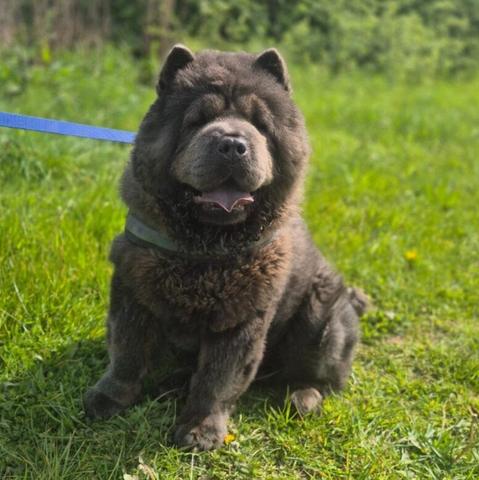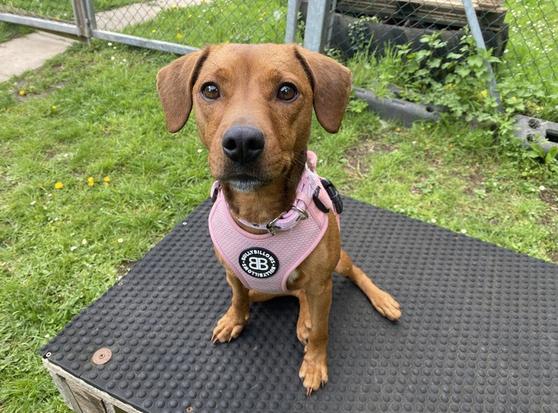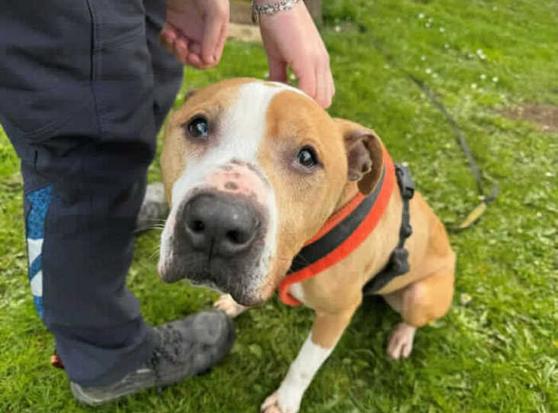
Home for Christmas: neglected pooch celebrates first Xmas in forever home

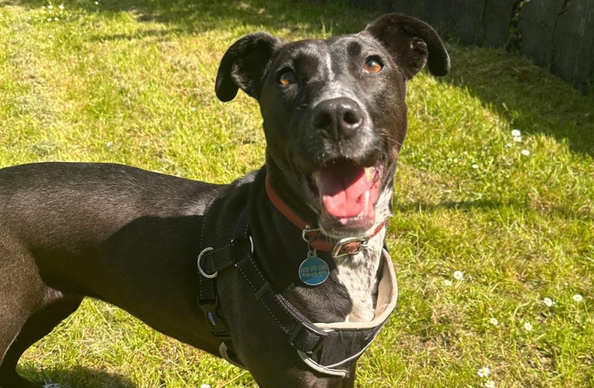
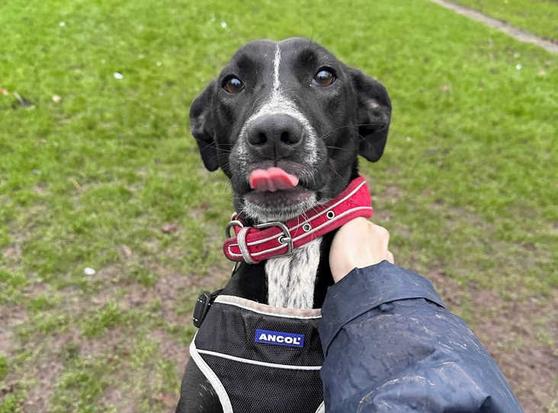
Bella was skin and bone – but now her festive wish has been granted. With the love and care of RSPCA staff, her transformation has been nothing short of a Christmas miracle – and now, she’s set to celebrate her first Yuletide at home with her new family.

Bella was rescued in October last year, from a house where she’d been tethered outside and left to starve. When she arrived in RSPCA care she was skin and bone, very nervous and scared of everyone and everything.

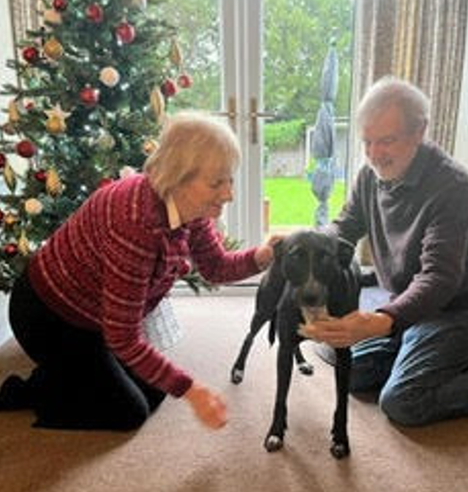
But after nearly a year in RSPCA care, with gentle rehabilitation and lots of love, three-year-old black-and-white Lurcher crossbreed Bella was ready to find her forever home – and she has been living her best life with Carol and Neil Chambers, for the past four months.

Carol said: “We sadly lost our previous dog last year, and when we decided we were ready for another dog we started looking on the RSPCA website, as soon as we saw Bella’s picture, we were drawn in. She was just adorable.

“It sounded like she’d had a terrible start in life and it really pulled at our heartstrings – we wanted to help her, and show her the love she deserved.

“When we first travelled to meet her, she was very shy and nervous – which wasn’t surprising, given she hadn’t had the best start in life. We visited several times and slowly built a bond with Bella, and then the RSPCA staff started bringing her for visits to our home too. 

“She started coming out of her shell and each time we saw her again, her tail wagged a bit more and we could see she was getting more happy and relaxed with us.

“Now, she’s been with us for four months and we couldn’t imagine life without her. It’s still early days and we have a way to go with her training, but she’s a different dog to the one we first met and we couldn’t love her more.”

This Christmas, Omaze has partnered with the RSPCA for their latest Million Pound House Draw – they will be donating money from this to help pay for vital rehabilitation work for rescue animals just like Bella.

Everyone who enters the draw helps with the rehabilitation of hundreds of rescued animals – getting them one step closer to finding a home to call their own, just like Bella has.

Carol added: “She’s so playful and loves a ball,and Neil’s bobble hats, but she also loves to chill on the sofa for a snuggle.

“We take her to a secure field where she can have a good run off-lead, and watching her zoom around with so much energy as she plays is a joy to see.

“She still has some challenges to overcome, but the ongoing help and support from the team at RSPCA has been amazing. 

“We’re so grateful to have her in our lives and we’ll definitely be spoiling her this Christmas.”

People can visit the RSPCA’s Find A Pet webpage to see all of the animals currently in the charity’s care who are looking for their perfect match.

Hayley Moorey, Behaviour and Welfare Advisor at RSPCA Animal Centre, said:

“Sadly, RSPCA centres across England and Wales are full of rescue animals, and at the moment we simply cannot keep up with demand. Our teams are working incredibly hard, under immense pressure, to protect the welfare of every animal in our care.

“Omaze’s funding will support the RSPCA’s animal rehabilitation work across our centres and hospitals in England and Wales, meaning we can give hundreds of rescued animals the specialised care and attention they need to recover from cruelty, neglect, abuse, and injury.

“Bella’s transformation has been truly remarkable. When she was first brought into us, we were told she had been kept tethered outside 24/7 and she had lost a lot of weight. She was one of the skinniest dogs I’ve ever seen.

“Thankfully, once in our care, she put on weight but on the mental and emotional side needed more rehabilitation work. Given the life she’d lead, it was unsurprising that she was very nervous and wary of everyone. She has come on leaps and bounds though – by the time she met Carol and Neil she’d already come so far, and now seeing her with them, she’s a different dog. It’s an absolute pleasure to see how far she’s come.

“So on behalf of all the RSPCA staff, rescuers and volunteers and of course the animals and Bella, thank you Omaze for providing us with this life-saving funding.”

James Oakes, President of Omaze, said:

“We’re thrilled to be partnering with the RSPCA once again for our latest Omaze Million Pound House Draw. This Lake District retreat is a truly special property in one of the most spectacular parts of the country.

“The eventual winner is free to choose if they want to move in, rent it out, or sell up and walk away a multimillionaire – the life changing choice is entirely theirs.

“Omaze gives people the chance to win life-changing prizes, while also raising significant funds for incredible causes. Thanks to the generosity of the Omaze community, we’ve now raised over £100 million for good causes across the UK.”

For full terms and conditions, see omaze.co.uk.

#Omaze #RSPCACymru

RSPCA Cymru urges public to ‘help quieten the noise’ this fireworks season

The charity highlights the potentially devastating impact of loud displays on animals.

RSPCA Cymru has made an urgent plea to the public to be a ‘Kind Spark’ this fireworks season – by considering the impact of firework displays on animals and engaging in conversations with neighbours about any planned celebrations across Wales.

Recent RSPCA polling reveals that an estimated 6.16 million* households (22%) across Wales and England plan to set off fireworks this season, prompting the charity to renew its call for responsible use and community engagement.

There are currently 15 local authorities across Wales who have taken proactive action to mitigate the negative impact of fireworks in their locality.

Measures local authorities can introduce include publicising displays in advance so that pet owners can be prepared, promoting public awareness campaigns, and encouraging local suppliers of fireworks to stock ‘quieter’ fireworks for public display.

RSPCA Cymru has urged councils to adopt a motion which encourages local authorities to write to the UK Government – who are responsible for the relevant legislation – to encourage them to limit the maximum noise level of purchasable fireworks.

Billie-Jade Thomas, Senior Public Affairs Manager, at RSPCA Cymru said:

“Thousands of animals suffer every year due to fireworks, sometimes with devastating consequences. With more than six million households set to let off fireworks this season across Wales and England, animals face a really tough time again.

“We are delighted to have a majority of councils who have taken action and are doing what they can in their locality to increase awareness of the impacts of fireworks pose to animals – but everyone can do their bit this fireworks season.”

She added: “We want to see a restriction of fireworks sales to licensed venues only, and a limit to a set number of days when people can let off fireworks, enabling animal owners to plan ahead to protect their animals.

“We’d also like to see the noise level of fireworks reduced by manufacturers, clearly labelled on packaging, and include a warning that the fireworks may cause huge distress to animals.”

Despite the large number of backyard displays anticipated, RSPCA polling suggests they are a big concern for animal owners.

Billie added: “We know 66% of pet owners say that backyard firework displays are a major concern, which highlights the levels of anxiety and worry that so many animal owners have as we approach the fireworks season – especially given how impossible it can be to know when someone is going to let off fireworks in your area.”

The RSPCA is urging the public to sign their petition calling for a change in legislation. The public can contact their local Member of Parliament (MP) to advocate for stronger firework laws and protect all animals—from pets and horses to livestock and wildlife. The charity’s recommendations include:

  • Reducing the noise level of all traditional fireworks from 120dB to 90dB.
  • Limiting the sale of consumer fireworks to Category F1 and F2, and only to specialised/licensed shops.
  • Designating ‘firework free zones’ in areas where fireworks are likely to have a greater impact on animals, the environment, and vulnerable people.
  • Where firework-free zones are in place, local councils would be encouraged to organise their own alternative displays instead.
  • Reviewing regulations surrounding alternatives to fireworks, such as drone displays, given their economic potential and benefits to wildlife and the environment.

The RSPCA offers plenty of pet fireworks advice for animal owners looking to plan ahead to help their pets cope during the loud bangs.

The charity is also once again partnering with radio station Classic FM for the return of the much-loved programme Pet Classics, the annual radio show to help owners and pets relax during fireworks season. Two special programmes will air this year on Saturday 2 November and Wednesday 5 November from 5pm to 9pm – playing a calming background sound to pets and their owners across the nation.

In addition, in the build-up to the main Pet Classics programmes, Charlotte Hawkins is presenting a new Friday night Pet Classics mini-series from 9pm, running until Friday 31st October.

[Lead image: Swansea Council]

#Fireworks #PetClassics #RSPCACymru

Suspended sentence for Swansea pair for neglect of their dog

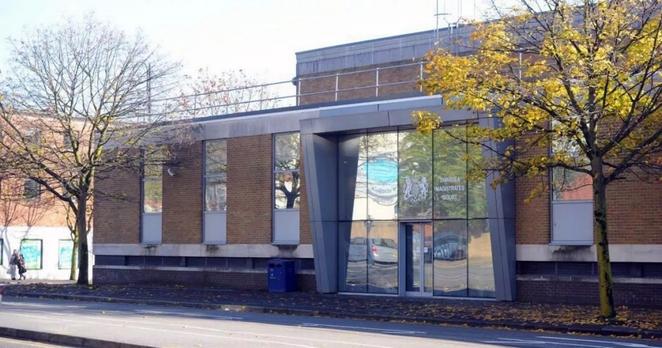
27-year-old Aaron Francis and 25-year-old Charlie Sabrina Nakita Smith, both of Nicander Parade, Mayhill, pleaded guilty to an Animal Welfare Act offence and were sentenced at Swansea Magistrates Court on Thursday 21 August.

The court heard that Bear, a one-year-old Tibetan Mastiff was found to have untreated ailments, and Francis and Smith had failed to investigate or address signs of ill health, including a severely matted coat, cherry eye condition and hip dysplasia.

In mitigation it was heard that the defendants were naive, had no understanding of the breed – including the size or specific needs – and did not notice the deformity of his hips. It was also heard that Francis has an injury impacting on everyday life.

At sentencing they both were handed 12 weeks in custody, which was suspended for 12 months – and also 15 Rehabilitation Activity Requirement Days. In addition to the five year ban on keeping animals, they were ordered to each pay £400 and a victim surcharge of £154.

In a written statement provided to the court, it was heard that Bear was first seen by Animal Rescue Officer (ARO) Ellie West on 14 December last year. As Bear came over to her, she placed her hand on his head and could “instantly feel a large matted area on the top of his head – it appeared quite firm and I was able to move his whole head and forehead in one motion with the matts.”

She added: “He smelt of a strong wet dog smell and appeared dirty. He lifted his head to look up to me and I was totally shocked to then see both of his eye areas with large areas of red fleshy masses that covered where his eyeballs would be.

This appeared to be what I know as cherry eye from previous dealings with dogs with this type of condition, but I had never seen a dog’s eyes look so full of masses.

“I was very shocked and concerned and taken aback at the sight I was looking at. There was a distinctive smell like a mixture of cheese and fish that was coming from his eye area and areas underneath his eyes that appeared wet.”

Bear was taken to a vet and then officially signed over to the RSPCA. He was given medications and he was de-matted carefully with clippers. He was signed over and placed into another charity’s care however, sadly it was later discovered he had severe hip dysplasia and was put to sleep.

Following sentencing, RSPCA Deputy Chief Inspector Gemma Cooper, said:

“We are saddened that Bear was found with these untreated conditions. We would like to remind pet owners to please seek help if they are struggling.

“Don’t bury your head in the sand and leave conditions untreated and for them to become worse. There is help out there, and we urge you to seek this before it’s too late.”

#animalNeglect #animalWelfare #featured #RSPCACymru #SwanseaMagistratesCourt

Neath woman imprisoned after springer spaniel abandoned and found dead

Areo’s body was found by South Wales Police and the RSPCA on 5 December last year. All his bones were visible and he was in an “extremely emaciated” body condition. A vet said Areo had “one of the worst body conditions” they had ever seen.

His owner, Jessica Catherine Louise Edwards,29, of Fairyland, Neath, appeared at Swansea Magistrates Court on 1 July for trial and was found guilty of two offences under the Animal Welfare Act.

Edwards caused unnecessary suffering to Areo after failing to provide him adequate food and water.

She was also found to have failed to ensure his needs were met. 

She was sentenced on Tuesday (12 August) at Swansea Magistrates Court and given a custodial sentence of 26 weeks – for charge one she was handed 26 weeks in prison and for charge two she was also handed 26 weeks – which will run concurrently.

Edwards was disqualified from keeping animals for life, and was ordered to pay a £154 victim surcharge.

In mitigation it was heard that she accepted it was an appalling case and she should have known better.

In a witness statement, provided to the court, RSPCA Deputy Chief Inspector (DCI) Gemma Cooper, said police were given permission to enter the property by Edwards.

She said as the door was opened there was a foul smell “emanating” from the property and she could see a dead dog laying underneath a hi-vis jacket in the kitchen.

As the jacket was lifted off she found a liver and white, springer spaniel in an “extremely emaciated body condition”.

DCI Cooper added: “All of his bones were visible. I do not believe I have ever seen such a skinny dog in nearly 15 years as an RSPCA Inspector.”

The body was seized by police so that the RSPCA could continue the investigation. The following day the body was examined by a vet.

In a witness statement the vet said that the body “showed obvious severe muscle mass loss with a body condition score of one out of nine”. (four and five out of nine being normal)

He added: “There was almost no muscle mass left on this body – being one of the worst body conditions I have seen. There were a large number of flies with the body and maggots in various body openings particularly on the underneath.

“To become emaciated to this level, assuming he was at normal weight initially, would take about three months on water only with no food at all, suffering from severe hunger during that whole period.”

Following sentencing, DCI Cooper said: “This is a heartbreaking case. Poor Areo was left all alone and would have experienced such suffering and hunger.

“It is never acceptable to abandon any animal – and our hearts go out to Areo.”

[Lead image: RSPCA Cyrnru]

#animalCruelty #RSPCACymru #SouthWalesPolice

RSPCA issues appeal after new-born kittens found dumped in plastic bags in Neath

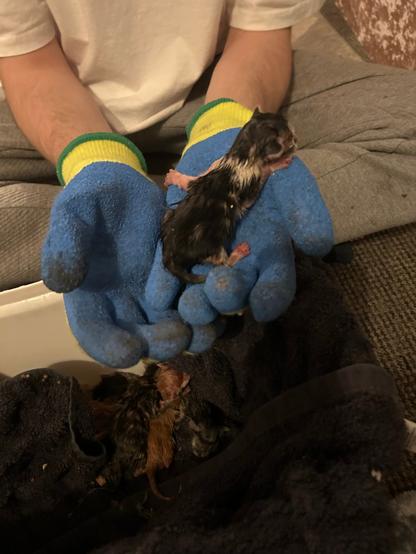
The black and ginger kittens — believed to have been born that same day — were found on 27 July at Rectory Road. According to the charity, the tiny animals were wet, freezing, and barely moving when a member of the public spotted the bundle and rushed them to a nearby vet.

Inside the bag were birthing fluids, and one of the kittens appeared to be actively trying to escape — suggesting the cats had been born just hours before being discarded.

Sadly, five of the kittens did not survive despite receiving round-the-clock emergency care. One resilient kitten is currently clinging to life under veterinary supervision.

RSPCA Animal Rescue Officer Ethan Griffin described the discovery as “shocking and distressing,” adding:

“This poor kitten luckily still had some fight in it and has pulled through. We’re crossing our fingers he keeps on doing well and would like to thank those caring for the kittens for their dedication and kindness.”

Six new-born kittens found in a plastic bag on the side of lane in Neath
(Images: RSPCA)

An investigation is now underway, but the charity says it has no idea where the kittens came from or why they were abandoned. The RSPCA is urging anyone with first-hand information to contact its inspectorate appeal line on 0300 123 8018, quoting incident reference 01588392.

The incident comes as the charity ramps up its Summer Cruelty Appeal, aimed at tackling the seasonal spike in animal abandonment and abuse. Supporters can learn more and donate via rspca.org.uk/endcruelty.

For guidance on reporting animal cruelty and seeking help, visit rspca.org.uk/reportcruelty.

#abandonedKittens #cat #cats #kitten #Neath #RSPCA #RSPCACymru

Greyhound racing ban in Wales “a huge step forward for animal welfare”, says leading charities  

On Tuesday, Huw Irranca-Davies MS, Deputy First Minister and Cabinet Secretary for Climate Change and Rural Affairs, announced that the Welsh Government will support a ban on greyhound racing in Wales. 

The Welsh Government wants greyhound racing to be phased out “as soon as possible” and will bring forward specific proposals on implementation in the near future.

Since 2018, more than 2,700 greyhounds have died or were put to sleep following their participation in greyhound racing in the UK*. As such, the news that it is to be banned in Wales has been lauded by Blue Cross, Dogs Trust, Greyhound Rescue Wales, Hope Rescue and RSPCA Cymru.

Collectively, as the Cut the Chase coalition, these leading animal welfare organisations have been campaigning alongside the general public to bring greyhound racing to an end in Wales – and across the UK – to stop the entirely preventable injuries and deaths of dogs involved in racing.

The Cut the Chase coalition believes that greyhound racing is inherently dangerous for the dogs involved, as running at speed around oval tracks can cause significant injury to many dogs. In some cases, the injuries are so severe that it is necessary to euthanise the dog. 

Chris Burghes, Chief Executive of Blue Cross, said:

 “We are delighted to hear the news that the Welsh Government have decided, further to their consultation last year, to end greyhound racing in Wales. 

“Alongside our colleagues from the Cut the Chase coalition we have been actively campaigning for a phased end to the sport since 2022. In that time, sadly, many more dogs have lost their lives or suffered serious injuries in the name of entertainment. The Welsh Government’s announcement today will save the lives of countless greyhounds across Wales. 

“This is a huge step forward for greyhounds, we thank the Welsh Government for leading the way on this issue and hope the rest of the UK takes the same view to cut out the sport once and for all.”  

Owen Sharp, Chief Executive of Dogs Trust, said:

“Today’s announcement that the Welsh Government is committed to ending greyhound racing marks a significant step forward for animal welfare.

“Over the past six years, more than 2,700 dogs have lost their lives in the UK in the name of entertainment, with many more suffering serious or life-changing injuries. This is unacceptable, and we are pleased the Senedd is ready and willing to take decisive action to prevent further deaths and injuries. 

“There are now just four other countries worldwide where this cruel so-called sport still persists. With Wales now committed to ending greyhound racing, it’s time England, Scotland, and Northern Ireland followed suit and put a stop to this inhumane form of entertainment once and for all.”

Vanessa Waddon, Chief Executive Officer of Hope Rescue added:

“With over 35,000 dog lovers signing our petition to ban greyhound racing in Wales, we’re delighted that Welsh Government have agreed that the only way to fully protect greyhounds is to end this inherently dangerous activity.

“We’re grateful to the Petitions Committee for their support in progressing our petition, and to the cross-party Senedd Members who have supported the Cut The Chase campaign. Wales is once again leading the way on animal welfare.”

Dr Samantha Gaines, Head of Companion Animals at the RSPCA, said:

“This is an historic day for animal welfare in Wales; and will protect countless greyhounds from the inherent risks that come with competitive racing. 

“Greyhound racing has long been in decline as a leisure activity; and we know huge numbers of people have shared our concerns about the number of dogs across the UK dying or sustaining serious injury. 

“This campaign has been a monumental team effort – from the animal welfare groups involved, but also the animal-loving public across Wales who have made their voices heard loud and clear. With greyhound racing now continuing in so few countries, we hope the Welsh Government’s action sends a strong statement to the rest of the UK. 

“We now stand ready to work closely with the Welsh Government, the racing industry and racing greyhound owners to protect the dogs who will now exit competitive racing; and help find them a loving home.”

Tim Doyle, CEO of Greyhound Rescue Wales said: 

“This is a momentous day for greyhounds, an ancient and noble breed whose very recent history has been blighted by this cruel and unnecessary gambling product. We are pleased that the Welsh Government has put animal welfare first and added Wales to the extensive list of countries that have banned greyhound racing in recent years.

“While greyhound racing in Wales has had a high profile of late, the reality is that this campaign has been decades in the making. We want to pay tribute to each and every one of the greyhound advocates out there who have fought tirelessly over many years to protect these dogs who have no voice of their own.

“We are now hard at work with our partner rescues to coordinate and manage the rehoming of dogs leaving the industry, and we are committed to ensuring that no dog is made homeless by the end to greyhound racing in Wales.

“Sadly, we know the numbers of greyhounds needing rehoming from the rest of the UK and Ireland is unlikely to decrease in the near future, and we still have a lot of ongoing work to find homes for these dogs across Wales and the borders. However, we hope that respective governments will now take notice of Wales leading the way in putting greyhound welfare above entertainment.”

The coalition’s priority has always been the welfare of the dogs involved in greyhound racing, and member organisations remain committed to ensuring that this is not negatively impacted by the ban. The coalition has sent an open letter to both the Valley Greyhound Stadium and the Greyhound Board of Great Britain (GBGB) offering their support with displaced greyhounds needing rehoming both during the transitional period, and after racing ceases at the stadium.

The coalition hopes to see other nations follow Wales’ lead in ending the industry, with support for an end to greyhound racing in Scotland also growing. In July 2024, Green MSP for Mid Scotland and Fife, Mark Ruskell, whose constituency covers the last unlicensed racetrack in Scotland, secured the required support to table a Private Member’s Bill.

The Proposed Prohibition of Greyhound Racing (Scotland) Bill will soon be introduced to the Scottish Parliament and seeks to promote the welfare of the animals by introducing an offence of permitting a greyhound to compete at racetracks in Scotland.  

#DogsTrust #greyhoundRacing #RSPCACymru #WelshGovernment

Injury and Retirement Data | Greyhound Board of Great Britain

GBGB

Greyhound Board of Great Britain

The RSPCA’s Kind Sparks campaign aims to reduce the negative impacts of fireworks. 

Swansea County Council has recently become one of the 15 local authorities in Wales to take action to mitigate the negative impact of fireworks in their locality. There are now just seven local authorities in Wales yet to take action – with RSPCA Cymru calling upon them to take action for animal welfare.

Measures local authorities can introduce include publicising displays in advance so that pet owners can be prepared, promoting  public awareness campaigns, and encouraging local suppliers of fireworks to stock ‘quieter’ fireworks for public display.

RSPCA Cymru’s motion also encourages local authorities to write to the UK Government – who are responsible for the relevant legislation – to encourage them to limit the maximum noise level of purchasable fireworks. 

It comes as the RSPCA’s Kind Sparks campaign encourages everyone to make a small change to reduce the impact of fireworks on pets, livestock and wildlife – and ensure fireworks can be enjoyed more responsibly this fireworks season.

RSPCA Cymru’s Public Affairs Advisor Sioned Nikolic said:

“We’re delighted that councillors recently voted to make a difference to animals across the local authority’s boundaries by adopting our motion – and have joined other councils across Wales by doing so.

“We receive so many calls related to animal welfare concerns connected to fireworks  so having local authorities across Wales introducing measures to mitigate the relevant risks is so important for animal welfare.

“Preparedness is so important – and better advertising of displays and  public awareness campaigns could make all the difference in ensuring people know what steps to take to keep pets and other animals safe, and when.

“By also lobbying the Welsh Government and UK Government, to utilise levers at their disposal, we hope we can make Wales a safer place for animals when fireworks are being set off; encouraging responsible use, better information and the promotion of lower-noise alternatives.

“Sadly, we know many pets and other animals struggle with fireworks phobia – but our website is full of advice to help their animals through firework season, including building  safe dens, finding hiding places for cats or closing windows and curtains to help soundproof against the noise.”

This year, the RSPCA has launched an interactive map which allows users to see the estimated number of cats and dogs in their area who could be impacted by a local garden-held fireworks displays. The map also shows the decibel level at which animals would hear the fireworks based on their proximity to the display.

Research commissioned by the RSPCA found that more than half (55%) of the UK’s pet-owners dread the fireworks season, and 43% admit they have to change their lifestyle due to unexpected fireworks nearby.

And while 71% of people surveyed always alert neighbours about parties with fireworks, nearly a quarter (24%) forget to pre-warn them – increasing the risk for animals.

According to the findings many pet owners and farmers struggle to speak up for fear of creating a divide in their area. Two in five (40%) said they felt awkward saying anything while a third (31%) fear being seen as a killjoy. One in five (20%) admitted they don’t know how to approach the conversation, with 30% feeling isolated.

Advice for owners:

During fireworks displays

 Bringing pets inside –  If you’re planning to bring them indoors to better protect them then start to make this change ahead of fireworks night to get them used to the new sights, smells and sounds inside. 

 Soundproof your house – Simple steps like closing windows and curtains can help your house seem safer to your pet and reduce the sound and visual stimulation from the fireworks.

 Pop the radio on – tune into Classic FM’s ‘Pet Classics’ programme, in partnership with the RSPCA, on Saturday 2 and Tuesday 5 November – so your pet can enjoy soothing and comforting classical music, handpicked by Classic FM to help calm and settle any anxious pet. 

 Stay at home with your pets if possible during firework displays to provide comfort and reassurance.

 Pheromone diffusers – Speak to your vet about using a calming collar or diffuser which disperses calming pheromones which may help your dog or cat feel more secure.

 Provide extra bedding – Rabbits, guinea pigs and other small animals who live outside should have extra bedding to burrow into or you can cover their housing with a blanket for extra sound-proofing. Begin to introduce this now.

 Create a distraction for your pets by engaging them in interactive play or giving them puzzle toys that dispense treats.

 Avoid bringing your pets to fireworks displays, as the loud noises and crowds can be overwhelming and stressful for them.

 Keep horses or livestock secure in a well-fenced area during fireworks events

 Give your pets plenty of exercise during the day to tire them out, as this can help reduce anxiety and stress in the evening.

 Use positive reinforcement techniques to help your pets associate firework noises with something enjoyable. Offer treats, playtime, or cuddles during quieter moments so they can form positive associations with the sounds of fireworks.

After fireworks season

 If your animals have been impacted by fireworks, fill out the RSPCA’s short survey to share your experiences and help raise awareness about the impact of fireworks on animals. Last year we had over 1,000 responses to our survey which demonstrated that 64% of respondents’ animals struggled due to noise from private at-home backyard displays, which helps to strengthen our campaign and our lobby for change.

 If you would like to see changes to legislation to improve fireworks sessions for animals take RSPCA’s action and email your Member of Parliament.

To read the Kind Sparks guide and try out the decibel map visit www.rspca.org.uk/getinvolved/campaign/fireworks

To support the RSPCA’s rescue work we are calling on the public to Join the Christmas Rescue campaign to help us to continue to save the lives of animals over our busy winter period.

[Lead image: RSPCA]

https://swanseabaynews.com/2024/11/05/fifteen-councils-across-wales-take-action-to-protect-animals-from-fireworks/

#Fireworks #KindSparks #RSPCACymru

Change Firework Laws For Animals | RSPCA - RSPCA - rspca.org.uk

Join our campaign to change firework regulations. We receive hundreds of calls about fireworks and animals every year.

RSPCA

The incident took place near Castle Square at the top of Oxford Street on Saturday 24 August at around 6pm. The gull was reportedly grabbed by its wing, thrown to the floor and kicked by a male.

The gull – which looked to have a broken wing following the incident – was confined to a box and taken for a veterinary examination. Sadly due to the severity of its injuries the bird was put to sleep to prevent further suffering.

Unfortunately enquiries have come to an end, leading to the RSPCA releasing further stills.

The charity is keen to trace a man (pictured) who may be able to help provide information to assist these enquiries. He was wearing a white top, jeans and had a black strapped pink/orange bag. 

RSPCA Inspector Keith Hogben said:

“This upsetting incident took place in a public place and would have been a very distressing incident to witness.

“We are now launching a re-appeal as we are still looking to speak to anyone with first-hand information which could help our enquiries. If you can help please give us a call on our appeals line on 0300 123 8018, and quote 01338330.”

Keith added: “We’d also like to thank those who helped this gull and to those who have reached out to us about this incident. Sadly, many people have an unfavourable opinion of gulls – but these are intelligent animals who form strong social bonds with each other, and deserve to be treated with respect.”

If you do find a sick or injured bird please visit our website on what you can do to help.

Anyone who can help is urged to call the appeal line number on 0300 123 8018.

[Lead image: RSPCA]

https://swanseabaynews.com/2024/10/21/rspca-issue-further-picture-as-part-of-re-appeal-following-swansea-gull-attack/

#RSPCACymru #SeagullAttack

Found a Sick or Injured Bird | RSPCA - RSPCA - rspca.org.uk

RSPCA

25-year-old Roseanne Lee and 33-year-old Nathan Price of Tudno Place, Penlan, appeared at Swansea Magistrates’ Court on Wednesday 25 September.

They had previously pleaded guilty to one offence under the Animal Welfare Act.

They were that they jointly caused unnecessary suffering to a female German Shepherd cross-type dog known as Bella by failing to provide adequate or effective professional veterinary care and attention for the injury or injuries to her left hind limb.

At the sentencing hearing Lee and Price were disqualified for life from keeping any animal and were ordered to pay £400 costs each and undertake 15 Rehabilitation Activity Requirements days.

Price was handed a 12 week prison sentence which was suspended for a year and Lee was handed an eight week prison sentence which was suspended for a year.

The court heard that on 16 January RSPCA Deputy Chief Inspector Gemma Cooper presented a video of Bella to a veterinary surgeon. The vet advised that she thought her leg was broken and it looked like it had been broken for quite some time and had therefore healed abnormally. 

DCI Cooper subsequently contacted the police requesting assistance and met officers at a temporary travellers site off Corporation Road on 17 January and Bella was found lying in the back of a Peugeot van.

In her witness statement – which was provided to the court – DCI Cooper said:

“There was carpet that had been laid in the back of the van but no access to food or water. 

“Roseanne Lee said that her dog was called Bella and that she was pregnant and that it was her due date today so that’s why she had placed her in the van.

“Bella was heavily pregnant but also underweight with her spine and hip bones protruding. She was extremely lame on her back left leg and it “swung” when she walked.”

Bella was seized by police. 

DCI Cooper said: “Roseanne Lee stated that Bella’s leg was already broken when they bought her two to three months ago and that’s why she was only £50.

“She said she was part of their family now and they love her very much.”

Bella was taken to the RSPCA Merthyr Tydfil Veterinary Clinic and following an examination it was confirmed she was fit to travel to another RSPCA veterinary centre in Birmingham where they could cater for her multiple medical needs. 

On 18 January Bella gave birth to 11 puppies and all were well and made good progress.

In a veterinary report – provided to the court – the vet stated that following the birth, Bella’s ability to get up and move around on three legs was improved.

The vet said: “Mostly she was carrying the leg held up and did not bear any weight at all with it,  instead preferring to hop on three legs.”

On 31 January Bella was anaesthetised and radiographs were taken of her hind legs and pelvis. In the summary – included the in vet report – it stated that her hind leg had a femoral neck fracture with evidence of loss of bone density indicating chronicity (minimum four to eight weeks). 

The radiographs also showed a fracture of the femur which was completely healed at a nearly 90 degree angle and the stifle joint (knee) was found to be in an anatomically incorrect position and unstable on manipulation.

The report stated that she would have been suffering and that the femoral fracture likely occurred at least 10 to 12 weeks prior.

“Significant force is necessary to cause a femoral shaft fracture,” the report said. “This force must have been a strong impact such as a form of a road traffic accident or a kick to the leg. This is a very painful injury to sustain and would have caused instant and ongoing signs of pain including complete non-weight bearing of the limb for at least two to three weeks.

“Any reasonable owner would have sought veterinary attention for pain relief and treatment options (stabilisation of the fracture or leg amputation) within hours of the injury occurring.”

The report added: “Reportedly Bella was to have her puppies in the back of a van. Her impaired mobility would have made it difficult for her to enter or leave this van for toileting or exercising.

“The difficulty would have been compounded by her pregnancy and additional weight. Even if she was helped into and out of the van the handling of her rear end to do this would have caused pain to her injured leg each time.

“In addition, unless a heat course was provided, the van would have been a wholly unsuitable environment to give birth due to the lack of insulation and warmth.”

Bella and her 11 puppies were transferred to a foster home and then in March they were officially signed over to the RSPCA for rehoming by their owner. 

In RSPCA care, Bella was given the veterinary treatment she needed and her leg was amputated once the pups had been weaned. She is now doing well in the care of an RSPCA branch and is awaiting her forever home. All the puppies have been happily rehomed. 

[Lead image: RSPCA]

https://swanseabaynews.com/2024/10/03/swansea-man-and-woman-banned-from-keeping-animals-for-life-after-dog-suffered/

#animalCruelty #RSPCACymru

Swansea man and woman banned from keeping animals for life after dog suffered 

A Swansea man and woman have been sentenced after they caused unnecessary suffering to a heavily pregnant German Shepherd cross dog by failing to provide vet care to a leg injury.

Swansea Bay News