Huba de Graaff’s Kurdish opera Qaqnas channels the spirit of ‘Woman, Life, Freedom’
Inspired by a Kurdish poem about women’s rights, composer Huba de Graaff created Qaqnas, an all-female opera premiering at the Holland Festival on 12 June. The work arrives at a moment when the Netherlands has fallen to 43rd place on the 2025 global gender gap index, far behind Namibia (8), Nicaragua (18) and Albania (36).
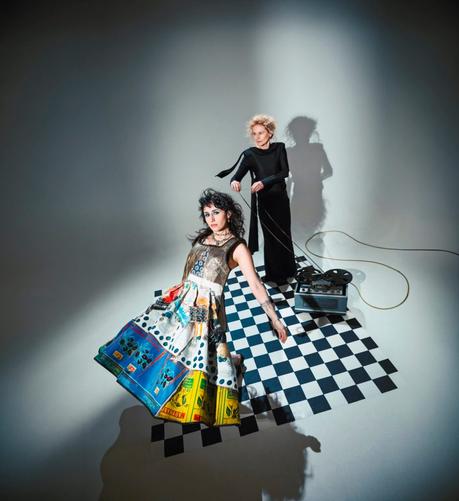
Naaz and Huba de Graaff (c) Bowie Verschuuren
Dutch composer Huba de Graaff (1959) gained notoriety with controversial operas such as Apera, inspired by communication between monkeys; Pornopera, constructed around the sounds of a copulating couple; and The Naked Shit Songs, which transformed a Theo van Gogh interview with British artist duo Gilbert & George into music.
Across her experimental body of work, the interplay between language and song recurs as a central theme, with electronics forming an essential element from the outset. – ‘In my early years, I was told women could not compose’, De Graaff recalls, ‘so I started working with electronics. Liberating.’
Kurdish culture under pressure
For decades, Kurdish was forbidden, and it remains under pressure in parts of the region. Against that backdrop, Qaqnas (“Phoenix”) can be read as a provocation aimed at those seeking to suppress Kurdish cultural expression.
De Graaff had previously employed a Kurdish choir in The Naked Shit Songs. ‘I’ve been friends with the Mohammed family for 25 years,’ she explains. ‘Their son and my eldest daughter were in primary school together. Mother Bakhcha often invited me to visit Sulaymaniyah (also known as Slemani) with them, but I’m not really the tourist type.’
Electronic music festival Space21
‘And if I travel, I prefer to combine it with work’, she adds. ‘While searching online, I came across Space21, a festival of experimental electronic music in Sulaymaniyah. We started corresponding, but then the Covid-19 pandemic hit and live performances were cancelled. Instead Space21 organised a live radio interview from northern Iraq with artists from all over the world, including me.’
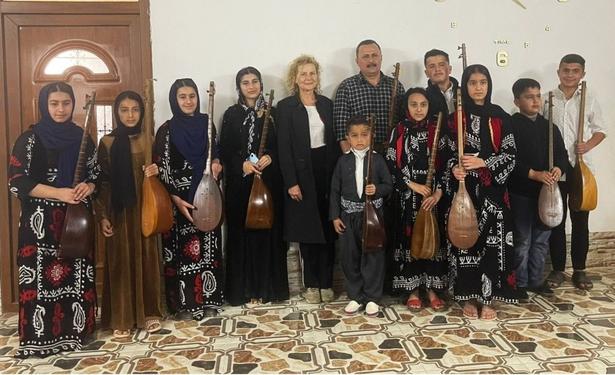
In 2023, De Graaff travelled with Bakhcha Mohammed to Sulaymaniyah, where she met the team behind Space21. ‘I gave a lecture at the university, appeared on television, and attended a saz concert in Halabja, a place marked by Saddam Hussein’s chemical attack on the Kurds in 1988.’
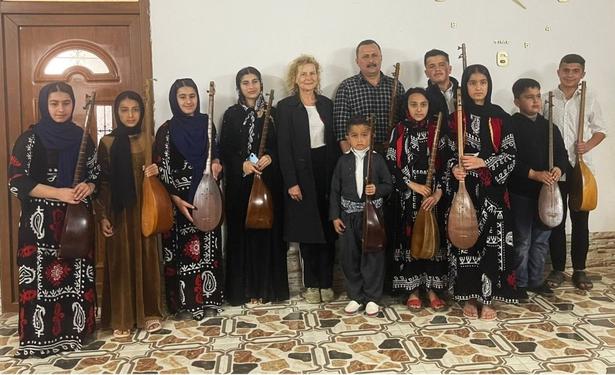
Saz orchestra, Halabja
‘I also had a meeting with the Culture Department, where the director introduced me to all the important ‘classical’ composers of the governorate — exclusively men — and asked me to write a new opera.’
Combative and creative women
The hospitality was generous throughout: ‘Lunch, dinner — everything was freshly prepared and delicious.’ With a guilty smile: ‘I put on three kilos that week.’ During meals and informal moments between official engagements, she met many women. ‘Combative, outspoken, passionate, and working in the arts — often in electronics, though usually with limited equipment and a lot of improvisation.’
‘And then there was the language… incredibly beautiful, but incomprehensible. I would sit at the kitchen table, listening intently as they talked, sang, and laughed.’
Gradually, a plan for a music theatre production began to take shape. ‘I’m not a typically ‘classical’ composer; my background is in electronics, pop bands, and my studies in sonology in Utrecht. I love collaborating, and at a certain point I realised I wanted to create an opera in which all these elements return — in collaboration with Kurdish female musicians and other electronic artists.’
‘Together we visited the Kurdish Heritage Institute, where volunteers are working intensively to safeguard cultural heritage. That experience reinforced the urgency: I wanted to make an opera that speaks loudly and clearly in Kurdish — about women, freedom, and electronic music.’
Tarza Jaff: ژن کە دەڕۆن، خودا غەزەبیان لێ دەگرێت، باڵ دەگرن!
When Women Go, God Inflicts Wrath On Them, They Grow Wings
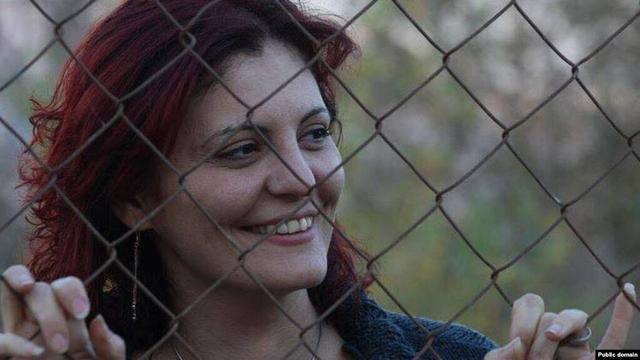
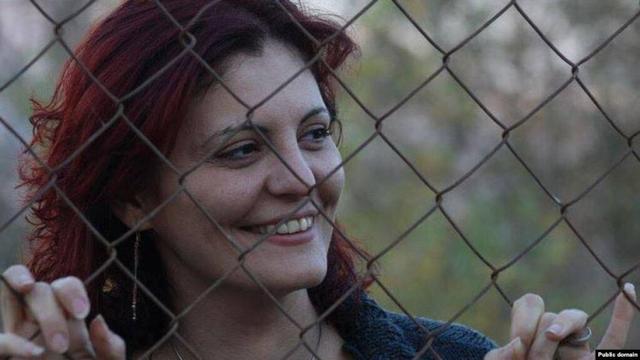
Tarza Jaff
Her friend Bakhcha introduces Tarza Jaff’s poem When Women Go, God Inflicts Wrath On Them, They Grow Wings. ‘Many Kurds consider this the most beautiful poems ever written on the subject’, De Graaff says.
‘The people I met were educated, militant, feminist, eager to be part of a free world. But there is also another Kurdistan, where women are severely disadvantaged and face honour killings, forced marriages, and religious restrictions. The singer Naaz, who performs in Qaqnas, for instance, was not allowed to sing at home. Jaff’s poem captures the difficulty of claiming freedom.’
For many in Kurdistan, leaving a husband can mean becoming an outcast. ‘Unfortunately, that is still the case in large parts of the world. People struggle with this in different ways everywhere. But ultimately, they rise from the ashes, like the Qaqnas, the phoenix.’
Naaz smoothly moves between Kurdish tradition, pop and coloratura
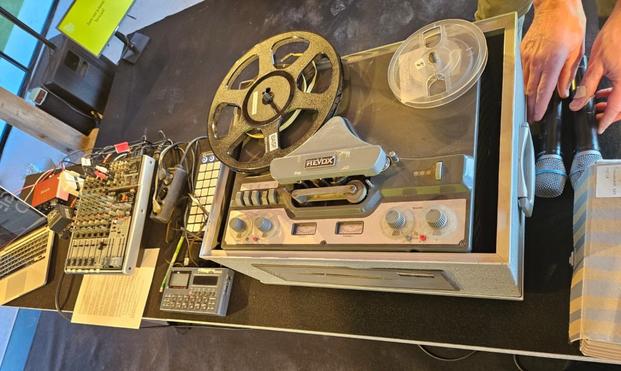
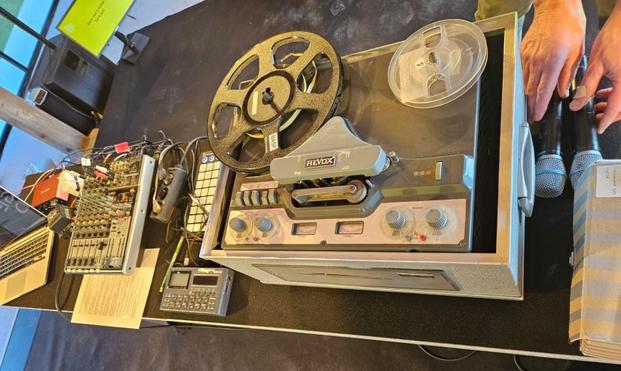
During the press presentation of the Holland Festival in March, a preview of Qaqnas is shown. The composer, dressed in a black robe, stands behind a table filled with equipment — a laptop, microphones, mixing desk, rhythm box, and an old-fashioned tape recorder.
She operates this setup with admirable ease, sometimes using a pencil to extend the tape and create a loop. The sound shifts between unearthly growlings and sweet melodic passages, forming a backdrop to Naaz’s singing.
Preview Qaqnas 5 March 2025 Holland Festival (c) Oscar Smit
Her voice moves seamlessly between traditional Kurdish vocal styles with a metallic edge, pop-inflected melodies, and operatic cantilenas, keeping the audience spellbound from start to finish.
‘Those coloratura passages came at her own request’, De Graaff says. ‘Naaz has no classical training, but was determined to sing Callas-style high notes. She’s a natural talent — as a singer, songwriter, and performer.’
‘The theme — woman, life, freedom — resonates deeply with her; Jin, Jiyan, Azadî is tattooed on her neck. This was the central slogan in the mass protests in Iran following the death of Mahsa Amini in 2022.’
Language equals sound equals melody
De Graaff often works with musicians and singers who cannot read music. How has she gone about? ‘I sing the part, Naaz repeats it, and I record this. From this material, I create rehearsal tracks based on my score.’
‘Mind you, electronic elements are difficult to notate, they exist mainly in the form of sketches and written instructions. As for the melodic material, I based this exclusively on the sound of the Kurdish verses.’
‘For me, language equals sound equals melody. I previously translated speech into musical form in The Naked Shit Songs and Apera. This time I worked with a completely unfamiliar vocabulary and ditto sounds. But in Sulaymaniyah, I had listened carefully to the people around me, and I don’t think there are any mistakes in my setting of the poem.’
Woman – life – electronics
In Qaqnas, De Graaff works with vintage electronics, ‘hence the pencil-and-tape loop technique’, she says. ‘This blends beautifully with Naaz’s vocals and subtle intonation shifts. Soldering and homemade electronics also play a role, along with recorded material and synthetic sounds.’
When does she consider Qaqnas a success? ‘I’m happy if, from our experimental space of forbidden language and unorthodox singing, we create a performance that resonates long after it ends. When the inner world steps into the open in complete freedom: woman – life – electronics!’
Qaqnas runs from 11 (try-out) through 14 June in Frascati Amsterdam and will then tour the Netherlands
#HubaDeGraaff #Naaz #Qaqnas #Space21 #TarzaJaff #ژنکەدەڕۆنخوداغەزەبیانلێدەگرێتباڵدەگرن Klassiekvannu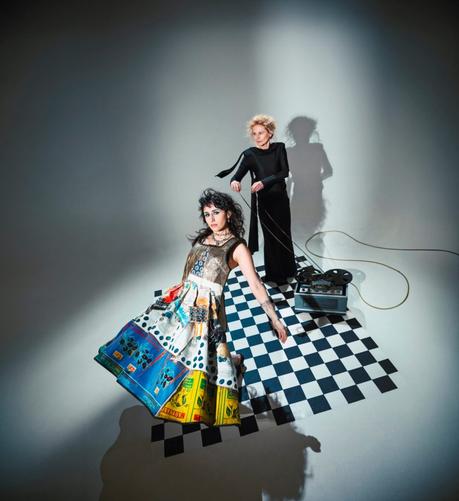
 Contemporary Classical - Thea Derks