Compact mid-infrared tunable interband-cascade laser-based spectrometer: Characterization and outlook for Amide-I region chemical sensing.
Sensors and Actuators B: Chemical
Volume 447, Part 2, 15 January 2026, 138841
https://doi.org/10.1016/j.snb.2025.138841
#infrared #qcl #openaccess
We're moving to Bluesky. Follow us at https://bsky.app/profile/clirspec.org
Surface-emitting ring quantum cascade lasers.
Nanophotonics, 2025.
https://doi.org/10.1515/nanoph-2025-0248
#review #qcl #openaccess
Follow us on Bluesky: https://bsky.app/profile/clirspec.org

Surface-emitting ring quantum cascade lasers

This review highlights the development and diverse applications of surface-emitting ring quantum cascade lasers. These lasers, featuring a ring-shaped cavity and a second-order distributed feedback grating, enable controlled surface emission, stable single-mode operation, and collimated, circularly symmetric beams. These advancements have expanded their use in scientific and industrial applications, with significant progress in extending their operation from the mid-infrared to the terahertz regime. Innovations such as microring designs, phase-shifted gratings and buried heterostructures have enhanced their scalability, beam quality, and suitability for continuous-wave operation at room temperature, unlocking opportunities in spectroscopy, imaging, and communication. On-chip optical solutions and integrated architectures combining emission and detection within a single chip further pave the way for compact and efficient systems for remote sensing and gas monitoring. Progress in miniaturization, thermal stability, and wavelength consistency strengthens the role of ring-based lasers in industrial, environmental, and medical diagnostics. These advancements, alongside scalable fabrication techniques and enhanced modulation schemes, position ring quantum cascade lasers as key enablers for the next generation of robust, energy-efficient sensors tailored to diverse scientific and industrial needs.

De Gruyter Brill

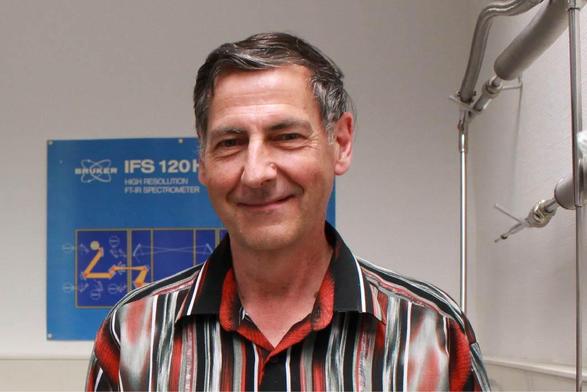
Check out our interview with Dr. Lutz Schrottke, whose work on Quantum Cascade Lasers (QCLs) laid the foundation for one of PDI’s core research areas. After more than 25 years at PDI, Dr. Schrottke reflects on his academic journey, his key contributions to THz QCL development, and their real-world applications in areas such as #astronomy and plasma diagnostics.

More: https://bit.ly/4dWXOCk

#interview #shareknowledge #QCL #quantumtechnology #nanonarratives

NanoNarratives: Dr. Lutz Schrottke, Expert in...

Dr. Lutz Schrottke has spent more than 25 years at PDI, where his work on Quantum Cascade Lasers (QCL) laid the groundwork for one of the institute's Core Research Areas (CReAs). In this...

Paul-Drude-Institut für Festkörperelektronik