Thought Of The Day #29: Be yourself. But be really good at being yourself. #principals #values [ May 8th 2026 ] https://rons-home.net/en/living-life-lab/personal-growth/thought-of-the-day/thought-of-the-day/2026/5/8
Thought #29 :: Thought Of The Day :: Thought Of The Day :: Personal Growth :: Living Life Lab :: Ron's Home

Each Thought Of The Day is an opportunity for you to reflect on your life, who you want to become, your identify and purpose in life. May 8th 2026 edition.

After National Principals Day: The Humble Heart to Serve

This past Friday, schools across the nation paused to recognize National School Principals Day. It is a meaningful day, and I am thankful for every word of encouragement, every kind post, every handshake, and every moment of appreciation offered to those who serve in the principalship.

But the truth is this: one day of recognition can never fully explain the weight of the chair.

The principalship is not simply a title. It is not a parking spot, a nameplate, or a seat at the head of the table. It is a calling to serve in a place where the pressure is constant, the criticism can be loud, and the victories are sometimes quiet.

At the heart of this work is something that does not always make the spotlight:

humility.

The Humble Heart to Serve

It takes a humble heart to serve people even when they do not support you.

That may sound simple, but anyone who has sat in the principal’s chair knows it is not. Leadership will stretch you. It will test your motives. It will reveal whether you are serving for applause or serving because the mission is bigger than you.

Humility is not weakness.

Humility is strength under control. It is the ability to keep the grand scope of the work larger than yourself. It is choosing students over ego, mission over applause, and purpose over personal comfort.

A principal must often walk into the building knowing that every decision will not be understood, every action will not be supported, and every motive will not be fairly interpreted.

And still, the work must continue.

That is humility.

Navigating at the Top

There is a unique difficulty in leading from the top.

Many assume the person at the top has the most freedom. In reality, the person at the top often carries the most restraint.

A principal must listen carefully, speak wisely, decide responsibly, and absorb more than most people will ever know. There are moments when candor is limited because confidentiality matters. There are moments when silence is not the absence of truth, but the protection of people, processes, and professionalism.

That is one of the hardest parts of leadership.

You may know more than you can say.

You may carry more than you can explain.

You may be judged by people who only see one piece of the puzzle while you are responsible for the whole picture.

And yet, the principal must keep showing up with clarity, consistency, and courage.

More Than a Systemic Algorithm

Principals cannot afford to become systemic algorithms of repetitive tasks.

Yes, the work includes schedules, evaluations, reports, meetings, policies, discipline, safety, transportation, parent concerns, compliance requirements, and more emails than any human being should have to read before 9:00 a.m.

But leadership is not supposed to be mechanical.

Schools do not improve because leaders simply repeat last year’s routine with a new date on the calendar. Schools improve when leaders ask better questions, challenge ineffective patterns, build stronger systems, and refuse to accept “that is just how we have always done it” as a serious improvement strategy.

A principal must be a change-agent.

That means constantly studying the model.

Where are students getting stuck?

Where are teachers unsupported?

Where is the schedule working against instruction?

Where is intervention too late?

Where are expectations unclear?

Where is culture drifting?

Where are we celebrating compliance when we should be building capacity?

The goal is not to simply manage the building.

The goal is to build a brighter path for students and stronger capacity for teachers.

The Public Eye

There is also a public side of the principalship that many people do not fully understand.

The public often sees the announcements, the social media posts, the car rider line, the ballgames, the awards programs, and the big moments.

But the public does not always see the full weight of the role.

They may not see the principal praying before a difficult meeting.

They may not see the late-night work after the school lights are off.

They may not see the burden of making decisions where every option carries a cost.

They may not see the pressure of keeping students safe, supporting teachers, answering families, meeting district expectations, complying with state requirements, and still pushing academic achievement forward.

Principals are often expected to be instructional leaders, culture builders, crisis managers, counselors, compliance officers, community liaisons, accountability analysts, human resource problem-solvers, and professional fire extinguishers — sometimes all before lunch.

The task is daunting.

Still, the best principals do not lead by public applause. They lead by conviction.

They seek to do what is right even when the majority claims the opposite. They understand that popularity may shift with the mood of the moment, but integrity must remain anchored.

The work is too important to be driven by noise.

Doing What Is Right

One of the greatest tests of the principalship is the ability to do what is right when it is not popular.

There will be times when the right decision is misunderstood.

There will be times when accountability is mistaken for harshness.

There will be times when structure is mistaken for control.

There will be times when change is mistaken for disruption.

But strong school leadership requires the courage to keep the mission in front of the emotion.

That does not mean leaders should ignore people. It does not mean leaders should dismiss concerns. In fact, the best principals listen deeply.

But listening does not always mean surrendering the mission.

A principal must be willing to hear the noise while still following the compass.

A Handshake to the Chair

So after National Principals Day, I offer a sincere handshake.

To those who have sat in the principal’s chair: thank you.

You know the weight. You know the sleepless nights. You know the burden of loving a school enough to make hard decisions for it.

To those currently sitting in the chair: stay encouraged.

Keep your heart clean, your mission clear, your systems tight, and your students at the center. Some days will test you. Some seasons will stretch you. But the work still matters.

To those who truly desire the chair: pursue it with sober understanding.

Do not chase the title if you are not ready for the weight. But if you are called to serve, lead with humility, courage, clarity, and conviction.

Because the principalship is not for the faint of heart.

It is for those willing to carry the burden of the whole school while keeping the focus on something far bigger than themselves:

a brighter path for students,

stronger capacity for teachers,

and a better future for the communities we serve.

Final Thought

National Principals Day may last one day on the calendar, but the calling of the principalship continues every morning the doors open.

The work is heavy.

The expectations are high.

The criticism can be real.

But so is the purpose.

And for those who lead with a humble heart, the mission will always be bigger than the moment.

Classroom Management That Actually Works

Help Me Manage My Class

A research-based teacher reference guide for managing behavior, maintaining structure, and building a high-functioning classroom aligned to the Mississippi Teacher Growth Rubric. You may access the visual below:

Aligned Standards

  • MTGR Standard 1: Planning & Preparation
  • MTGR Standard 2: Learning Environment
  • MTGR Standard 3: Instructional Practice
  • MTGR Standard 4: Professional Responsibility

Why this matters right now

Behavior disruptions have been trending upward across grade levels. Research confirms that reactive responses such as raised voices, public call-outs, and empty threats accelerate behavior cycles rather than interrupting them. This guide gives you a proactive, structured, legally-defensible framework for K-12 schools. Use it to plan before behavior appears, not after.

The 4 MTGR Pillars That Drive Management

The Mississippi Teacher Growth Rubric does not evaluate behavior management in isolation. Your management competency is embedded across four interconnected standards. Mastering all four is the only path to a Level 3 or Level 4 rating.

1. Planning & Preparation

Behavior is managed before the bell rings. A rigorous, paced, student-relevant lesson is your number one management tool. Empty time becomes behavior time.

2. Learning Environment

Room arrangement, posted expectations, transitions, and routines matter. Evaluators score how well you establish and maintain physical and emotional safety.

3. Instructional Practice

High engagement lowers behavior incidents. Rigorous instruction keeps sixth and seventh graders mentally occupied and academically challenged.

4. Professional Responsibility

Documentation, parent communication, administrator communication, and consistent follow-through matter. Your consistency is your credibility.

The 4-Zone Behavior Escalation Framework

Every teacher needs a clear, rehearsed escalation path. The goal is always to de-escalate to the lowest zone possible, not to jump straight to removal.

Zone 1: Proactive

Trigger: Class is engaged and on-task.

Use these moves:

  • Narrate positive behavior publicly.
  • Circulate continuously.
  • Use non-verbal praise.
  • Vary voice, proximity, and pace.
  • Begin class with a strong warm-up within 90 seconds.

Zone 2: Preventive

Trigger: One or two students begin to disengage or distract.

Use these moves:

  • Move toward the student while continuing instruction.
  • Use the student’s name in an academic context.
  • Use a non-verbal redirect first.
  • Offer a positive behavioral choice.
  • Adjust seating strategically if needed.

Zone 3: Corrective

Trigger: Disruption begins to affect other students.

Use these moves:

  • Correct privately and quietly.
  • Offer a behavior reset.
  • State a formal warning once, clearly.
  • Assign a brief reflection or reset task.
  • Document the incident in real time.

Zone 4: Escalation

Trigger: Safety risk or repeated disruption after prior interventions.

Use these moves:

  • Contact the office calmly.
  • Continue instruction for the rest of the class.
  • Complete a written incident report within 24 hours.
  • Contact the parent or guardian before the next class day.
  • Debrief and prepare a re-entry plan.

The Big 3: Proximity, Redirection, and Professional Responsibility

These three competencies show up repeatedly in classroom observations.

Proximity

Your physical presence is one of your strongest management tools.

Best practices:

  • Map a deliberate movement route through the room before class starts.
  • Use the three-foot rule: stand near the student and keep teaching.
  • Scan continuously rather than staring down one student.
  • Do not anchor yourself to the board or teacher desk.

Redirection

Effective redirection preserves instructional momentum and student dignity.

Best practices:

  • Correct privately whenever possible.
  • Offer two acceptable choices.
  • State the redirect once, then move on.
  • Do not over-explain during instruction.

Professional Responsibility

Your management is only as strong as your follow-through.

Best practices:

  • Keep a simple behavior log.
  • Make positive parent contact before behavior becomes a crisis.
  • Apply consistent consequences.
  • Never issue threats you cannot enforce.

The Managed Classroom: Room Arrangement and Zones

Research confirms that physical environment is a proactive management decision, not an aesthetic one.

What matters most

  • Every student should remain visible from multiple points in the room.
  • High-need students should sit front-adjacent and aisle-adjacent, not isolated.
  • A focus or reset table should function as a support tool, not a punishment corner.
  • Dead zones and blocked sightlines should be eliminated.
  • Teacher movement should be intentional, not random.

What to Say and What Never to Say

The language you use either opens a path to compliance or closes it.

High-leverage teacher language

  • “I need you to open your notebook and write the warm-up question.”
  • “You can do this now or stay after class to complete it. Your choice.”
  • “I see you’re frustrated. Let’s talk about it after class.”
  • “I noticed Table 3 is already on task. That’s exactly what I need.”
  • “I’m going to give you 30 seconds to make a good choice.”

Language that escalates behavior

  • “Why are you always doing this?”
  • “I’ve told you a hundred times.”
  • “Do you want to go to the office?”
  • “Everyone stop, we’re waiting on Marcus.”
  • “That’s it, you’re done.”
  • Arguing with a student during instruction about fairness.

Teacher Planning Checklist: Before, During, and After

Behavior management is a planning discipline, not a reaction skill.

Before class

  • Post and prepare the warm-up before students enter.
  • Review seating for strategic placement.
  • Plan transitions explicitly.
  • Stage materials to reduce wait time.
  • Tighten pacing so students are engaged consistently.
  • Review any behavior follow-up from previous classes.

During class

  • Begin circulating within the first two minutes.
  • Narrate positive behavior regularly.
  • Use non-verbal redirects before verbal ones.
  • Redirect privately, calmly, and briefly.
  • Maintain momentum during transitions.
  • Use student names positively, not only for correction.

After class

  • Document incidents clearly.
  • Note positive contacts to make.
  • Follow up with students privately when needed.
  • Identify patterns.
  • Notify administration of serious incidents.
  • Prepare the next day’s opening before leaving.

MTGR Classroom Management: Level 1 to Level 4

Know what evaluators are actually looking for.

Standard 2A: Routines and Procedures

  • Level 1: No visible routines; transitions are chaotic.
  • Level 2: Some routines exist but are inconsistent.
  • Level 3: Routines are established and mostly automatic.
  • Level 4: Students manage routines independently.

Standard 2B: Behavior Management

  • Level 1: Behavior is ignored or mishandled.
  • Level 2: Responses are inconsistent and reactive.
  • Level 3: Teacher uses consistent, private, proactive strategies.
  • Level 4: Students self-regulate and class culture is self-sustaining.

Standard 2C: Physical Environment

  • Level 1: Room arrangement impedes supervision.
  • Level 2: Room is functional but not optimized.
  • Level 3: Room supports supervision and access.
  • Level 4: Room is purposefully designed and owned by students.

Standard 3C: Engagement and Momentum

  • Level 1: Students are inactive and disengaged for long stretches.
  • Level 2: Engagement is uneven.
  • Level 3: Most students are engaged most of the time.
  • Level 4: Instructional design eliminates many behavior conditions before they emerge.

Standard 4B: Professional Responsibilities

  • Level 1: No documentation, no follow-through.
  • Level 2: Documentation and communication are inconsistent.
  • Level 3: Documentation and communication are consistent and proactive.
  • Level 4: Systems are detailed, collaborative, and preventative.

What the Research Actually Says

This guide is built on peer-reviewed research and validated classroom practice.

Marzano

Effective classroom management is one of the highest-impact factors on student achievement.

Wong and Wong

Routines and procedures, not rules alone, are the foundation of a well-managed classroom.

Siegel and Bryson

Middle school students are neurologically wired for emotional reactivity and peer sensitivity. Teacher calm matters.

Emmer and Evertson

Proactive management strategies prevent most classroom disruptions before they occur.

Final Takeaway

Classroom management is not about control for its own sake. It is about creating the conditions where students can learn, teachers can teach, and the classroom can function with dignity, structure, and momentum.

Strong management is planned. It is practiced. It is consistent. And it always serves instruction.

Click Below

ClassroomManagement_GuideDownload

The Accountability Science: Why Mississippi School Leaders Need More Than a Testing Plan

Mississippi accountability is not driven by instinct or generic test prep. It is driven by formulas, student pools, participation rules, growth logic, and FAY attribution. School leaders who understand that science make better decisions before the scores are released.

Accountability Is a Leadership Issue, Not Just a Testing Issue

There is a mistake school leaders make every year when accountability season gets close. They start talking about testing strategy before they have validated accountability logic. That is backwards.

Mississippi’s accountability model is not just about whether students perform well on MAAP. It is about whether leaders understand the rules that determine which students count, where they count, how points are earned, and what can quietly reduce a school’s final grade even when instruction improved.

That is why I call this The Accountability Science.

Accountability errors usually start before testing ends. They start when leaders misunderstand who actually counts.

That is the purpose behind the accountability explainer I built for School Leaders’ Think Tank. It gives school leaders a plain-language walkthrough of Mississippi’s 2025 accountability structure.

  • The 700-point model for schools without Grade 12
  • The 1,000-point model for high schools and K-12 schools
  • Proficiency and growth components
  • Full Academic Year rules
  • Participation penalties
  • Readiness calculations
  • At-risk identification
  • The difference between accountability grades and accreditation status

The First Problem: Wrong Student Pools

In Mississippi, accountability is rule-driven. It is not enough to know how many students may score proficient. Leaders have to know which students belong in which component.

  • Proficiency components use FAY students
  • Growth components use FAY students with a valid prior-year Mississippi score
  • The Lowest Performing 25% subgroup is calculated separately for reading and math growth
  • Participation below 95% can increase the denominator and trigger a one-letter-grade drop
  • Transfer students may test in one school while the accountability impact follows the school where FAY was actually met

If those distinctions are not built into a school’s internal tracker, the projections are already compromised.

Growth Is Not the Same as Proficiency

One of the biggest leadership mistakes in accountability conversations is treating proficiency and growth like the same pool. They are not.

Mississippi growth is tied to specific rules around proficiency-level movement. A student can count in proficiency and still not count in growth.

Students who meet current-year FAY can be included in proficiency. But if they do not have a valid prior-year Mississippi assessment score, they are excluded from growth. That includes many out-of-state transfers. First tested-grade students also do not generate growth because there is no prior-year baseline.

If you do not separate proficiency pools from growth pools, your accountability forecast is not serious.

FAY Is Not a Footnote

Too many leaders still treat Full Academic Year as a side issue. It is not.

Under Mississippi’s rules, FAY is based on enrollment for at least 75% of calendar days from September 1 through the first day of state testing. That is an accountability filter with real consequences.

  • FAY is based on enrollment, not attendance
  • Weekends and holidays count in the calculation
  • 74.5% does not round up
  • For some schedules, the FAY window can differ
  • A score follows the school where FAY was actually met

A student may test at one school, but the score may belong to another school for accountability purposes. If leaders are not checking attribution carefully, they can misread both risk and performance.

Mississippi Uses Two Different Models

Schools without Grade 12 operate under the 700-point model. High schools and K-12 schools that include Grade 12 operate under the 1,000-point model.

That difference matters because the component structure changes. High schools add Graduation Rate and Readiness, while science carries a different weight than it does in the elementary and middle model.

Participation Can Hurt You Twice

If participation falls below 95%, the damage is not limited to optics. Mississippi’s rules can force the denominator for proficiency components up to 95% of enrollment rather than using the actual number tested. That lowers the component score. It can also trigger an automatic drop of one full performance classification.

Low participation does not just create a compliance issue. It can directly damage the score and the grade.

Accountability and Accreditation Are Not the Same Thing

A school performance classification is not the same thing as district accreditation status. Mississippi districts can face accreditation consequences tied to process standards, compliance failures, reporting problems, testing security violations, graduation issues, or other policy breaches that sit outside the accountability grade itself.

  • Performance
  • Compliance

Strong leadership requires both conversations at once.

What School Leaders Should Audit Right Now

Before anyone celebrates projected gains or panics about risk, leaders should verify the inputs.

  • Which students actually meet FAY?
  • Which students count in proficiency but not growth?
  • Which students lack a prior-year Mississippi score?
  • Where will transfer student scores actually be attributed?
  • Is the school exposed to a participation penalty?
  • Does the leadership team understand the correct model and weights?

That is not clerical work. That is accountability protection.

Final Thought

The entire point of The Accountability Science is simple: if school leaders are going to be judged by the system, they need to understand the system with precision.

Not vaguely. Not eventually. Precisely.

Because vague leadership creates avoidable surprises. And accountability surprises are almost always more expensive after the release than before it.

Join Me Live

Join me for The Accountability Science: Checkmate on Tuesday, June 2, 2026, at 6:30 PM through School Leaders’ Think Tank and PrincipalYeager.com. I’ll break down what Mississippi school leaders need to understand now about accountability, FAY, growth logic, participation, score attribution, and the mistakes that quietly cost schools points.

Join Us Live

If your denominator is wrong, your projection is wrong.

Strong school leaders do not wait for the release to understand the system.

Author note: Principal Yeager writes for School Leaders’ Think Tank on accountability, school improvement, accreditation, and executive-level leadership decisions in Mississippi public education.

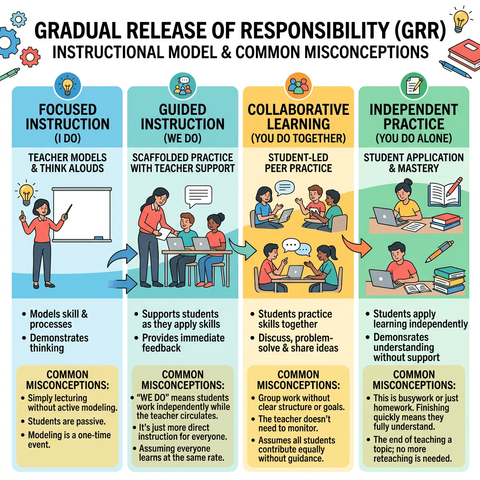
What is Rigor?

An infographic explaining the four stages of the Gradual Release of Responsibility instructional model.

What Rigorous Instruction Actually Looks Like in Grades 6 and 7

Suggested URL slug: what-rigorous-instruction-looks-like-grades-6-7

Suggested excerpt:
Rigor is not about giving students harder worksheets. It is about asking them to think, justify, analyze, and explain at the level demanded by the standards. This framework for Grades 6 and 7 ELA and Math shows what rigorous instruction should look like in real classrooms.

What Is Rigor in Elementary and Secondary

When people talk about rigor, the conversation often becomes vague. Some define it as harder work. Others define it as more work. In schools, that confusion creates a real problem: teachers may believe they are increasing rigor when they are actually increasing compliance, pacing, or task volume.

That is why I built a visual framework for rigorous instruction in Grades 6 and 7 ELA and Math.

The goal was simple: make rigor visible.

At any school, rigor cannot live as a slogan. It has to show up in lesson design, student tasks, classroom discourse, written responses, and daily walkthrough evidence. If a lesson is truly aligned to Mississippi College- and Career-Readiness Standards, then students should be doing more than completing work. They should be reading closely, writing with evidence, reasoning through mathematics, explaining their thinking, analyzing mistakes, and revising their responses.

Rigor Is Not “Harder.” It Is Stronger Thinking.

One of the clearest problems in instruction is the gap between activity and standard. A classroom may look busy, but that does not mean students are doing grade-level thinking.

Real rigor means the standard drives the lesson.

In Grade 6 ELA, that means students move from comprehension to analysis to evidence-based writing. They do not just find an answer in the text. They cite evidence, determine central ideas, explain author point of view, and defend claims in writing.

In Grade 7 ELA, the demand increases. Students must analyze author’s craft, distinguish explicit meaning from inference, compare perspectives, and write arguments that include evidence, counterarguments, and rebuttals.

In Grade 6 Math, rigor means students explain why a strategy works, not just perform it. They move across representations, connect math to context, and justify steps with language and reasoning.

In Grade 7 Math, rigor becomes even more important because this is a critical bridge into algebra. Students must translate real-world contexts into equations, reason proportionally, explain integer operations conceptually, and compare solution methods for efficiency and accuracy.

What I Should See During a Walkthrough

If rigor is present, it should be visible quickly.

In ELA classrooms, I should see students annotating with purpose, citing multiple pieces of evidence, writing short analytical responses, and revising weak thinking into stronger thinking. I should hear teachers pressing with questions like: “Which word tells you that?” or “What evidence makes that claim stronger?”

In Math classrooms, I should see students solving before being rescued, using multiple representations, discussing why a method works, and analyzing errors instead of just marking answers right or wrong. I should hear students explain what a variable represents, what a unit rate means, or why two methods produce the same result.

Rigor drift is just as visible.

If the teacher talks too long without student thinking, if students are completing low-level worksheets, if only one method is accepted, if exit tickets only ask for answers without explanations, or if the lesson never reconnects to the standard, rigor has already weakened.

The Eight-Step Lesson Architecture Matters

The framework also makes another point clear: rigor does not happen by accident.

Strong lessons move through a deliberate sequence:

  • A clear objective tied to the standard
  • A launch that creates thinking demand
  • Explicit teaching of the skill or concept
  • Modeling that makes expert thinking visible
  • Checking for understanding before release
  • Guided practice with productive struggle
  • Independent practice requiring explanation
  • Closure with standard-aligned exit evidence
  • That sequence matters because it protects the lesson from collapsing into either lecture or loose activity. Students need direct teaching, but they also need opportunities to think, struggle, justify, and apply.

    Non-Negotiables for Daily Rigor

    Across all four content areas, several non-negotiables stand out.

    Students need written rationale, not just verbal participation. They need misconception analysis, not just answer checking. They need grade-level text and grade-level math tasks, not watered-down substitutions. They need exit tickets that require explanation, reflection, and evidence of real understanding.

    In ELA, that may look like a daily rationale stem, a short constructed response, or a counterargument frame.

    In Math, that may look like multiple representations, an error analysis routine, a real-world launch task, or a three-part exit ticket that asks students to solve, explain, and identify a likely mistake.

    Those routines are not extras. They are the structures that make rigor repeatable.

    Why This Matters

    Rigor is not an abstract instructional ideal. It is a daily leadership responsibility.

    If we want stronger outcomes, we have to become more precise about what students are being asked to think and do every day. Standards-aligned rigor improves classroom quality, reduces assessment surprise, and builds the kind of reading, writing, and mathematical reasoning students need for long-term success.

    Teachers deserve clarity on what rigorous instruction actually looks like. Students deserve classrooms that ask them to think deeply, not just comply. School leaders need walkthrough tools that separate true rigor from the appearance of rigor.

    That is the purpose of this framework.

    Rigor should be visible. It should be teachable. And it should be non-negotiable.

    Closing

    If you are a teacher, instructional coach, or school leader, the challenge is straightforward: look at your next lesson and ask whether students are being required to explain, justify, analyze, compare, and reflect at the level of the standard.

    If not, that is the next move.

    Optional WordPress Pull Quotes

    Rigor is not about harder worksheets. It is about stronger thinking.

    The standard, not the activity, must drive the lesson.

    If students are only answering, but not explaining, rigor is missing.

    Suggested SEO Title

    What Rigorous Instruction Looks Like in Grades 6 and 7

    Suggested Meta Description

    An instructional leadership framework for Grades 6 and 7 ELA and Math showing what rigorous, standards-aligned teaching should look like in real classrooms.

    Rigorous Instruction Framework for Grades 6 and 7

    This inline version is simplified for WordPress. It removes scripts, tabs, and interactive behavior while preserving the core instructional content for Grade 6 ELA, Grade 7 ELA, Grade 6 Math, and Grade 7 Math.

    Grade 6 ELA

    From Comprehension to Analysis to Evidence-Based Writing

    Mississippi CCR Standards anchor every instructional move. Students in Grade 6 must move beyond surface reading. They must cite textual evidence, analyze how authors develop central ideas, and write claims supported by specific, relevant evidence.

    Key Standards

    StandardWhat Students Must DoDOKRigor MoveRI.6.1Cite textual evidence to support analysis of what the text says explicitly and what is inferred.DOK 2-3Move from find-it to prove-it to justify-it.RI.6.2Determine central idea and how it is developed; provide objective summary.DOK 3Students trace development across paragraphs, not just identify.RL.6.3Describe how plot unfolds and how characters respond or change as plot moves toward resolution.DOK 3Requires analysis of change over time, not just events.RI.6.6Determine author’s point of view and explain how it is conveyed.DOK 3Students defend a point-of-view claim with word-level evidence.W.6.1Write arguments supported by clear reasons and relevant evidence.DOK 4Every claim needs text-based evidence and reasoning.W.6.2Write informative and explanatory texts with analysis, facts, and elaboration.DOK 3Students explain how evidence supports ideas, not just list facts.

    Principal Walkthrough Look-Fors

    • Students annotate with a specific purpose.
    • Students write 3-4 sentence rationales citing specific text.
    • The teacher presses with questions such as “Which word tells you that?”
    • Misconceptions are visible and being analyzed.
    • Students revise written responses instead of only producing first drafts.
    • Exit tickets require explanation, not just answers.

    Rigor Drift Warning Signs

    • Teacher talk dominates the lesson for more than 20 minutes without student response.
    • Students fill in blanks with no reasoning required.
    • The exit ticket is multiple choice only.
    • The text is below grade level or summarized for students.
    • No misconception is surfaced during the lesson.
    • Closure is skipped.

    Non-Negotiable Tools

    • Daily rationale stem: “The central idea is ___ because the text states ___. This shows ___ because ___.”
    • Misconception organizer: Students identify wrong thinking, explain why it is wrong, and restate correct reasoning with evidence.
    • Stretch text protocol: Students engage grade-level or above-grade-level text and annotate actively.
    • Short constructed response: Claim, evidence, reasoning every class period.
    • Revision cycle: Students strengthen weak responses using models, rubrics, or peer comparison.
    • Standard-based exit ticket: One aligned item, one rationale, and one reflection on a likely error.

    Grade 7 ELA

    From Analysis to Argument to Author’s Craft

    Grade 7 CCR Standards demand deeper analytical moves. Students must analyze how authors develop craft through word choice, structure, and point of view, and they must write arguments using multiple pieces of evidence and clear reasoning chains.

    Key Standards

    StandardWhat Students Must DoDOKRigor MoveRI.7.1Cite several pieces of evidence to support analysis and distinguish what the text says from what is inferred.DOK 3Multiple pieces of evidence are required.RI.7.2Determine two or more central ideas and analyze their development.DOK 3-4Students track multiple ideas across a text.RL.7.4Determine meaning of words and phrases and analyze their effect.DOK 3Word choice leads to author intent and reader impact.RI.7.6Determine author’s point of view and analyze how the author distinguishes that position from others.DOK 3-4Students compare perspectives, not just identify them.W.7.1Write arguments with claims, evidence, reasoning, and counterarguments.DOK 4Counterargument acknowledgment is the key Grade 7 leap.RL.7.5Analyze how a drama or poem’s form contributes to meaning.DOK 3Students study how the text is built, not just what it says.

    Principal Walkthrough Look-Fors

    • Students cite multiple pieces of evidence per claim.
    • Students analyze author’s word choice and intent.
    • Counterarguments appear in writing and discussion.
    • Students compare two texts or two perspectives.
    • Students explain why one piece of evidence is stronger than another.
    • Exit tickets require a reasoning chain.

    Rigor Drift Warning Signs

    • Only one piece of evidence is accepted per response.
    • Argument writing has no counterargument.
    • Students copy from the text without reasoning.
    • Discussion stays at the literal level only.
    • Word choice work asks only for definitions.
    • Teacher reads the text for students instead of students annotating.

    Non-Negotiable Tools

    • Evidence ranking task: Students rank evidence from strongest to weakest and justify the ranking.
    • Counterargument frame: “Some might argue ___. However, the text shows ___ because ___.”
    • Author’s craft lens: Students identify a craft move and explain its effect on the reader.
    • Two-text comparison: Students analyze how two authors develop their points differently.
    • Argument writing protocol: Claim, evidence, counterargument, rebuttal, conclusion.
    • Exit evidence with inference layer: Students state what the text says and what they infer.

    Grade 6 Math

    From Procedures to Reasoning to Mathematical Justification

    Grade 6 Math is a transition year from arithmetic to ratio reasoning, negative numbers, equations, and statistics. Rigor means students explain why a procedure works, not just execute it.

    Key Standards

    StandardWhat Students Must DoDOKRigor Move6.RP.A.1Understand ratio concepts and describe ratio relationships using ratio language.DOK 2Use ratio, fraction, table, graph, and verbal explanation.6.RP.A.3Use ratio and rate reasoning to solve real-world problems.DOK 3Require multiple strategies, not just one method.6.NS.C.5Understand positive and negative numbers in real-world contexts.DOK 2Connect number to meaning, not just sign rules.6.EE.A.2Write, read, and evaluate expressions with variables.DOK 2-3Students evaluate and explain each step.6.EE.B.7Write and solve equations from real-world problems.DOK 3Real-world context is required.6.SP.B.5Summarize numerical data sets in relation to context.DOK 3Statistics without context is not statistical thinking.

    Principal Walkthrough Look-Fors

    • Students attempt non-routine problems before direct instruction.
    • Students use more than one representation.
    • Students explain why a procedure works.
    • Error analysis is visible.
    • Tasks include real-world context.
    • Exit tickets require solve, explain, and error reflection.

    Rigor Drift Warning Signs

    • Teacher models the full problem and students copy.
    • Only one method is shown or accepted.
    • Problems are naked computation with no context.
    • Students justify with “I got it right.”
    • All tasks are DOK 1.
    • Teacher rescues too quickly.

    Non-Negotiable Tools

    • Multiple representations protocol: Table, visual, and equation.
    • Math rationale stem: “I solved it by ___. I chose this strategy because ___. My answer makes sense because ___.”
    • Error analysis task: Students identify the error, explain it, and correct it.
    • Real-world task launch: Students reason about meaningful contexts.
    • Math discourse protocol: Students agree or disagree with reasoning and explain why.
    • Three-part exit ticket: Solve, explain, and identify a likely mistake.

    Grade 7 Math

    From Operations to Proportionality to Algebraic Thinking

    Grade 7 is the critical pre-algebra year. Students extend rational number operations, deepen proportional reasoning, and begin formal work with expressions and equations. Rigorous Tier 1 instruction here directly affects readiness for algebra and MAAP performance.

    Key Standards

    StandardWhat Students Must DoDOKRigor Move7.RP.A.2Recognize and represent proportional relationships and identify unit rate.DOK 2-3Students move across table, graph, and equation.7.NS.A.1Apply properties to add and subtract rational numbers with number-line understanding.DOK 2Rules are built from understanding, not memorized tricks.7.NS.A.2Multiply and divide rational numbers and explain sign behavior conceptually.DOK 2-3Students justify sign rules.7.EE.A.1Use properties to simplify, factor, and expand expressions.DOK 2Students justify each property used.7.EE.B.4Represent real-world quantities with variables and solve equations.DOK 3Context-to-equation translation is the key rigor move.7.G.B.4Use formulas for circles to solve real-world problems.DOK 3Students explain where pi comes from, not just plug into a formula.

    Principal Walkthrough Look-Fors

    • Students translate real-world situations into equations.
    • Students explain integer operations conceptually.
    • Proportional relationships appear as table, graph, and equation.
    • Students catch and correct errors with explanation.
    • Productive struggle is visible before teacher modeling.
    • Students compare solution strategies for efficiency.

    Rigor Drift Warning Signs

    • Integer rules are taught as tricks with no conceptual backing.
    • Only equation form is used for proportional reasoning.
    • Teacher solves first and students copy.
    • Word problems lose their real context.
    • Error analysis is reduced to circling the wrong answer.
    • No closure reconnects students to the standard.

    Non-Negotiable Tools

    • Proportionality triple representation: Table, graph, and equation every time.
    • Rational number concept build: Number line and real-world context before rules.
    • Equation translation protocol: Scenario, unknown, equation, solve, check.
    • Strategy comparison task: Two methods, then analyze efficiency.
    • Misconception of the week: Common error posted, corrected, and revisited.
    • MAAP-aligned weekly task: Multi-step real-world constructed response with explanation.

    Core Leadership Message

    Rigor is not about harder worksheets or more teacher talk. It is about stronger student thinking. If students are not being asked to explain, justify, analyze, compare, revise, and reflect at the level of the standard, the work is not rigorous enough.

    Other places: mic drop

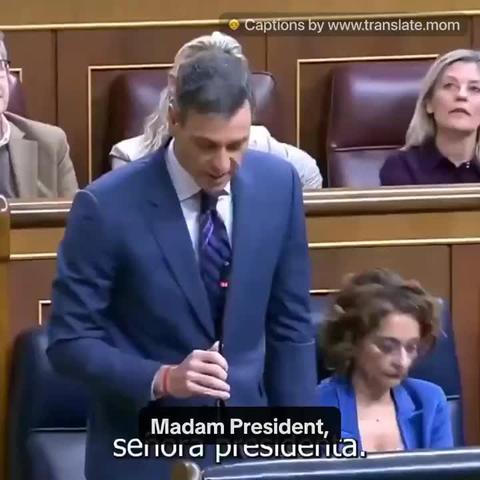
    Spain: mic flip

    Spain's Pedro Sánchez is ready for zero g game, and I'm here for it. Everyone else is going to look so dumb the first time they end a blast in zero g, let go of the mic, and it just hangs there next to their head like some kind of unwanted dildo.

    Also, Sánchez is just winning at principled foreign policy right now. If only Starmer or Merz were half as good.

    https://bsky.brid.gy/r/https://bsky.app/profile/did:plc:mxc7liuon6iq5gzapmmwkq22/post/3mhpdmfqmqs2n

    #Spain #politics #Sánchez #war #principals #style

    Anonymous (@youranoncentral.bsky.social)

    Spain Prime Minister Pedro Sanchez: "Trump is someone who will set the world on fire and then blame smoke caused by that. He has been wrong for 18 days of war. I urge everyone to call him out"

    Bluesky Social
    Thought Of The Day #29: Be yourself. But be really good at being yourself. #principals #values [ November 28th 2025 ] https://rons-home.net/en/living-life-lab/personal-growth/thought-of-the-day/2025/11/28
    Thought #29 :: Thought Of The Day :: Personal Growth :: Living Life Lab :: Ron's Home

    Each day www.Rons-Home.net shares a thought to promote reflection and introspection. Are you looking for personal growth? Check in here.

    A 9-year-old girl stood before the school board and absolutely eviscerated standardized tests

    https://fed.brid.gy/r/https://www.upworthy.com/9-year-old-mic-drop-on-standardized-tests-ex1

    Inside Amazon's Engineering Culture: Lessons from Their Senior Principals

    Craft over frills

    Olshansky's Newsletter