 Astro Hawk (Ian Kluft) ✅🚀🛰️
At approximately 2026-May-15 13:44 UTC, #asteroid #2026JN4 impacted Earth's atmosphere shortly after discovery. The 1m-wide rock was not a threat. Most that size are simply not discovered before becoming a common fireball meteor. The previous impactor discovered before impact was in December 2024. https://ssd.jpl.nasa.gov/tools/sbdb_lookup.html#/?sstr=2026%20JN4&view=OPC #astronomy #PlanetaryDefense #PlanetaryDefence #LowFlyingRocks
#asteroid #2026JN4 is apparently not being added to the official list of pre-impact detections because there were not enough observations to nail down an estimated impact point and there were no reports to confirm air or ground impact. More observations could change that. (ref @michael_w_busch ) https://mastodon.online/@michael_w_busch/116581727698756513 #astronomy #PlanetaryDefense #PlanetaryDefence #LowFlyingRocks
Michael Busch (@[email protected])
#ST26E86 is now indexed as #2026JN4: https://minorplanetcenter.net/mpec/K26/K26JE3.html. The Minor Planet Center is also interested in any reports of observations of the impact.
 matecurkovic
The Vera C. Rubin Observatory has discovered over **11,000 new asteroids** in just six weeks, including **33 near-Earth objects**.
Its powerful surveys also revealed **380 distant trans-Neptunian objects**, two with extremely elongated orbits.
These early results show Rubin will **revolutionise solar system mapping** and bolster planetary defence.
#Astronomy #Asteroids #SpaceScience #RubinObservatory #PlanetaryDefence https://phys.org/news/2026-04-early-vera-rubin-observatory-reveals.html
Its powerful surveys also revealed **380 distant trans-Neptunian objects**, two with extremely elongated orbits.
These early results show Rubin will **revolutionise solar system mapping** and bolster planetary defence.
#Astronomy #Asteroids #SpaceScience #RubinObservatory #PlanetaryDefence https://phys.org/news/2026-04-early-vera-rubin-observatory-reveals.html
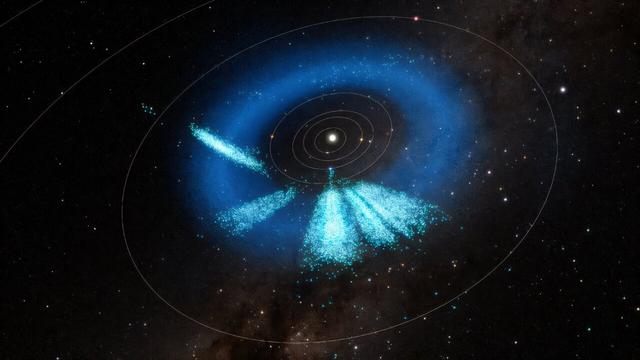
Early data from Vera C. Rubin Observatory reveals over 11,000 new asteroids
Using preliminary data from the Vera C. Rubin Observatory, scientists have discovered over 11,000 new asteroids. The data were confirmed by the International Astronomical Union's Minor Planet Center (MPC), making this the largest single batch of asteroid discoveries submitted in the past year. The discoveries were made using data from Rubin's early optimization surveys and offer a powerful preview of the observatory's transformative impact on solar system science.
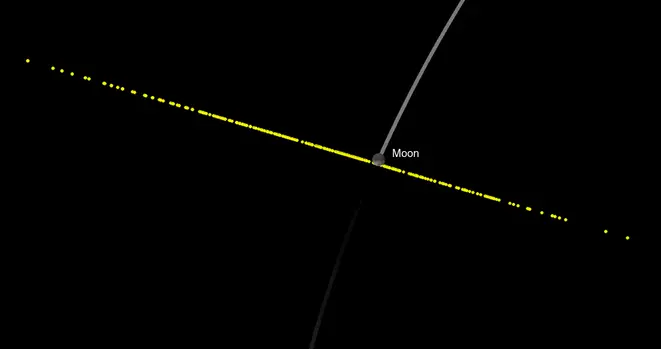
"Phew! NASA Rules Out Asteroid Smashup on the Moon in 2032" by @universetoday / @alanboyle - Astronomical observations of #asteroid #2024YR4, including from #NASA #WebbSpaceTelescope🔭 #JWST, refined its orbit estimate to rule out impact with the #Moon on its Dec 22, 2032 flyby. Possibility of Earth impact on that pass was already ruled out in April 2025. The 60m diameter rock would be a serious threat. https://www.universetoday.com/articles/phew-nasa-rules-out-asteroid-smashup-on-the-moon-in-2032 #astronomy #PlanetaryDefense #PlanetaryDefence #LowFlyingRocks #space
 Dr. Manuel Metz
My colleague wrote a nice Blog about the #ESA #RAMSESmission
https://www.dlr.de/en/blog/archive/ramses-mission-rps-and-marie-to-investigate-asteroid-apophis-passage-through-earth-s-magnetosphere
#asteroid #planetarydefence
https://www.dlr.de/en/blog/archive/ramses-mission-rps-and-marie-to-investigate-asteroid-apophis-passage-through-earth-s-magnetosphere
#asteroid #planetarydefence

RAMSES mission: RPS and MARIE to investigate asteroid Apophis' passage through Earth's magnetosphere
The RAMSES space probe is a replica of ESA's Hera mission, with minor modifications to the spacecraft and some new instruments. Like Hera, RAMSES will also deploy two small satellites: the CubeSats 'Farinella' and 'Don Quijote'.
 Martin R
Already on Monday, the Scientific and Technical Subcommittee started its 2026 session. This morning, the Space Mission Planning Advisory Group started its meeting. At #SMPAG, Space Agencies meet and discuss planetary defence, i. e. how to react in case a Near-Earth Object threatens to hit our planet. More information here: https://smpag.net #PlanetaryDefence #COPUOS #STSC #NEO #Asteroid #space
"Asteroid 2024 YR4's collision with the moon could create a flash visible from Earth, study finds" by @LiveScience - #Asteroid #2024YR4 was briefly subject of concern until Earth impact was ruled out. It's still being studied for potential impact with the #Moon on Dec 22, 2032. New paper estimates impact areas, all on the side facing Earth. A tiny fraction might be in darkness, visible without optics. https://www.livescience.com/space/asteroids/asteroid-2024-yr4s-collision-with-the-moon-could-create-a-flash-visible-from-earth-study-finds #astronomy #PlanetaryDefense #PlanetaryDefence #LowFlyingRocks #space

 Daniel Fischer
Dynamical development of strength and stability of #asteroid material under 440 GeV proton beam irradiation: https://www.nature.com/articles/s41467-025-66912-4 -> New study simulates asteroid #impact – and reveals the hidden strength of space rocks, a breakthrough with direct implications for #PlanetaryDefence strategies: https://www.ox.ac.uk/news/2026-01-08-new-study-simulates-asteroid-impact-and-reveals-hidden-strength-space-rocks

Dynamical development of strength and stability of asteroid material under 440 GeV proton beam irradiation - Nature Communications
Understanding asteroid materials is critical for determining deflection methods for planetary defense. Here the authors show, via experiments performed in High-Radiation to Materials facility at CERN, that iron-rich asteroid materials can absorb more energy without structural failure than standard material parameters would suggest.
 Mashable India [Unofficial]
Amid 3I/ATLAS Buzz ESA’s Planetary Defense Team Detects The 40,000th Near-Earth Asteroid; Is The Planet Safe?

"Apophis flyby in 2029 will be the first time a potentially hazardous asteroid has been visible to the naked eye" by @LiveScience - #Asteroid #99942Apophis will make a close pass by Earth on April 13, 2029. Earth will not be affected. But scientists are gearing up to observe how Earth's gravity changes the orbit of the asteroid, and possibly deforms its shape. There's so much to learn for #PlanetaryDefense / #PlanetaryDefence for the future. https://www.livescience.com/space/asteroids/apophis-flyby-in-2029-will-be-the-first-time-a-potentially-hazardous-asteroid-has-been-visible-to-the-naked-eye #astronomy #LowFlyingRocks
