 The New Renaissance Mindset
T.A.E.’s Book Review – Perfume: The Story of a Murder by Patrick Süskind
Perfume: The Story of a Murder is one of the most unsettling novels of the late twentieth century because it turns a seemingly intangible sense into the engine of plot, desire, and metaphysics. Patrick Süskind does not merely tell the story of Jean-Baptiste Grenouille, a man born without personal odour; he builds an entire moral universe around smell, then asks what kind of human being emerges when the world is understood not through ethics, but through scent. The result is a dark, feverish fable about genius without conscience, desire without reciprocity, and artistry severed from love.
At the centre of the novel is Grenouille, one of literature’s most chillingly original protagonists. He is not a conventional villain, because he lacks the emotional life that would make villainy legible as motive. He is instead an intelligence of pure appetite and calculation, a being whose gift is so extraordinary that it becomes a deformity of the soul. Süskind repeatedly stresses Grenouille’s near-supernatural olfactory talent, and this matters because smell in the novel is not simply sensory detail; it is a form of knowledge, even a form of domination. Grenouille does not encounter people as persons. He encounters them as olfactory structures, reducible to traces, components, and formulas. The human body becomes, for him, an archive of extractable essence.
That premise gives the novel its most disturbing philosophical force. The author suggests that the most intimate sense is also the most invasive. Sight allows distance; smell abolishes it. The novel’s descriptions of crowded streets, markets, tanneries, and slaughterhouses are not merely grotesque atmosphere. They are arguments about embodiment. Paris, in this book, is less a city than a fermenting organism, a place where human life is overwhelmed by excrement, rot, sweat, fat, blood, and perfume. This constant saturation of odour makes civilization look thin, almost theatrical. Beneath manners and culture lies the animal fact of the body.
Süskind’s prose is especially effective because it moves between clinical precision and Gothic excess. He writes with the cool attention of an anatomist and the relish of a decadent fabulist. The famous scent-making scenes are not just plot mechanisms; they are acts of miniature alchemy. Grenouille’s craft resembles art, science, and sorcery at once. But the novel insists on the monstrous implication of this craft: if beauty can be manufactured, then morality can be manufactured too. Grenouille’s perfumes do not reveal truth; they produce consent. In that sense, the novel becomes a savage meditation on charisma, propaganda, and the seductions of aesthetic power. The language of attraction is exposed as manipulable chemistry.
One of the book’s most profound ironies is that Grenouille possesses extraordinary sensitivity to the world while remaining spiritually absent from it. He is all perception and no relation. He can detect the most delicate human nuance in scent, but he cannot experience pity, tenderness, or mutuality. This makes him a horrifying inversion of the Romantic artist: a creator who seeks the sublime, but only to consume it. The novel’s repeated concern with “essence” is therefore double-edged. Grenouille hunts for the essential fragrance of things, yet the more he extracts essence, the more he evacuates life.
The narrative structure strengthens this moral bleakness. Süskind frames Grenouille’s career almost like a rise-and-fall legend, but the “rise” is parasitic and the “fall” is oddly liberating. The novel is not a simple crime story. It is a parable of genius detached from human purpose. Grenouille’s search for the perfect perfume becomes a quest for immortality, but what he really wants is not remembrance or love; it is annihilation of his own lack. The irony is devastating: he masters the power to compel adoration, yet cannot make himself believe in it. His triumph is empty because his selfhood is empty.
The book’s ending is one of the most brilliant and grotesque conclusions in modern fiction. Rather than restoring moral order, Süskind stages a collapse of moral categories themselves. The response to Grenouille’s perfect perfume is not justice but ravenous reverence. Human beings, stripped of discernment by desire, become a mob of appetites. That is the novel’s most savage insight: civilization may be more fragile than we want to admit, and our noblest judgments may be no more secure than our senses.
What makes Perfume unforgettable is that it is both repellent and beautiful. Süskind compels us to inhabit a world of stink, lust, slaughter, and genius, then reveals that beauty itself may be inseparable from corruption. It is a novel about the power to enchant, and the terror of enchantment without conscience. Few books are so obsessed with the physical world, and fewer still use that obsession to expose the abyss beneath human civilization.
#BookReviews #classicBooks #Fiction #LiteraryCriticism #PatrickSüskind #Süskind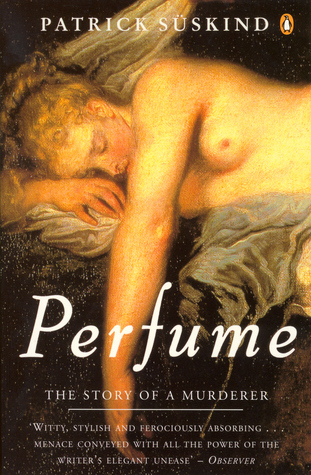
 Readit Club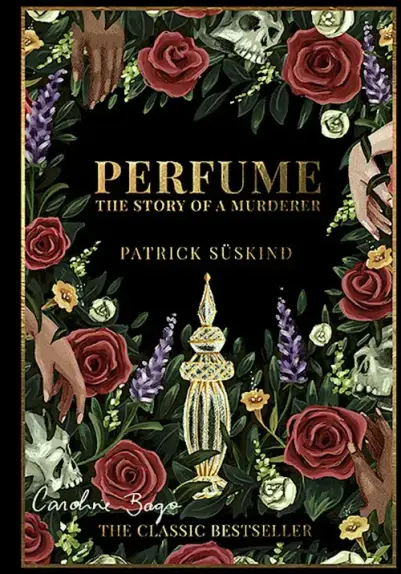
 Mediathekperlen.de
 50+ Music


 cob
cob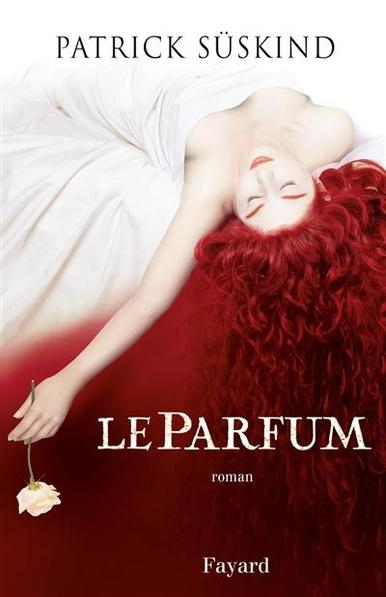

 Karen Mzk