Bioactivated Glucoraphanin Modulates Genes Involved in Necroptosis on Motor-Neuron-like Nsc-34: A Transcriptomic Study. https://doi.org/10.3390/antiox13091111 #Glucosinolates #Isothiocyanates #TranscriptomicAnalysis #PathwayAnalysis #OxidativeStress
Bioactivated Glucoraphanin Modulates Genes Involved in Necroptosis on Motor-Neuron-like Nsc-34: A Transcriptomic Study

Research on bioactive compounds has grown recently due to their health benefits and limited adverse effects, particularly in reducing the risk of chronic diseases, including neurodegenerative conditions. According to these observations, this study investigates the activity of sulforaphane (RS-GRA) on an in vitro model of differentiated NSC-34 cells. We performed a transcriptomic analysis at various time points (24 h, 48 h, and 72 h) and RS-GRA concentrations (1 µM, 5 µM, and 10 µM) to identify molecular pathways influenced by this compound and the effects of dosage and prolonged exposure. We found 39 differentially expressed genes consistently up- or downregulated across all conditions. Notably, Nfe2l2, Slc1a5, Slc7a11, Slc6a9, Slc6a5, Sod1, and Sod2 genes were consistently upregulated, while Ripk1, Glul, Ripk3, and Mlkl genes were downregulated. Pathway perturbation analysis showed that the overall dysregulation of these genes results in a significant increase in redox pathway activity (adjusted p-value 1.11 × 10⁻³) and a significant inhibition of the necroptosis pathway (adjusted p-value 4.64 × 10⁻³). These findings suggest RS-GRA’s potential as an adjuvant in neurodegenerative disease treatment, as both increased redox activity and necroptosis inhibition may be beneficial in this context. Furthermore, our data suggest two possible administration strategies, namely an acute approach with higher dosages and a chronic approach with lower dosages.

MDPI
@reactome Pathway enrichment analysis of these proteins showed that each tumor type had perturbations in a distinct set of pathway #PathwayAnalysis
We carried out an epigenome-wide association study using Illumina EPIC chips, and now would like to carry out Ingenuity Pathway Analysis (IPA), but are wondering what to do with CpGs that annotate in the EPIC manifest to two or more genes? Looks like some applying IPA annotate each CpG to the gene with the nearest TSS, while others applying IPA are rather vague regarding what they did. #epigenetics #PathwayAnalysis #Methylation #IlluminaEPIC

#scRNAseq #singlecell #pathwayAnalysis
Seems really easy to use, and return good results:

ReactomeGSA - Efficient Multi-Omics Comparative Pathway Analysis - ScienceDirect

https://www.sciencedirect.com/science/article/pii/S1535947620600159?via%3Dihub

A Bioinformatic Approach Based on Systems Biology to Determine the Effects of SARS-CoV-2 Infection in Patients with Hypertrophic Cardiomyopathy
https://doi.org/10.1155%2F2022%2F5337380
#Cardiomyopathy #SARSCoV2 #PathwayAnalysis
A Bioinformatic Approach Based on Systems Biology to Determine the Effects of SARS-CoV-2 Infection in Patients with Hypertrophic Cardiomyopathy

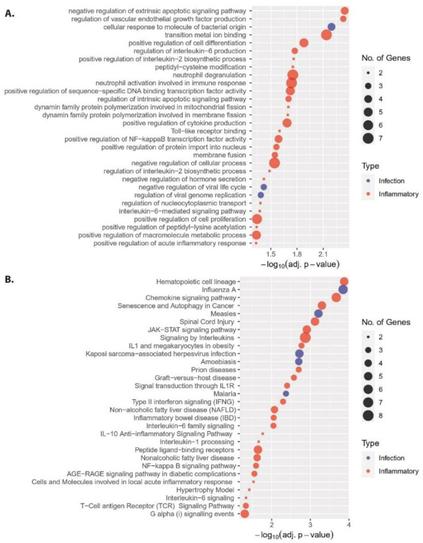
Recently, severe acute respiratory syndrome coronavirus 2 (SARS-CoV-2), the causative agent of coronavirus disease 2019 (COVID-19), has infected millions of individuals worldwide. While COVID-19 generally affects the lungs, it also damages other organs, including those of the cardiovascular system. Hypertrophic cardiomyopathy (HCM) is a common genetic cardiovascular disorder. Studies have shown that HCM patients with COVID-19 have a higher mortality rate; however, the reason for this phenomenon is not yet elucidated. Herein, we conducted transcriptomic analyses to identify shared biomarkers between HCM and COVID-19 to bridge this knowledge gap. Differentially expressed genes (DEGs) were obtained using the Gene Expression Omnibus ribonucleic acid (RNA) sequencing datasets, GSE147507 and GSE89714, to identify shared pathways and potential drug candidates. We discovered 30 DEGs that were common between these two datasets. Using a combination of statistical and biological tools, protein-protein interactions were constructed in response to these findings to support hub genes and modules. We discovered that HCM is linked to COVID-19 progression based on a functional analysis under ontology terms. Based on the DEGs identified from the datasets, a coregulatory network of transcription factors, genes, proteins, and microRNAs was also discovered. Lastly, our research suggests that the potential drugs we identified might be helpful for COVID-19 therapy.

Severity of COVID-19 patients with coexistence of asthma and vitamin D deficiency
https://doi.org/10.1016%2Fj.imu.2022.101116
#SARS-CoV-2 #PPI #Asthma #PathwayAnalysis