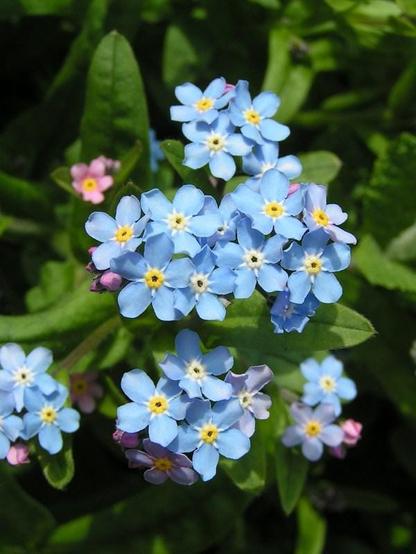
🔍 The review highlights key gaps: we need to better integrate floral chemistry, flowering timing, and pollinator sensory biology to understand how resilient these interactions are under climate warming. (8/8)

👉 https://doi.org/qxxv

#PlantScience #AoBpapers #Pollination

Warming effects on floral volatile organic compounds and plant–pollinator interactions in tropical ecosystems

Abstract. Climate warming increasingly disrupts plant–pollinator interactions through changes in floral chemical cues, particularly volatile organic compou

OUP Academic

🌸🌼Join us to learn about the newly published “Warming effects on floral volatile organic compounds and plant–pollinator interactions in tropical ecosystems” in @AnnBot by Ibrahim Salman and co-authors. 🧵 (1/8)

👉 https://doi.org/qxxv

#PlantScience #AoBpapers

🍅Welcome back to another #TomatoTuesday!
🤝Wang et al. explore the relationship between #auxin response factors and #brassinosteroid signaling to regulate #tomato #leaf angle.
🔗https://doi.org/10.1111/jipb.70215
@WileyLifeSci
#PlantScience #JIPB #CropScience #AgTech #PlantArchitecture #botany

Funded PhD position on novel crop pest and pathogen diagnostics available based at Fera Ltd. in collaboration with my lab - please share with any UK students who may be interested: https://generationresearch.ac.uk/mres-and-phd-studentships

#SynBio #PlantScience #EngBio

MRes and PhD Studentships | GenerationResearch

GenerationResearch provides paid research and technical experiences with a focus on widening access and increasing inclusivity to these important opportunities.

Why Would the Plant Next Door Smell Different?
https://www.botany.one/why-would-the-plant-next-door-smell-different/

Two populations of the same plant, just 4 km apart in the Italian mountains, produce different perfumes and attract different pollinators. Why?
#Botany #PlantScience

Why Would the Plant Next Door Smell Different?

Two populations of the same plant, just 4 km apart in the Italian mountains, produce different perfumes and attract different pollinators. Why?

Botany One

🍃 New article in @AoBP showing that dominant species in a tropical urban wetland display distinct leaf traits and physiological strategies shaped by seasonality and soil conditions.

Full #openaccess
👉 https://doi.org/10.1093/aobpla/plag006

#PlantScience

What Our Footsteps Leave Behind: the Silent Impact of Tourist Trails on Lichens and Bryophytes
https://www.botany.one/what-our-footsteps-leave-behind-the-silent-impact-of-tourist-trails-on-lichens-and-bryophytes/

Trails may seem small and harmless amid the vastness of national parks, but new evidence suggests that their ecological impact may be far greater than it appears.
#Botany #PlantScience

What Our Footsteps Leave Behind: the Silent Impact of Tourist Trails on Lichens and Bryophytes

Trails may seem small and harmless amid the vastness of national parks, but new evidence suggests that their ecological impact may be far greater than it appears.

Botany One

Are you passionate about Computational Proteomics and Plant Science? The @tu_muenchen is looking for a Doctoral Candidate (f/m/d) to join their visionary graduate college.

🔍 The Project: Build Graph Neural Networks to predict protein-protein interactions in crops.

💼 Offer: 4-year position (TV-L E13) starting Oct 2026.
📅 Deadline: 30 May 2026
📍 Location: Freising/Munich, Germany

👉 Apply now: https://www.denbi.de/news1/2077-doctoral-candidate-f-m-d-in-computational-proteomics-bioinformatics

#Bioinformatics #Proteomics #PlantScience #PhDPosition #TUM #deNBI

♻️ Comparative plastomes of five Psittacanthus species: genome organization, structural features, and patterns of pseudogenization and gene loss by Saddan Morales-Saldaña and co-authors.

Full #openaccess
👉 https://doi.org/10.1093/aobpla/plaf032

#PlantScience

Comparative plastomes of five Psittacanthus species: genome organization, structural features, and patterns of pseudogenization and gene loss

Despite the high conservation of gene order (synteny) or collinearity observed across different Psittacanthus chloroplast genomes (plastomes), significant

OUP Academic

The Week in Botany March 30, 2026
https://www.botany.one/the-week-in-botany-march-30-2026/

This week: the strange love lives of flowers, how healing may cause harm, connecting plants and humans, and more.
#Botany #PlantScience

The Week in Botany March 30, 2026

This week: the strange love lives of flowers, how healing may cause harm, connecting plants and humans, and more.

Botany One