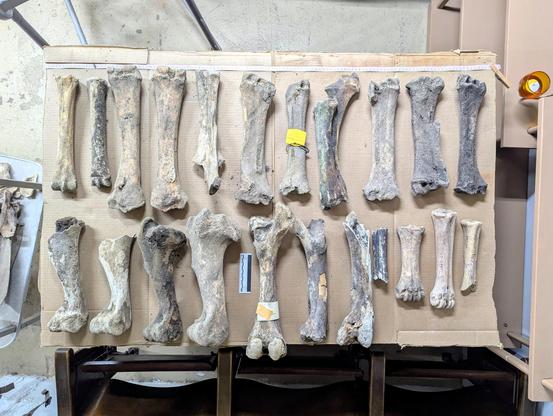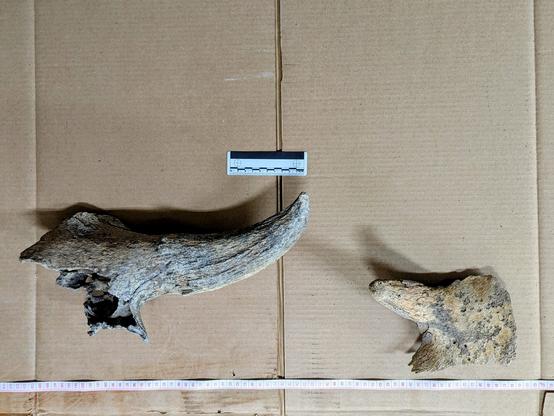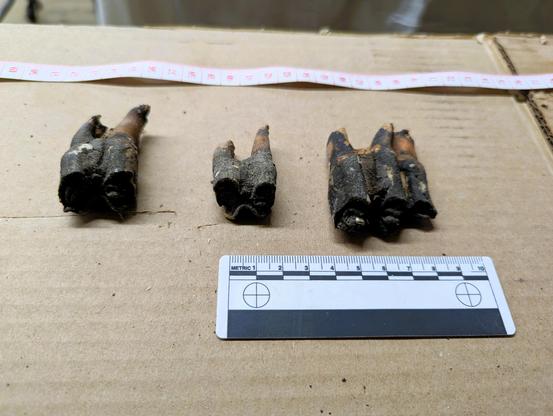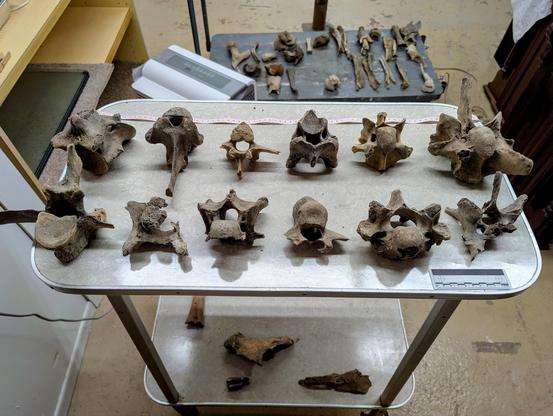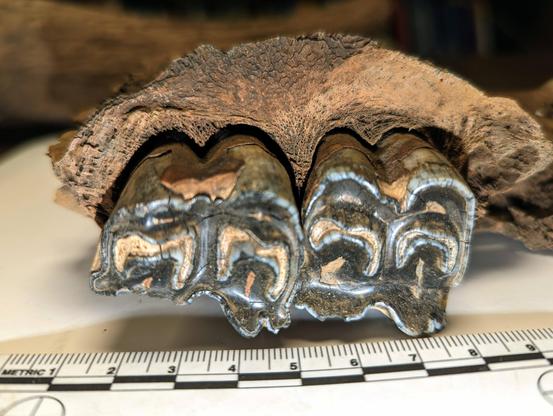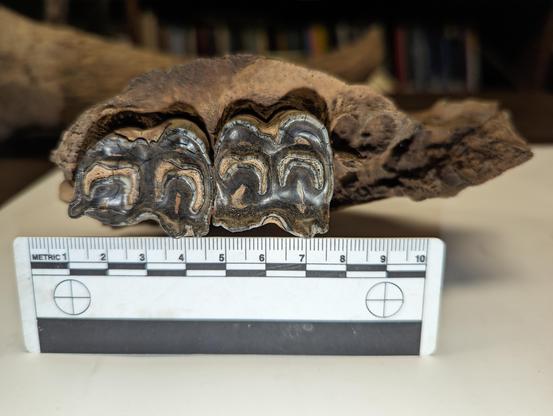
#FossilFriday #MnMuseum highlight: Carver County Historical Society. Carver County’s past is on display, anchored by a mammoth molar amid exhibits on Indigenous history, agriculture, and military service.

The molar was found in 2000 at the W. Mueller & Sons gravel pit in Chaska, when Mori Willemsen’s clamshell dredge—dropping through 100 feet of water—hauled up a proboscidean tooth.

https://www.carvercountyhistoricalsociety.org/

#pleistocene #palaeontology #CitizenScience
Source: Chaska Herald, April 5, 2001, p. 1.

Review of the European Middle #Pleistocene hominin record 'characterized by pronounced morphological variability and persistent taxonomic uncertainty'. Authors argue 'trait-by-trait approaches inflate phylogenetic fragmentation of the fossil record.'

https://www.sciencedirect.com/science/article/pii/S0277379126001605

New blog post!

We tried to upgrade an exhibit, and instead accidentally discovered a new species of mastodon!

https://life-from-a-certain-point-of-view.ghost.io/pacific-incognitum-the-pacific-mastodon-story/

As always, if you enjoy these posts please consider becoming a paid subscriber or leaving a tip to support research and education at Western Science Center.

#Paleontology #Palaeontology #Mastodon #Pleistocene #Museum #Scicomm

Pacific Incognitum - The Pacific Mastodon Story

This is the 3rd in our monthly series of posts celebrating Western Science Center's 20th anniversary. It was supposed to just be an exhibit upgrade. Last month I talked about the discovery of Max the Mastodon, and how he became the iconic specimen for the Western Science Center. When I

Life...From a Certain Point of View
New research reads 125,000-year-old elephant molars like travel diaries—strontium isotopes show some Neanderthal-hunted giants roamed up to 300 km before arriving at a German lake site. #Neanderthals #Paleoanthropology #Pleistocene https://www.anthropology.net/p/what-elephant-teeth-tell-us-about
What Elephant Teeth Tell Us About Neanderthal Hunters

Strontium isotopes in 125,000-year-old molars reveal the surprisingly distant origins of the giant prey Neanderthals hunted at a German lakeside site

Anthropology.net

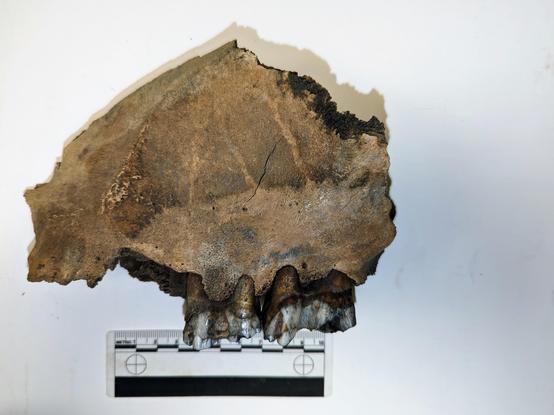
🐴 #LostBones #FossilFriday — Molar (SMM P77.20.1), specimen 8 of 12, was recovered in 1976 — the same year the U.S. celebrated its Bicentennial. This much older story emerged from the landscape in St. Cloud, Minnesota, when P. Lansing collected this beautiful upper horse molar near Highway 23.

Long before modern roads and cities, horses may have roamed Ice Age Minnesota, grazing across open prairie while mammoths and giant bison shared the region.

#pleistocene #palaeontology #CitizenScience

I'm well aware that elephants cannot jump, but you've never seen a living woolly mammoth in the first place so don't even get started on scientific accuracy here

Character from my game about animals who...jump! On a volcano!

#gamedev #art #paleoart #pleistocene #indie #MastoArt #CreativeToots #woollymammoth #mastodon

The Late Pleistocene Megafauna: Huge Animals that Used to Roam the Earth

Not so long ago, huge mammals weighing more than 1,000 kg existed practically all over the world. We call these giants the Pleistocene megafauna because they lived in a time period called the Pleistocene and were almost completely extinct around 11,700 years ago. These mammals lived on Earth for millions of years and were very important to almost all land-based ecosystems. However, natural climate change and humans decreased their ability to survive. Today, we find fossils of Pleistocene megafauna all over the world, including bones, hair, droppings, and even footprints. Scientists dig for these fossils to learn more about these animals and why they went extinct. Studying these ancient animals also gives scientists important information that helps them understand the risks that today’s living animals face in our world.

Frontiers for Young Minds

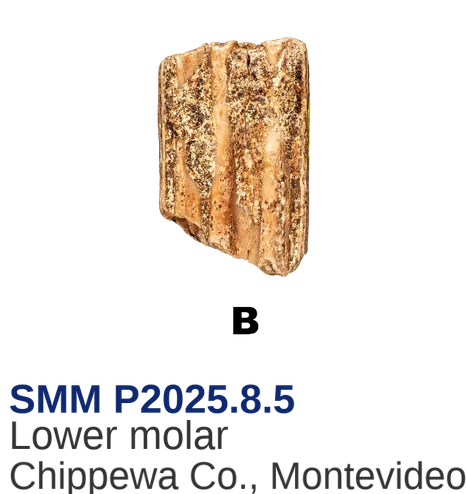
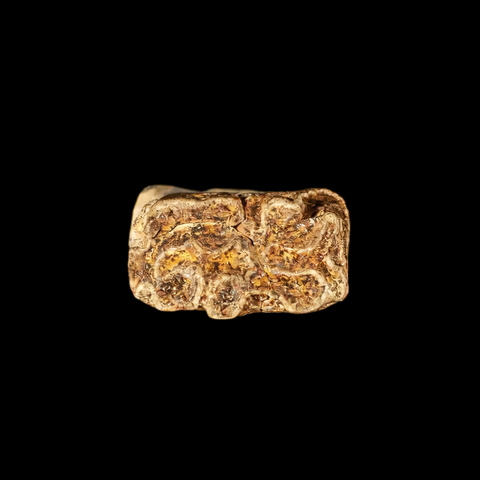
🐴 #FossilFriday — Horse molar (SMM P2020.7.34)❤️‍🔥. Specimen 7 of 12 for radiocarbon dating — another incredible Ice Age find from my good friend Bill in 2018 — New Ulm, Minnesota.

Every one of these teeth and bones helps us answer a bigger question: Were Ice Age horses still roaming Minnesota later than we thought?

I’ve added new notes on Substack:

https://substack.com/@marcusbrandel/note/c-210629991

👇 What do you think this molar’s age will come back as — Ice Age or more recent?
#Pleistocene #Equus

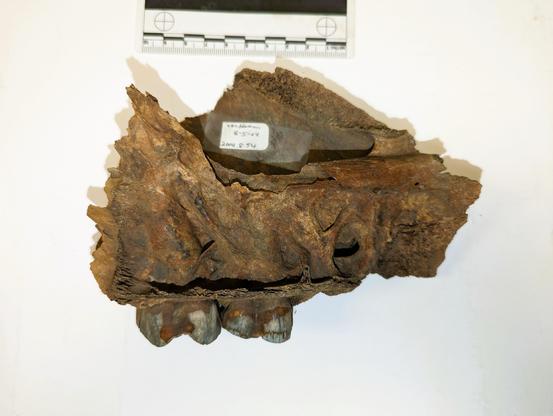
#LostBones #FossilFriday #RadioCarbonDating 🐂🦥🐴🐘🐪In June 1921, workers removing the overburden at the Sagamore Mine near Riverton, Minnesota uncovered a peat layer ~eight feet below the surface that held a rich Pleistocene bone bed. Among the material recovered from this layer were a horse molar (specimen #6) and an horse incisor, found alongside other late‑Quaternary remains within the same sedimentary zone.

https://www.crowwinghistory.org

#pleistocene #palaeontology #CitizenScience #Equus