 Walter - OLD ACCOUNT
My idea for #bulletjournaling to use pages for a #mentalhealth tracker with the #GAD7 and #phq9 as a template to track for my psych appointments.
#bujo #bulletjournal #BulletJournalMethod
#bujo #bulletjournal #BulletJournalMethod


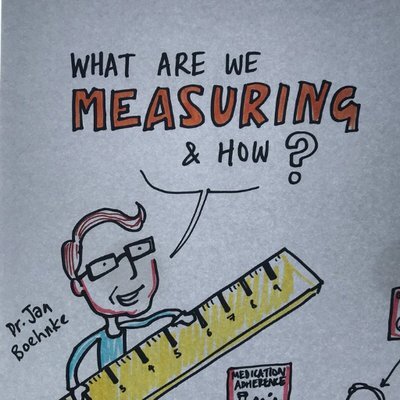
Last week "Quality of Life Research" published 4 articles, for example:
#QALY estimation in #MentalHealth trials w #PHQ9, #GAD7 to #ReQoL, EQ5D:
https://link.springer.com/article/10.1007/s11136-023-03443-9
#HTA #HealthEconomics
Experiences of adults after late repair of tetralogy of fallot in a low-middle income country (Pakistan):
https://rdcu.be/deQ1y
#HRQL #LMIC
Online first articles:
https://link.springer.com/journal/11136/online-first
#ISOQOL

Purpose Patient-reported outcome measures (PROMs) are commonly collected in trials and some care settings, but preference-based PROMs required for economic evaluation are often missing. For these situations, mapping models are needed to predict preference-based (aka utility) scores. Our objective is to develop a series of mapping models to predict preference-based scores from two mental health PROMs: Patient Health Questionnaire-9 (PHQ-9; depression) and Generalised Anxiety Questionnaire-7 (GAD-7; anxiety). We focus on preference-based scores for the more physical-health-focussed EQ-5D (five-level England and US value set, and three-level UK cross-walk) and more mental-health-focussed Recovering Quality-of-Life Utility Index (ReQoL-UI). Methods We used trial data from the Improving Access to Psychological Therapies (IAPT) mental health services (now called NHS Talking Therapies), England, with a focus on people with depression and/or anxiety caseness. We estimated adjusted limited dependent variable or beta mixture models (ALDVMMs or Betamix, respectively) using GAD-7, PHQ-9, age, and sex as covariates. We followed ISPOR mapping guidance, including assessing model fit using statistical and graphical techniques. Results Over six data collection time-points between baseline and 12-months, 1340 observed values (N ≤ 353) were available for analysis. The best fitting ALDVMMs had 4-components with covariates of PHQ-9, GAD-7, sex, and age; age was not a probability variable for the final ReQoL-UI mapping model. Betamix had practical benefits over ALDVMMs only when mapping to the US value set. Conclusion Our mapping functions can predict EQ-5D-5L or ReQoL-UI related utility scores for QALY estimation as a function of variables routinely collected within mental health services or trials, such as the PHQ-9 and/or GAD-7.
 Jan R. Boehnke
 Lachesis