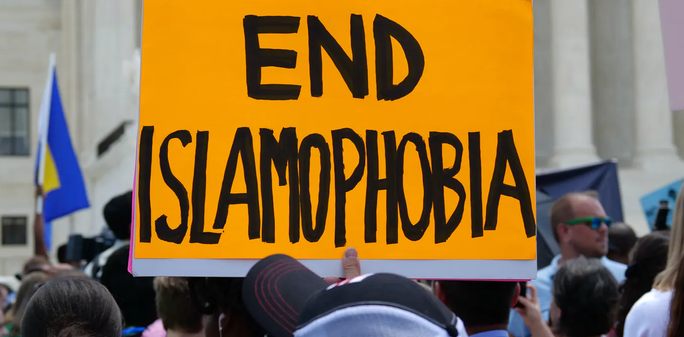
The shooting at the Islamic Center of San Diego is part of a far‑right curriculum of violence | The-14

Study examines how far-right extremist networks glorify anti-Muslim violence and radicalize youth after the San Diego mosque shooting. It warns of hate online.

The-14 Pictures

Guidance for Parents on Preventing and Identifying Online Extremism in Teens

📰 Original title: How to talk to your kids about extremism online

🤖 IA: It's not clickbait ✅
👥 Users: It's not clickbait ✅

View full AI summary https://en.killbait.com/guidance-for-parents-on-preventing-and-identifying-online-extremism-in-teens.html?utm_source=mastodon_world&utm_medium=social&utm_campaign=killbait.mastodon_world

#society #extremism #onlineradicalization #parenting

Guidance for Parents on Preventing and Identifying Online Extremism in Teens

The article explores growing concerns about how teenagers can be exposed to and influenced by extremist content online, particularly through social media and algorithm-driven platforms. It references a recent violent attack in San Diego carried out by two teenage suspects who allegedly engaged with far-right extremist material online. Authorities reported that the attackers left behind a manifesto promoting hate, antisemitism, anti-Islam ideology, and violence, and investigators are examining the role of online radicalization in the incident. Experts interviewed in the article explain that modern extremist recruitment no longer depends solely on in-person networks. Instead, digital platforms can create highly personalized environments where vulnerable youth may be gradually exposed to increasingly radical content. Psychologists describe processes such as “identity fusion,” where individuals develop a deep sense of belonging to online groups, sometimes blurring personal identity with extremist ideologies. Algorithms can intensify this exposure by continuously recommending similar content, potentially reinforcing harmful beliefs. The article also highlights how adolescents often seek belonging and purpose during formative years, making them more susceptible to online communities that offer acceptance, even if those groups promote dangerous ideologies. Researchers note that extremist grooming can occur privately through social media or messaging apps, making detection difficult for parents and guardians. Warning signs of radicalization may include sudden changes in identity, moral worldview, or social alignment, as well as the adoption of language that dehumanizes others or reflects obsessive allegiance to online groups. Experts caution that distinguishing normal teenage behavior from radicalization can be challenging. To address these risks, specialists recommend that parents engage actively with their children’s online lives, encourage open dialogue about digital habits, and expose them to a diversity of perspectives to counteract algorithm-driven echo chambers. The overall message emphasizes early communication and awareness as key tools in preventing online radicalization among youth.

KillBait

Guidance for Parents on Preventing and Identifying Online Extremism in Teens

📰 Original title: How to talk to your kids about extremism online

🤖 IA: It's not clickbait ✅
👥 Users: It's not clickbait ✅

View full AI summary https://en.killbait.com/guidance-for-parents-on-preventing-and-identifying-online-extremism-in-teens.html?utm_source=mastodon_social&utm_medium=social&utm_campaign=killbait.mastodon_social

#society #extremism #onlineradicalization #parenting

Guidance for Parents on Preventing and Identifying Online Extremism in Teens

The article explores growing concerns about how teenagers can be exposed to and influenced by extremist content online, particularly through social media and algorithm-driven platforms. It references a recent violent attack in San Diego carried out by two teenage suspects who allegedly engaged with far-right extremist material online. Authorities reported that the attackers left behind a manifesto promoting hate, antisemitism, anti-Islam ideology, and violence, and investigators are examining the role of online radicalization in the incident. Experts interviewed in the article explain that modern extremist recruitment no longer depends solely on in-person networks. Instead, digital platforms can create highly personalized environments where vulnerable youth may be gradually exposed to increasingly radical content. Psychologists describe processes such as “identity fusion,” where individuals develop a deep sense of belonging to online groups, sometimes blurring personal identity with extremist ideologies. Algorithms can intensify this exposure by continuously recommending similar content, potentially reinforcing harmful beliefs. The article also highlights how adolescents often seek belonging and purpose during formative years, making them more susceptible to online communities that offer acceptance, even if those groups promote dangerous ideologies. Researchers note that extremist grooming can occur privately through social media or messaging apps, making detection difficult for parents and guardians. Warning signs of radicalization may include sudden changes in identity, moral worldview, or social alignment, as well as the adoption of language that dehumanizes others or reflects obsessive allegiance to online groups. Experts caution that distinguishing normal teenage behavior from radicalization can be challenging. To address these risks, specialists recommend that parents engage actively with their children’s online lives, encourage open dialogue about digital habits, and expose them to a diversity of perspectives to counteract algorithm-driven echo chambers. The overall message emphasizes early communication and awareness as key tools in preventing online radicalization among youth.

KillBait

It's true, I've become an Erika Vikman fanboi since hearing Father (I will never confess) and reading a bit about her.

Always liked me a good rebel story, and hers is that.

https://www.youtube.com/watch?v=4Fx0owlelKU

#ErikaVikman #OnlineRadicalization

Käärijä & Erika Vikman - Ruoska (Live) // UMK24

YouTube
Site Of Passage

A cartoon for September 28, 2025

Crooks and Liars

A Deep Dive Into the #Extremism of #Groypers

A detailed analysis of the #Groyper movement, exposing its connections to #white #nationalism and #farright extremism. This video examines evidence-based research revealing how Groypers use online platforms for #hatespeech and recruitment.

#GroyperExposed #WhiteNationalism #FarRightExtremism #HateGroupWatch #AntiHateResearch #CivilRights #OnlineRadicalization #ExtremistMovements #DigitalFascism #Identitarianism

https://www.youtube.com/watch?v=RkhSCk9XLuM

A Deep Dive Into the Extremism of Groypers

YouTube

BBC: Terror warning over kids using screens over summer. “For the first time, Counter Terrorism Policing (CTP), MI5, and the National Crime Agency (NCA) have issued a joint statement calling for greater vigilance. It is encouraging parents to discuss online safety with their children, alongside things like putting parental controls on devices and routers.”

https://rbfirehose.com/2025/07/27/bbc-terror-warning-over-kids-using-screens-over-summer/

BBC: Terror warning over kids using screens over summer | ResearchBuzz: Firehose

ResearchBuzz: Firehose | Individual posts from ResearchBuzz

How do extremist views spread online? We spoke to Lion Wedel & Linda Coufal about their studies on Incel radicalization, COVID-19’s impact, and how platform structures fuel misogynistic ideology.

Read the full interview: ➡️ https://www.weizenbaum-institut.de/news/detail/from-isolation-to-extremism/

#OnlineRadicalization #DigitalExtremism #MisogynyOnline #wisskomm #research #socialscience

From Isolation to Extremism: Radicalization in the Manosphere

Together with his colleague Linda Coufal, Weizenbaum researcher Lion Wedel recently published two studies on the radicalization of Incels – a group known for its misogynistic views. We spoke to them about their research.

Weizenbaum Institut

I am writing a piece to educate young teens (13 ish) on how to not falling victim to grooming and online radicalization.

I am psychotherapist interested in this as a cause.

I believe a teen, around 17 or 18 years old who has had experience on the deep web and has survived this experience, can help me skillfully reach others from potential victimization.

Any thoughts or contacts for me?

Pls share. You can DM me if necessary

#grooming #radicalization #onlineradicalization #