The article reports that Americans overestimate how many social media users engage in harmful online behavior, estimating higher prevalence than what is found in platform data. It examines how these misperceptions can influence views of society and moral decline, and tests a misperception correction approach. The findings highlight a small, active minority as the main source of toxic content and false news online.

This topic is of interest to psychology enthusiasts because it explores cognitive biases in social perception, the impact of beliefs about others on trust and cynicism, and how corrective information can shift attitudes toward social morality.

Article Title: Americans systematically overestimate how many social media users contribute to harmful online behavior

Link to PsyPost Article: https://nolinkpreview.com/www.psypost.org/americans-systematically-overestimate-how-many-social-media-users-contribute-to-harmful-online-behavior/

#socialmedia #misperception #psychology #cynicism #trust #moraldecline #toxiccomments #false news #onlinebehavior #researchstudy

The Noisy Room

Only 3% of social media users post toxic content — but Americans estimate 43%. An interactive essay about what algorithms hide.

The Noisy Room

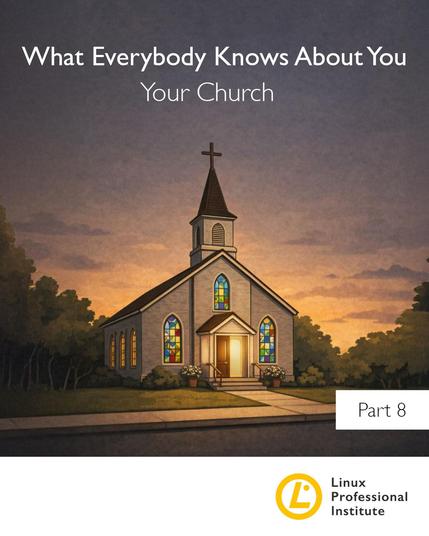
This episode of the Andrew Oram series "What Everybody Knows About You" explains how some churches collect people’s data.

Read it here: https://lpi.org/7bx9

[Disclaimer: This post contains an image created with the assistance of AI.]

#LPI #dataprivacy #digitaltracking #churchtech #onlinebehavior #mentalhealth #churchdata #church

Ah, yes, a riveting read on how people choose to like things in secret, because who doesn't want to risk their precious online rep for a digital thumbs-up? 🤔✨ Spoiler alert: It involves social networks, reputational anxiety, and enough academic jargon to make your eyes glaze over. 🚀📚
https://arxiv.org/abs/2601.11140 #socialnetworks #reputationalanxiety #academicjargon #digitalthumbsup #onlinebehavior #HackerNews #ngated
When "Likers'' Go Private: Engagement With Reputationally Risky Content on X

In June 2024, X/Twitter changed likes' visibility from public to private, offering a rare, platform-level opportunity to study how the visibility of engagement signals affects users' behavior. Here, we investigate whether hiding liker identities increases the number of likes received by high-reputational-risk content, content for which public endorsement may carry high social or reputational costs due to its topic (e.g., politics) or the account context in which it appears (e.g., partisan accounts). To this end, we conduct two complementary studies: 1) a Difference-in-Differences analysis of engagement with 154,122 posts by 1068 accounts before and after the policy change. 2) a within-subject survey experiment with 203 X users on participants' self-reported willingness to like different kinds of content. We find no detectable platform-level increase in likes for high-reputational-risk content (Study 1). This finding is robust for both between-group comparison of high- versus low-reputational-risk accounts and within-group comparison across engagement types (i.e., likes vs. reposts). Additionally, while participants in the survey experiment report modest increases in willingness to like high-reputational-risk content under private versus public visibility, these increases do not lead to significant changes in the group-level average likelihood of liking posts (Study 2). Taken together, our results suggest that hiding likes produces a limited behavioral response at the platform level. This may be caused by a gap between user intention and behavior, or by engagement driven by a narrow set of high-usage or automated accounts.

arXiv.org

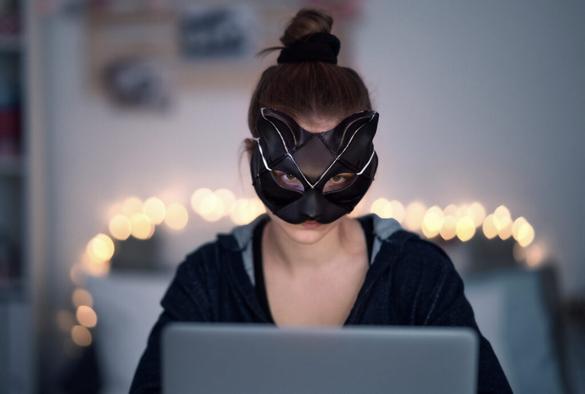
Why do we behave differently online than we would in person? There are different theories about this, from SIDE to the theory of possible selves, we have explored what the experts think.

#psychology #cyberpsychology #onlineBehavior #anonymity

https://negativepid.blog/why-do-we-behave-differently-online/

Why do we behave differently online? - Negative PID

Since the invention of the Internet and cyberspace, people have been able to interact online. Are we different people online from the people we are offline?

Negative PID

Why do we behave differently online than we would in person? There are different theories about this, from SIDE to the theory of possible selves, we have explored what the experts think.

#psychology #cyberpsychology #onlineBehavior #anonymity

https://negativepid.blog/why-do-we-behave-differently-online/

Why do we behave differently online? - Negative PID

Since the invention of the Internet and cyberspace, people have been able to interact online. Are we different people online from the people we are offline?

Negative PID

Why do we behave differently online than we would in person? There are different theories about this, from SIDE to the theory of possible selves, we have explored what the experts think.

#psychology #cyberpsychology #onlineBehavior #anonymity

https://negativepid.blog/why-do-we-behave-differently-online/

Why do we behave differently online? - Negative PID

Since the invention of the Internet and cyberspace, people have been able to interact online. Are we different people online from the people we are offline?

Negative PID

This Post (Wont Delete Now or Ever)

There’s a trend going around on the internet these days, one that’s so painfully obvious and, honestly, kind of pathetic, that it’s almost laughable. You know what I’m talking about. Folks post something, maybe something serious, maybe something dumb, and then they tack on a little note at the end, something like “will delete soon” or “might delete later.” And it’s everywhere. Social media, blogs, forums, even meme pages. Everywhere you look, someone is trying to say […]

https://jaimedavid.blog/2025/11/15/01/38/15/analysis/jaimedavid327/8151/this-post-wont-delete-now-or-ever/

The Dumbest Meme Alive: Why “6–7” Perfectly Sums Up the Decay of Internet Culture

If there was ever a sign that the internet had officially eaten itself, it’s “6–7.” The so-called meme phrase, born from a forgettable rap lyric and somehow inflated into a cultural touchstone, represents everything wrong with the modern state of online culture. It’s not clever, not funny, not even coherent. It’s just noise—empty repetition masquerading as entertainment, proof that virality no longer depends on meaning or creativity but on sheer algorithmic force and social […]

https://jaimedavid.blog/2025/10/30/22/48/29/analysis/jaimedavid327/7991/the-dumbest-meme-alive-why-6-7-perfectly-sums-up-the-decay-of-internet-culture/

Why do we behave differently online than we would in person? There are different theories about this, from SIDE to the theory of possible selves, we have explored what the experts think.

#psychology #cyberpsychology #onlineBehavior #anonymity

https://negativepid.blog/why-do-we-behave-differently-online/

Why do we behave differently online? - Negative PID

Since the invention of the Internet and cyberspace, people have been able to interact online. Are we different people online from the people we are offline?

Negative PID